Blasts from The Past: Posts on Virtual Events, Airlines, Facebook and More

August 24, 2012

Introduction

While recent posts have focused on social media, I used to crank out a few dozen posts (every few months) on virtual events. After all, just look at the name of this blog. So I thought I’d round up some former blog postings and bring them back to life.

What Virtual Events Can Learn from The Airline Industry

From frequent flyer programs to first class and business class, I shared ideas on how virtual events could apply concepts from the airline industry. If you’ve seen examples of virtual events that have applied these sorts of concepts, please share details in the comments section.

Read the full post (from 2009): What Virtual Events Can Learn From The Airline Industry

Breaking News: Facebook’s Not a Social Network, it’s a Virtual Event

Facebook has hundreds of millions of active users. And guess what? They’re online, right this moment. If you’re a Facebook user, you probably know the drill. You post a photo from your daughter’s soccer game and as the page refreshes with your update, you’ve already received 5+ Likes from friends. Yes, Facebook is a virtual event – and it’s the world’s largest.

Read the full post: Why Facebook Is The World’s Largest Virtual Event

Give Me a Virtual Farm for my Virtual Event

I looked at group buying (Groupon), Q&A sites (Quora) and virtual farms (FarmVille) for ideas that could be applied to virtual events. Not sure how well these would work in a real-life virtual event, but I’d love to see someone try.

Read the full post: What Virtual Events Can Learn From Groupon, Quora and FarmVille

Dear Flight Attendant, I’m Online

That’s right, back to the airline industry again – and the old fashioned flight attendant call button. Virtual events should add one of these, as a form of “presence indicator” for technical support, interaction with other attendees and interaction with exhibitors. The engagement model is flipped on its head: instead of venturing “out” to find interactions, people find you instead.

Read the full post: A Flight Attendant Call Button for Virtual Events

Are You Ready For Some Football?

With the NFL 2012-2013 season right around the corner, I bring you this earlier post about the NFL. Look to the NFL to learn how you can turn your “once a year” event into a year-round experience. So after your “Super Bowl,” hold an “NFL Draft” to determine your speaker line-up for next year’s championship event.

Read the full post: What The NFL Can Teach You About Virtual Events


Top 10 Tips for Social Media Time Management

August 17, 2012

Introduction

Whether you use social media for work, pleasure, personal branding or all of the above, one of the trickier questions is, “How do I manage my time on social media?” Like New York, social media is the “city that never sleeps” and there seems to be a new social network emerging every week. So how do you keep up? Consider these ten tips.

1) Understand that you have a fixed amount of time.

Time (in the day) is a zero sum game, at least for those of us who require sleep. The 20 minutes I spend fixing the kitchen sink is 20 minutes I won’t have to do something else. So think of your social media activities as a continual give and take. Give the effort that you’re comfortable with, but don’t let it take over your life.

2) Let automated tools assist you.

On social media, you can find a tool (or app) for just about anything. A good number of tools are absolutely free, while others are paid (or freemium) tools. The Next Web published an excellent list of “50 (mostly) free social media tools you can’t live without in 2012.”

One tool that I like to use is Buffer, which allows me to schedule certain tweets at specific times. If I have an article to share late one night (on the West Coast of the U.S.), it won’t be seen on the East Coast, as most everyone has gone to bed. So I’ll use Buffer to schedule it to be posted (automatically) the next morning.

3) Know what you’re good at.

Figure out what you’re good at, along with what you enjoy the most (they’re very often one and the same). Then, schedule your activities such that you’re focusing 60% (or more) of your time on that very thing. My primary focus is Twitter. Other social networks may come and go, but I’ve enjoyed Twitter the most. And that’s where I spend most of my social media time.

4) Get into a routine.

Just like the morning coffee, the afternoon walk or the after-dinner dish cleaning, social media is incorporated into my daily routine. I have social media with my morning coffee, in fact. As I’m checking the morning headlines, I’ll tweet some interesting articles. As I see what’s written about my favorite sports teams, I’ll check whether any images are worth pinning on Pinterest.

5) Find the right blend.

Don’t stick to one sort of activity (e.g. tweeting links). Find a good blend of activities, which include publishing, sharing and interacting. Jenise Fryatt (@JeniseFryatt) coined the term “EIR” (Engage, Inform, Retweet) and routinely lists (and thanks) Twitter users with the hash tag #EIR.

When I started with Twitter, my activities were all about publishing. These days, I find roughly 25% of my tweets are interactions (e.g. at replies, retweets, etc.).

6) Use social networks’ mobile apps.

On my iPhone, I’ve downloaded mobile apps for Facebook, Twitter, Google+ and Pinterest (to name a few). The mobile apps have been tremendous for time efficiency.

Now, when I’m stuck on a 30 minute security line at the airport, that’s 25 minutes I get to check in with friends on Facebook, see what’s happening on Twitter, etc. (the other 5 minutes is consumed by fumbling for my driver’s license and untying my shoe laces).

7) Use email notifications to alert you.

While some have declared a death to email (partially due to social networks), I find it to be the “glue” that connects all of your social media activities. In particular, email is great for notifying you to take action.

For instance, I get an email when someone mentions me on Twitter. I can read the details (in the email) and if I’m on mobile, I can tweet back to the user right away. Similarly, I receive emails when someone comments on my Google+ post, so I know to reply back when I get a chance.

8) Spend 15% of your time experimenting.

Craft a 15% budget towards R&D (or, trying out new things). When Google+ first came out, I didn’t jump on board right away. But when I did, I spent a good chunk of my time on it, to learn about Circles, Hangouts and more. While Twitter rules the roost for me, that may not be the case forever. And it’s this experimentation that may identify whatever comes next.

9) Use aggregation and recommendation services.

The best example I can give is Summify – their service is so neat that they were recently acquired by Twitter. Summify creates a “daily summary of the most relevant news from your social networks.” In a given hour, you may have 7,000 tweets in your stream. You need to skim through a lot of text to find content that interests you.

Summify finds the particularly popular links that people you’re following have shared. It’s now incorporated into the daily email (sent by Twitter). The recommendations are so good that I click on more than half of the links.

Related services include LinkedIn Today and Twitter Stories.

10) Take a break.

You shouldn’t be on social media all the time. It may be hard to do, but allocate periods of time where you go completely offline. Trust me, you’ll enjoy the break and you’ll return with a fresh perspective on things. I took a break from social media to go camping – and it was fabulous.

Conclusion

So in closing, I’ll reiterate a few of the key points:

  1. Find what you’re good at (and enjoy) and spend most of your time doing it.
  2. Technology (tools, emails, aggregation services) will aid in time efficiency.
  3. Find the right blend of publishing, sharing and interacting.
  4. Use email notifications to alert you to take action.
  5. Take a break and go offline.

Note: I invite you to connect with me on .


Summer Reading List: Books on Happiness, Neuroscience, Games and More

August 9, 2012

Introduction

I know just what you’re thinking: summer is just about over. The cross-country flight has been flown and the week at the beach is over. I hear ya.

But a long weekend is but a few weeks away (Labor Day) and it’s never too late to pick up some great books for the Fall (or for, gasp, the holidays).

What follows are recommendations for books I’ve read recently. I must warn you: the list contains neither the super-latest releases nor any current New York Times bestsellers. Without further ado, here’s my list of five:

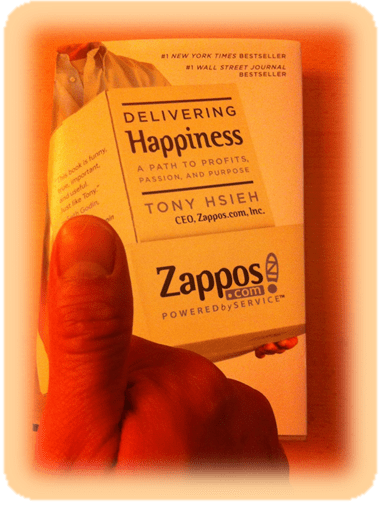
1) Delivering Happiness by Tony Hsieh

I read this book one year ago. I purchased the book expecting to hear about Tony Hsieh’s approach to delivering great customer service at Zappos. And while the book does include insights related to that, it’s scope is really much more.

Hsieh relates a compressed life story (his own) and how he sought to discover meaning and happiness. The book is filled with a series of entertaining personal anecdotes. Hsieh wraps things up by discussing the science of happiness and declares that the meaning of life is to discover it.

This is my favorite book of all time and has completely changed my outlook on life. For the better.

  1. Read my prior book review on Delivering Happiness.
  2. Check out the book at Amazon.

2) Brain Rules by John Medina

Earlier this year, Medina was the keynote presenter at a conference I attended. I couldn’t attend Medina’s session, but I knew from the related tweets that the audience found it interesting. Later, I’d bump into other attendees and Medina’s session was mentioned often.

I decided (then) to add “Brain Rules” to my reading list and it didn’t disappoint. Medina is a neuroscientist and the book helps us understand how the brain works. This understanding can help us design more effective meetings, classes, events and more.

  1. Read my prior post on how to use Brain Rules to make your next event more impactful.
  2. Check out the book at Amazon.

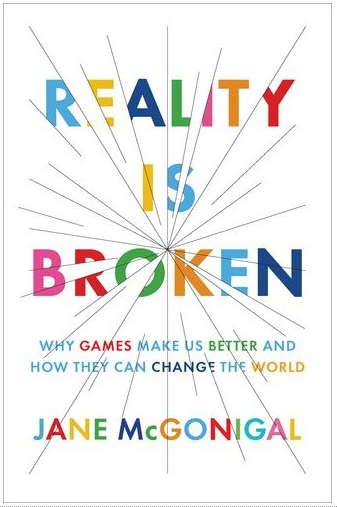
3) Reality Is Broken by Jane McGonigal

Coincidentally, Jane McGonigal also provided a keynote presentation at the same conference (as Medina). While I also missed McGonigal’s session, I had already read her book. McGonigal presents research from a number of scientists to explain “why games make us happy” and describes how games can be applied to solve problems at a global scale.

I liked this book so much, in fact, that I organized a digital book club in which we assembled via Google+ Hangouts to discuss portions of the book.

  1. Read my favorite quotes from the book.
  2. Check out the book at Amazon.

4) The Third Wave by Alison Thompson

Thompson’s book makes an impact right from the first page. She describes rollerblading down the street. They were the streets of New York City and she was headed south towards the World Trade Center. And it was September 11, 2001.

Thompson, who has training as a nurse, provided emergency response to victims (on the streets) and witnessed the collapse of the second tower. She volunteered day and night in the days immediately following 9/11 and returned there for weeks afterwards, lending a hand each and every day.

Thompson traveled to Sri Lanka to assist victims of a 2004 tsunami and provided relief efforts to earthquake victims in Haiti. “The Third Wave” is Thompson’s “volunteer story.”

It’s not just touching, it’s inspirational. Reading about Thompson’s selfless acts have inspired me to “do more” for the larger world around me.

  1. Check out the book at Amazon.

5) Start Something That Matters by Blake Mycoskie

This book is the story of TOMS, a shoe company who matches “every pair of TOMS (shoes) purchased with a new pair given to a child in need.” (they now sell more than just shoes). Like “Delivering Happiness,” the book does more than just tell the story of a company’s growth.

Mycoskie provides prescriptive advice on how you (the reader) can start something that matters, yourself. With chapter headings such as “find your story,” “face your fears” and “be resourceful without resources,” Mycoskie made me think about jobs in my future – and how they ought to have a meaning larger than just “maximizing profits.”

  1. Check out the book at Amazon.

Conclusion

I hope you found my recommendations useful. If you end up reading any of these books, return here to leave a comment. I’d love to hear your feelings and reactions to reading them.


How I Attended My 25th High School Reunion on Facebook

August 2, 2012

Introduction

Connecting with old friends. Thinking they looked the same as 25 years ago. A sumptuous meal, followed by fun on the dance floor. Memories to last a lifetime. It was my 25th high school reunion. But I wasn’t there.

I considered flying back to New York for the reunion, but a scheduling conflict came up. So instead, I experienced the reunion 2,900 miles away. On Facebook.

Like many other high school alumni groups, mine created a Facebook Group a number of years ago. It’s a great way to stay connected and keep up to date with classmates. And better yet, it’s a fantastic destination for news, updates, photos and comments about reunions. And as I discovered, it’s particularly useful to those unable to attend.

High School Years: A Special Time

While some look back on their high school years in horror, I consider it a very special time. In high school, we find ourselves in the early stages of transition into adulthood. We discover a bit about ourselves, including some definition of what we want to be when we grow up.

To me, it’s this transition that makes our high school years special – after all, who goes to middle school or elementary school reunions? And, high school, for most people, is associated with “home,” which means that a high school reunion (unlike, say, a college reunion) is a return to your roots – the community in which you grew up.

At the same time, high schools are comprised of well-defined social groups, who interact with each other only when necessary: jocks, geeks, band members, greasers (remember them?) and so on. Twenty five years later, our graduating class is simply one cohesive social group.

Jocks catch up with geeks and vice versa. In fact, the labels are completely gone – today, the jock from high school is a 40-something dad, husband or business person, just like every other classmate.

Facebook as the Online Platform for the Reunion

Why was Facebook such an effective platform to “host” the reunion? Well, just about everyone is on it. We were a graduating class of 296 and the Facebook Group has 160 members (54% of the entire class). That’s a significant percentage, when you consider the fact that some classmates have little desire to connect with us, while others may not be aware of the group’s existence.
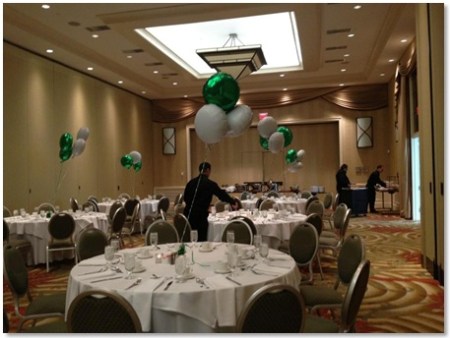
As the reunion prepares to rock and roll, this photo is shared with the Facebook Group.

With the Facebook Group, “remote” classmates were able to catch a glimpse of the reunion venue before our attending classmates arrived. Others could post messages and tributes, wishing classmates a good time. Here’s a good example:

Facebook: It’s Real-time and Mobile, Too

Twitter gets the accolades for being that dial tone of the real-time web. But I think Facebook is just as real-time (and mobile) as Twitter. The main difference is that Facebook sharing tends to be “With Friends” as opposed to 100% public (on Twitter).

For many of my friends, being online equates to being “on Facebook.” Whether they’re surfing the web or at work, they’re constantly checking their Newsfeed, as well as the Notifications area (for new comments, Likes, Group postings, etc.). I’ll often post an update on Facebook and as the page refreshes to reflect my post, see an immediate “Like” from a Friend. That’s real-time.

On the evening of the reunion, I had forgotten it was happening. I was in Napa, CA and getting ready for dinner. I checked my phone and noticed a number of new notifications on Facebook. Classmates were posting pictures from the reunion. Neat!

Even though I was 2,900 miles away and 3 hours behind, in some sense, I felt like I was there. Some classmates I recognized right away, while others required me to explore the not-so-deep recesses of my memory. Later, at dinner, I’d see new notifications and view new pictures that were posted.

Facebook as the Online Platform for Our Graduating Class

The Facebook Group allows the conversation to continue year-round. In that sense, the reunion was simply an event, along a continuum of interactions and gatherings among our class. And it’s the Facebook Group that ties it all together.

This week, in fact, a classmate uploaded 60 photos from the reunion. Facebook’s Notifications area alerted me to new activity in the Group. The new photos provided more reasons to continue the conversation, as numerous Likes and comments surfaced. And of course, comments beget further comments.

Facebook as a Proxy for the Reunion

Of course, nothing beats face-to-face interactions, especially with classmates you haven’t seen in 10-20+ years. But for those of us unable to make it in person, Facebook was our only available outlet. Not only could I witness elements of the reunion (in semi-real-time), but I’d see the “presence” of other classmates by way of their Likes and comments.

I’d see a “Like” from a classmate, then click on his profile to see what he’s been up to. I might see pictures of his kids, where he’s worked recently and where he currently lives. I found this similar to the manner in which you “catch up” at an actual reunion.

As reunion attendees met, hugged and exchanged email addresses and phone numbers, some of us “Facebook attendees” sent Friend requests to one another. There was certainly an online element to this 25th Reunion.

Conclusion

On Sunday evening, I returned home from Napa. This time, I turned to my tablet to check out the Facebook Group. There, I was able to view 30+ additional photos from the reunion and skim through all of the Likes and comments left by classmates. Because many of the reunion attendees were busy traveling back home, the most active members of the Facebook Group were those who were not even there (in person).

It was amazing how viewing photos, reading comments and checking out classmates’ Facebook profiles triggered deep and meaningful emotions. When I was done, I truly felt as if I just attended the reunion. And while I’ll try my best to attend the next one in person, the Facebook experience was the next best thing.

In closing, I’d like to share a classmate’s comment, who sums it up perfectly:

Note: I invite you to connect with me on .