10 Lists of 10: Insights on Social Media, Product Marketing and More

May 27, 2013

Top 10 Lists on social media, product marketing and more

Introduction

Because “lists of 10” is a popular format on this blog, I decided to round up a “list of 10 covering the lists of 10.” Without further ado, I present you with my ten favorite lists of ten.

1) 10 Reasons Print Rules in The Digital Age

Call me old fashioned: this post provides ten reasons why I enjoy magazine subscriptions to The Economist and SI.

2) 10 Steps to Creating Blog Posts Your Readers Will Love

My ten step process for writing blog posts. Since this post is a compilation of past posts, I didn’t use the process this time.

3) 10 Reasons Texting Has Taken Over the World

10 reasons texting has taken over the world

Texting is not limited to the younger generation – in fact, texting is taking over the world.

4) Unable to Attend an Event? 10 Ways Twitter Fills the Gap

You simply can’t make it to all events. And when you can’t, turn to Twitter to fill the gap.

5) 10 Reasons Storytelling is The New Product Marketing

Storytelling is the new product marketing

Calling all product marketers: tell good stories.

6) 10 Reasons to Skip the Web Site in Favor of Twitter (When Researching a Company)

When I research a company, I find it more useful to skim through their home page, then jump directly to their Twitter profile.

7) Top 10 Tips for Social Media Time Management

How to manage your time on social media

Intimidated by the amount of time social media consumes? Check out this list of tips on social media time management.

8) The 10 Things Marketers Should Do When Starting a New Job

When Marketers start a new job, they should engage with Sales right away, among other things.

9) 10 Reasons Social Media Addicts Should Go Camping

Camping lets you take a break from social media

Want to get off the grid and disconnect from social media? Go camping.

10) 10 Reasons Product Managers and Event Managers are Kindred Spirits

How product managers and event managers are alike

This list argues that documents how: product managers and event managers do a lot of the same things.


The 10 Things Marketers Should Do When Starting a New Job

May 25, 2013

Do these 10 things when starting a new marketing job

Photo credit: Courtney Dirks via photopin cc

Introduction

Recently, I started a new job at DotNetNuke, a leading web content management platform. As a product marketer, part of my role is to help tell the story of the great products we sell – and, in a broader way, the great company we are.

As a result, I wanted to meet everyone in the organization, from Sales to Legal, from Engineering to Finance and from HR to Customer Support.

Here are the ten things marketers should do when starting a new job.

1) Introduce yourself to everyone.

Meet everyone at your new company

Photo credit: Flickr user: screenpunk via photopin cc

Depending on the size of your organization, it may be challenging to meet “everyone.” I’m based at headquarters, with about 40 other team members. I was taken “on the rounds” to meet everyone. If you don’t have the benefit of being taken around, be sure to introduce yourself to everyone you come across.

2) Ask for an org chart.

I was provided an org chart on my first day, which helps on a number of levels. First, it gives me a list of everyone in the organization. Next, as I meet people, I’m able to look them up on the chart to confirm their role. And finally, it gives me an early sense of whom I’ll be working closely with (e.g. account managers, account execs, etc.).

3) Engage with Sales right away.

Sales and Marketing alignment begins with a “hello.” Introduce yourself to as many sales reps as you can. The first week is primarily an “existence proof,” so Sales knows your name and begins to recognize your face. It’s the beginning of a long-standing (and important) relationship.

4) Focus on completing the “logistics.”

Filling out the W-2, reading the employee handbook and enrolling in benefits are important and necessary steps. Spend the time early on to complete these steps. If you can get them done on Day 1 or 2, the rest of your first week (and beyond) is set up for success.

5) Schedule video conferences with remote teams.

Meet remote teams via video

Photo credit: Flickr user: oxmour via photopin cc

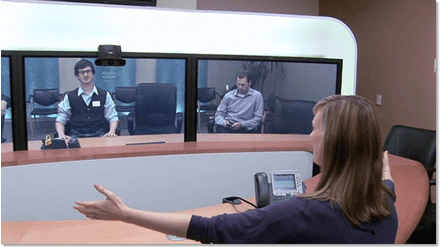
Since our Engineering and Support teams reside in a different location, I was scheduled on orientation briefings with the leaders of those teams. We used a Polycom video conferencing system, which allowed us to see each other. If you don’t have such a system in your organization, go with Skype or Google+ Hangouts.

6) Attend as many internal meetings as you can.

Ask for permission to attend as many internal meetings as your schedule permits. Because you’re new, you’re guaranteed to learn something in each meeting. I attended a daily scrum meeting and got to hear details around the current product release. It also gave me a feel for how the Engineering team works.

7) Tell Sales what you plan to do for them (informally).

I boiled it down to this: I want to enable Sales to sell more. Define your objective up front and communicate it. That helps shape everything else you do. Communicate the “what,” then work to define the “how.” Sales will be sure to help you with the “when.”

8) Ask for the fire hose to be turned on.

Ask your peers to send you as much information as they can: email threads, project plans, existing marketing content, etc. It’s better to have the fire hose be turned on than to be lacking in water. You’ll need to prioritize what you consume and review – but as a marketer, you’re skilled in working with (and prioritizing) massive amounts of content.

9) Attend sales calls as a silent observer.

It’s good to see product demos from peers, but it’s priceless to observe a sales call (and demo) with prospects and customers. You get to learn a lot about your products. And importantly, you get to see how Sales is positioning and selling the products. During your first week or two, you may not be ready to have a speaking role on these calls. So let Sales know up front that you’ll focus on listening.

10) Develop a short-term plan.

Your boss will probably provide you with a short-term plan. Take that plan and compress it down to an even shorter timeframe (e.g. your first 1-2 weeks). This helps you prioritize at a more tactical level, to ensure your first 1-2 weeks are as effective as possible.


Why Big Data is The Future for Virtual Event Platforms

May 18, 2013

The future for virtual event platforms

Image source: User gwire on flickr.

Introduction

Previously, I wrote about the future of face-to-face events. The future of events lies in technology that creates business intelligence from event data. Events create a massive amount of data (trees) and technology should enable event planners and sponsors to “see the forest from the trees.”

Virtual/hybrid event platforms can play an important role in this future. These platforms are a primary driver of “event data.” The future for virtual event platforms is to pair the data they generate with third party data sources to generate comprehensive event intelligence.

Let’s consider reasons why Big Data is the future for virtual event platforms.

Data is no longer in one place.

Data is no longer in one place

Image source: Horia Varlan on flickr.

In the early days, data generated by the virtual event platform was the one and only source of event data. Along came social media and attendees began to tweet, post and pin their way around (and often outside) the event experience.

Throw in hybrid events (which have a corresponding face-to-face event) and you have another universe of data being created “on site” (check ins, user-generated video, badge scans, etc.).  The reality is that event data, even for virtual events, is widely dispersed. To drive true event intelligence, “someone” needs to coalesce that data and make sense of it. For me, the virtual event platform should be that “someone.”

The ever-elusive “ROI” can be defined up front.

Virtual event planners still struggle to answer the question, “how are you measuring [and proving] ROI for your virtual event?” One reason is that the planner doesn’t quite know how to measure ROI. The other reason is that tools aren’t readily available to do so. By working with Big Data, virtual event platform providers (and the event planners) can define the ROI model when the deal is sold.

I imagine the platforms providing both standard and custom “ROI packages.” Standard packages could be “sentiment” (for internal, HR events) or “retention” (for training events). Using “pre” and “post” data, planners can now make statements such as, “our virtual town hall meeting drove a 45% increase in employee satisfaction.”

When you define, measure and prove ROI, it’s more likely that this year’s virtual/hybrid event will happen again next year (and the year after that).

The core technology already exists.

The foundation for the future is already in place: virtual/hybrid event platforms create online experiences, store data, process data and present/render data. The missing piece (and yes, it’s a big one) is the ability to integrate (import) third party data coming from social media, the broader web and face-to-face event systems.

The strategic value is in the data.

The value is in the data

Image source: User andertoons on flickr.

Content and user experience will always be critical to the success of an event. You need the right content and user experience to drive engagement, after all. After the event is over, the strategic value you take from it is found in the data.

Attendees will remember the content and user experience. Business owners will remember the data. Why do virtual event platforms need to work with (and make sense of) data outside their own platform? Because it paints the whole picture. And because true ROI cannot be delivered without it.

Conclusion

There’s a technology company called Splunk that “turns machine data into valuable insights no matter what business you’re in.” (source: Splunk web site). Splunk is a publicly traded company with a market cap well over $4B. There’s value in data. Virtual event platforms can be the “Splunk for event data.”


5 Tips for Turning Page Views into Conversions

May 16, 2013

buy-now-written-on-banana

Photo Source: User edkohler on flickr.

Note: The following is a guest post by Tim Harwood, Founder of TreatmentSaver.com.

Introduction

Whilst page views of your website are important, unless your revenue comes exclusively from advertising, page views alone are not going to make you any money. It is similar to the well-known phrase ‘Turnover is for vanity, profit is for sanity’.

And the same relationship applies between page views and conversion. Getting people to your site is only half the job; converting these ‘leads’ is what is actually going to make you any money.

This is certainly something that we struggled with when first launched our website Treatmentsaver.com. We spent all our resources on increasing our traffic with very little thought on converting any of them. Our call to action was effectively an afterthought which looking back now is quite embarrassing.

Our website is effectively an appointment booking platform and clinics pay us every time an appointment is booked though our site. After finally realising the importance of conversion we set about maximising the potential of our site. Below are five tips that we used to improve our conversion and hopefully they can do the same for you too:

1) Test what works.

Never ever assume that changes you are going to make are guaranteed to improve conversion. We found this out to our detriment as we changed what we thought were guaranteed conversion busters only to see our numbers drop! From that day on we vowed to test everything that we changed using A-B split testing amongst other techniques. It is also important to only test one thing at a time otherwise it is impossible to know the effect that each change had.

2) Get user feedback.

The simplest way to do this is to ask family and friends to give a critique of your website and in particular the conversion element. The problem with this is that you are unlikely to get a truly honest appraisal for fear of offending the website you so love! A much better idea is to pay for some user testing using websites such as usertesting.com.

The great thing about using these services is that you are getting real people using your site who do not know you are your product. You can set questions to ask the users and the one we found the most useful was ‘What are the reasons that would stop you booking an appointment’. Obviously this question will vary depending on what your conversion goal is. Use this feedback to make the appropriate changes to your site.

3) Get some social proof.

This can lead to a massive increase in conversion as you are effectively giving people the confidence to carry out the transaction. Social proof can take many different forms and you should test different ones.

Groupon uses this to great effect simply by clearly stating how many people have already made a purchase. The psychology of this is that if 100 people have already bought the product then it must be good so I will do the same!

4) Make your contact details visible.

Having your contact details clearly visible within your call to action gives potential buyers the confidence to go ahead. It’s your way of showing that you are confident in your product and not afraid to be contacted.

5) Address potential issues.

Within your design you should try to answer any potential barriers that people may have to booking. For our website following a round of user testing we realised that the main reasons that prevented people from booking was wondering if they had to add their credit card details and also being worried that they were committed to having the treatment.

We then brought these two elements into the booking process clearly stating that no credit card details were required and that there was no obligation to go ahead with the treatment. This lead to a significant increase in our conversion.

Conclusion

I hope these tips have been useful and it would be great if people would share their own findings for their website. The reality is however that improving conversion is an on-going process and there are no absolute hard and fast rules.

Just remember testing is everything and it is the only sure way to make improvements. The great thing about increasing conversion is that it will have an instant impact on your bottom line which is bound to put a smile on your face.

About the Author

Tim Harwood, Founder of TreatmentSaver.com

Tim is the founder of TreatmentSaver.com, a laser eye surgery and cosmetic surgery comparison website.


Why Mobile + Big Data = The Future of Events

May 11, 2013

Mobile + Big Data = Future of Events

Introduction

Lindsey Rosenthal (@eventsforgood) and Liz King (@lizkingevents) host a fabulous online radio show called Event Alley Show. On a recent episode, Lindsey and Liz interviewed Joe English about the future of events. Joe is Creative Director, Intel Developer Forums (at Intel). I was captivated by Joe’s take on the future of events:

The future is about contextual tools that bring information sources together about the audience.

When I ponder the future of events, I tend to jump directly to mobile apps, location awareness and other features tied to the smartphone. Upon further reflection, it occurred to me that mobility is a feature: part of a larger picture. And the larger picture is about the impact that events can make. In other words, what Joe said (above).

The mobile technologies of today will morph into new forms (of technology) tomorrow. So technology is the tool that facilitates context about the audience. And the better events can deliver “attendee intelligence” to sponsors, the more effective sponsorships will be.

Let’s take a closer look.

Step 1: Mobile-enable Event Attendees

The Double Dutch mobile event app

Image via Double Dutch.

Historically, events have been an inefficient medium, as far as data capture goes. Think about all of the “micro transactions” that occur within an event and how we’ve existed all these years without capturing them. Baby steps were made with post-event web surveys, RFID and badge scans, but the game changer has been mobile apps.

So step 1 in the future of events is already here. Event planners can choose from a wealth of mobile event apps. Michelle Bruno published an excellent overview of the mobile app vendors at Event Tech Brief.

Mobile event apps provide a personal assistant to help event attendees find the right content, meet the right people and generally get the most out of their experience. Meanwhile, all of the activity enabled by the app creates a stream of data that can turn into actionable intelligence when aggregated and interpreted.

Step 2: Aggregate Data Sources into a Common Repository

Image via Grzegorz Łobiński on flickr.

There’s an opportunity for a new player to emerge in Step 2. And that’s a vendor-neutral “Switzerland,” who builds interfaces for the industry’s vendors to exchange data (from the vendor’s applications into Switzerland). Here are just some of the many data sources that exist at an event:

  1. Mobile event apps.
  2. Registration.
  3. Online/hybrid events platforms.
  4. Badge scanners.
  5. Twitter.
  6. Survey systems.
  7. Photo sharing services.
  8. Third party location apps (e.g. Foursquare).
  9. Other social network apps.

The role of Switzerland is to combine proprietary data (from vendor applications) with publicly available data (e.g. public check-ins, tweets and other social streams) into a common data repository. From here, the next step kicks in.

Step 3: Apply Big Data to Deliver Attendee Intelligence.

We now apply Big Data technology against this enormous pool of event-specific data. Let’s return to the vision of Joe English: “contextual tools that bring information sources together about the audience.” Let’s consider a few applications of this.

An eHarmony for Events

Photo source: User VideoVillain on flickr.

Amazon makes awesome product recommendations for you because it’s gotten to know you (via your mouse clicks) and it compares your “profile” to what similarly profiled people have purchased. Via our new data repository, we’ve now collected a wealth of event data.

So now we can apply some science (similar to what eHarmony does to pair couples) to pair attendees to attendees and sponsors to attendees. As an attendee, wouldn’t it be neat for Big Data to tell you, “here are the three sponsors you should go visit today.”

Intelligence to Make Sponsors Smarter

Imagine mining the Big Data repository to provide aggregated intelligence profiles to sponsors. Activity data could be sliced and diced across numerous dimensions, including topic and frequency.

For instance, at a healthcare event, the analysis identifies the particular healthcare sub-topics that are receiving the most interest. Throw in a little sentiment analysis on top of this (e.g. from profiling public data and event-specific chatter) and you have some interesting possibilities.

With this sort of data crunching, attendee intelligence could tell sponsors:

  1. The specific sub-topics to focus on.
  2. The probability that particular profiles of attendees will engage with you.
  3. Whether attendee sentiment positive, negative or neutral about your company.

While this technology won’t deliver more visitors to your booth, the intelligence gained can allow you to adjust tactics “on the fly,” resulting in a more organic uptick in attendee engagement with you.

Intelligence for The Event Planner

By aggregating activity and engagement data (from attendees) and marrying that with sentiment analysis, event planners can infer attendee satisfaction. The thinking goes: the more engaged and active you were, the more you enjoyed the event.

Throw in the sentiment analysis and you can validate this. So you’d now have this option: instead of surveying attendees about your event, you can use Big Data to give you the answer implicitly.

Conclusion

So that’s my take on how technology can be applied to generate the contextual tools needed for attendee intelligence. I’d like to thank Lindsey, Liz and Joe for inspiring this post!



Separated at Birth: 10 Reasons Product Managers and Event Managers are Kindred Spirits

May 4, 2013

Product Managers and Event Managers are similar

Introduction

Creating a great event is like creating a great product. You need to have empathy for your user (attendee) and create delightful experiences that satisfy needs and make them come back for more.

Companies innately “get this.” It’s not surprising that some of the best product companies also produce great events. Two companies that come to mind are Apple and Salesforce. Let’s consider ten similarities between product managers and event managers.

1) Your job is defined by one thing.

Product managers are defined by their products. Event managers are defined by their events. I used plurals there, but more often than not, it’s singular: a product manager handles a product and an event manager handles an event. Most other jobs lack this singular focus.

2) Determining “market fit” is critical.

Before designing a product, a product manager needs to build the business case around market fit: will there be people willing to write a check for my product – and if so, how many are there and what’s the average selling price? Event managers need to follow a similar exercise, to determine whether people will attend the event and (in some cases) whether companies will pay for sponsorship.

3) Your work is determined and defined by a schedule.

Product managers and event managers work from a schedule

Image source: User sadiediane on flickr.

Yes, we all tend to work from a schedule. But product managers and event managers run against a schedule 12 months out of the year. For products, the schedule is built around the current release. For events, it’s built around the current event. After those “ship,” a new schedule is built for the next release or for next year’s event.

4) You apply feedback to make the next one better.

Effective product and event managers identify lessons learned and apply those lessons to make the next release or the next event even better.

5) Empathy for the user is a requirement.

Product managers need to put themselves in the shoes of their target customer. Event managers need to do the same with their target attendees. Without a sufficient amount of empathy, great products and great events will be merely good.

6) You need good marketing to succeed.

An example of good marketing

Image source: Boston Public Library on flickr.

A product never achieves greatness until it’s adopted by the market. An event can’t be great if no one attends. In both cases, marketing is needed to drive awareness and adoption. Without marketing, products may cease to have customers and events may cease to have attendees and sponsors.

7) You have a job that never ends.

I marvel at 24 hour news networks like CNN. Yes, I know that not all programming is truly “live,” but still, there’s programming around the clock. It’s similar for product managers and event managers: rarely is there downtime, because you’re always on to the next release or the next event.

8) The focus of your job is experiential.

So there’s my fancy term for this post, experiential. For events, this is obvious. And it’s true for products: craft a great user experience and you create great products (and events).

9) You’re required to lead multi-disciplinary teams across the finish line.

Great coaches lead great teams

Image source: User farmerdave8n on flickr.

Product managers and event managers need to lead. You’ll work with people across numerous functions and assorted personalities. In the end, you have a single goal: bring the team across the finish line to a great product release or event.

10) You need to make an impact to achieve customer loyalty.

Want customers to renew their SaaS subscription or purchase your next device? Want attendees to return to your event next year? It’s simple: satisfy their needs and make an impact.