Why Big Data is The Future for Virtual Event Platforms

May 18, 2013

The future for virtual event platforms

Image source: User gwire on flickr.

Introduction

Previously, I wrote about the future of face-to-face events. The future of events lies in technology that creates business intelligence from event data. Events create a massive amount of data (trees) and technology should enable event planners and sponsors to “see the forest from the trees.”

Virtual/hybrid event platforms can play an important role in this future. These platforms are a primary driver of “event data.” The future for virtual event platforms is to pair the data they generate with third party data sources to generate comprehensive event intelligence.

Let’s consider reasons why Big Data is the future for virtual event platforms.

Data is no longer in one place.

Data is no longer in one place

Image source: Horia Varlan on flickr.

In the early days, data generated by the virtual event platform was the one and only source of event data. Along came social media and attendees began to tweet, post and pin their way around (and often outside) the event experience.

Throw in hybrid events (which have a corresponding face-to-face event) and you have another universe of data being created “on site” (check ins, user-generated video, badge scans, etc.).  The reality is that event data, even for virtual events, is widely dispersed. To drive true event intelligence, “someone” needs to coalesce that data and make sense of it. For me, the virtual event platform should be that “someone.”

The ever-elusive “ROI” can be defined up front.

Virtual event planners still struggle to answer the question, “how are you measuring [and proving] ROI for your virtual event?” One reason is that the planner doesn’t quite know how to measure ROI. The other reason is that tools aren’t readily available to do so. By working with Big Data, virtual event platform providers (and the event planners) can define the ROI model when the deal is sold.

I imagine the platforms providing both standard and custom “ROI packages.” Standard packages could be “sentiment” (for internal, HR events) or “retention” (for training events). Using “pre” and “post” data, planners can now make statements such as, “our virtual town hall meeting drove a 45% increase in employee satisfaction.”

When you define, measure and prove ROI, it’s more likely that this year’s virtual/hybrid event will happen again next year (and the year after that).

The core technology already exists.

The foundation for the future is already in place: virtual/hybrid event platforms create online experiences, store data, process data and present/render data. The missing piece (and yes, it’s a big one) is the ability to integrate (import) third party data coming from social media, the broader web and face-to-face event systems.

The strategic value is in the data.

The value is in the data

Image source: User andertoons on flickr.

Content and user experience will always be critical to the success of an event. You need the right content and user experience to drive engagement, after all. After the event is over, the strategic value you take from it is found in the data.

Attendees will remember the content and user experience. Business owners will remember the data. Why do virtual event platforms need to work with (and make sense of) data outside their own platform? Because it paints the whole picture. And because true ROI cannot be delivered without it.

Conclusion

There’s a technology company called Splunk that “turns machine data into valuable insights no matter what business you’re in.” (source: Splunk web site). Splunk is a publicly traded company with a market cap well over $4B. There’s value in data. Virtual event platforms can be the “Splunk for event data.”


5 Tips for Turning Page Views into Conversions

May 16, 2013

buy-now-written-on-banana

Photo Source: User edkohler on flickr.

Note: The following is a guest post by Tim Harwood, Founder of TreatmentSaver.com.

Introduction

Whilst page views of your website are important, unless your revenue comes exclusively from advertising, page views alone are not going to make you any money. It is similar to the well-known phrase ‘Turnover is for vanity, profit is for sanity’.

And the same relationship applies between page views and conversion. Getting people to your site is only half the job; converting these ‘leads’ is what is actually going to make you any money.

This is certainly something that we struggled with when first launched our website Treatmentsaver.com. We spent all our resources on increasing our traffic with very little thought on converting any of them. Our call to action was effectively an afterthought which looking back now is quite embarrassing.

Our website is effectively an appointment booking platform and clinics pay us every time an appointment is booked though our site. After finally realising the importance of conversion we set about maximising the potential of our site. Below are five tips that we used to improve our conversion and hopefully they can do the same for you too:

1) Test what works.

Never ever assume that changes you are going to make are guaranteed to improve conversion. We found this out to our detriment as we changed what we thought were guaranteed conversion busters only to see our numbers drop! From that day on we vowed to test everything that we changed using A-B split testing amongst other techniques. It is also important to only test one thing at a time otherwise it is impossible to know the effect that each change had.

2) Get user feedback.

The simplest way to do this is to ask family and friends to give a critique of your website and in particular the conversion element. The problem with this is that you are unlikely to get a truly honest appraisal for fear of offending the website you so love! A much better idea is to pay for some user testing using websites such as usertesting.com.

The great thing about using these services is that you are getting real people using your site who do not know you are your product. You can set questions to ask the users and the one we found the most useful was ‘What are the reasons that would stop you booking an appointment’. Obviously this question will vary depending on what your conversion goal is. Use this feedback to make the appropriate changes to your site.

3) Get some social proof.

This can lead to a massive increase in conversion as you are effectively giving people the confidence to carry out the transaction. Social proof can take many different forms and you should test different ones.

Groupon uses this to great effect simply by clearly stating how many people have already made a purchase. The psychology of this is that if 100 people have already bought the product then it must be good so I will do the same!

4) Make your contact details visible.

Having your contact details clearly visible within your call to action gives potential buyers the confidence to go ahead. It’s your way of showing that you are confident in your product and not afraid to be contacted.

5) Address potential issues.

Within your design you should try to answer any potential barriers that people may have to booking. For our website following a round of user testing we realised that the main reasons that prevented people from booking was wondering if they had to add their credit card details and also being worried that they were committed to having the treatment.

We then brought these two elements into the booking process clearly stating that no credit card details were required and that there was no obligation to go ahead with the treatment. This lead to a significant increase in our conversion.

Conclusion

I hope these tips have been useful and it would be great if people would share their own findings for their website. The reality is however that improving conversion is an on-going process and there are no absolute hard and fast rules.

Just remember testing is everything and it is the only sure way to make improvements. The great thing about increasing conversion is that it will have an instant impact on your bottom line which is bound to put a smile on your face.

About the Author

Tim Harwood, Founder of TreatmentSaver.com

Tim is the founder of TreatmentSaver.com, a laser eye surgery and cosmetic surgery comparison website.


Why Mobile + Big Data = The Future of Events

May 11, 2013

Mobile + Big Data = Future of Events

Introduction

Lindsey Rosenthal (@eventsforgood) and Liz King (@lizkingevents) host a fabulous online radio show called Event Alley Show. On a recent episode, Lindsey and Liz interviewed Joe English about the future of events. Joe is Creative Director, Intel Developer Forums (at Intel). I was captivated by Joe’s take on the future of events:

The future is about contextual tools that bring information sources together about the audience.

When I ponder the future of events, I tend to jump directly to mobile apps, location awareness and other features tied to the smartphone. Upon further reflection, it occurred to me that mobility is a feature: part of a larger picture. And the larger picture is about the impact that events can make. In other words, what Joe said (above).

The mobile technologies of today will morph into new forms (of technology) tomorrow. So technology is the tool that facilitates context about the audience. And the better events can deliver “attendee intelligence” to sponsors, the more effective sponsorships will be.

Let’s take a closer look.

Step 1: Mobile-enable Event Attendees

The Double Dutch mobile event app

Image via Double Dutch.

Historically, events have been an inefficient medium, as far as data capture goes. Think about all of the “micro transactions” that occur within an event and how we’ve existed all these years without capturing them. Baby steps were made with post-event web surveys, RFID and badge scans, but the game changer has been mobile apps.

So step 1 in the future of events is already here. Event planners can choose from a wealth of mobile event apps. Michelle Bruno published an excellent overview of the mobile app vendors at Event Tech Brief.

Mobile event apps provide a personal assistant to help event attendees find the right content, meet the right people and generally get the most out of their experience. Meanwhile, all of the activity enabled by the app creates a stream of data that can turn into actionable intelligence when aggregated and interpreted.

Step 2: Aggregate Data Sources into a Common Repository

Image via Grzegorz Łobiński on flickr.

There’s an opportunity for a new player to emerge in Step 2. And that’s a vendor-neutral “Switzerland,” who builds interfaces for the industry’s vendors to exchange data (from the vendor’s applications into Switzerland). Here are just some of the many data sources that exist at an event:

  1. Mobile event apps.
  2. Registration.
  3. Online/hybrid events platforms.
  4. Badge scanners.
  5. Twitter.
  6. Survey systems.
  7. Photo sharing services.
  8. Third party location apps (e.g. Foursquare).
  9. Other social network apps.

The role of Switzerland is to combine proprietary data (from vendor applications) with publicly available data (e.g. public check-ins, tweets and other social streams) into a common data repository. From here, the next step kicks in.

Step 3: Apply Big Data to Deliver Attendee Intelligence.

We now apply Big Data technology against this enormous pool of event-specific data. Let’s return to the vision of Joe English: “contextual tools that bring information sources together about the audience.” Let’s consider a few applications of this.

An eHarmony for Events

Photo source: User VideoVillain on flickr.

Amazon makes awesome product recommendations for you because it’s gotten to know you (via your mouse clicks) and it compares your “profile” to what similarly profiled people have purchased. Via our new data repository, we’ve now collected a wealth of event data.

So now we can apply some science (similar to what eHarmony does to pair couples) to pair attendees to attendees and sponsors to attendees. As an attendee, wouldn’t it be neat for Big Data to tell you, “here are the three sponsors you should go visit today.”

Intelligence to Make Sponsors Smarter

Imagine mining the Big Data repository to provide aggregated intelligence profiles to sponsors. Activity data could be sliced and diced across numerous dimensions, including topic and frequency.

For instance, at a healthcare event, the analysis identifies the particular healthcare sub-topics that are receiving the most interest. Throw in a little sentiment analysis on top of this (e.g. from profiling public data and event-specific chatter) and you have some interesting possibilities.

With this sort of data crunching, attendee intelligence could tell sponsors:

  1. The specific sub-topics to focus on.
  2. The probability that particular profiles of attendees will engage with you.
  3. Whether attendee sentiment positive, negative or neutral about your company.

While this technology won’t deliver more visitors to your booth, the intelligence gained can allow you to adjust tactics “on the fly,” resulting in a more organic uptick in attendee engagement with you.

Intelligence for The Event Planner

By aggregating activity and engagement data (from attendees) and marrying that with sentiment analysis, event planners can infer attendee satisfaction. The thinking goes: the more engaged and active you were, the more you enjoyed the event.

Throw in the sentiment analysis and you can validate this. So you’d now have this option: instead of surveying attendees about your event, you can use Big Data to give you the answer implicitly.

Conclusion

So that’s my take on how technology can be applied to generate the contextual tools needed for attendee intelligence. I’d like to thank Lindsey, Liz and Joe for inspiring this post!


Separated at Birth: 10 Reasons Product Managers and Event Managers are Kindred Spirits

May 4, 2013

Product Managers and Event Managers are similar

Introduction

Creating a great event is like creating a great product. You need to have empathy for your user (attendee) and create delightful experiences that satisfy needs and make them come back for more.

Companies innately “get this.” It’s not surprising that some of the best product companies also produce great events. Two companies that come to mind are Apple and Salesforce. Let’s consider ten similarities between product managers and event managers.

1) Your job is defined by one thing.

Product managers are defined by their products. Event managers are defined by their events. I used plurals there, but more often than not, it’s singular: a product manager handles a product and an event manager handles an event. Most other jobs lack this singular focus.

2) Determining “market fit” is critical.

Before designing a product, a product manager needs to build the business case around market fit: will there be people willing to write a check for my product – and if so, how many are there and what’s the average selling price? Event managers need to follow a similar exercise, to determine whether people will attend the event and (in some cases) whether companies will pay for sponsorship.

3) Your work is determined and defined by a schedule.

Product managers and event managers work from a schedule

Image source: User sadiediane on flickr.

Yes, we all tend to work from a schedule. But product managers and event managers run against a schedule 12 months out of the year. For products, the schedule is built around the current release. For events, it’s built around the current event. After those “ship,” a new schedule is built for the next release or for next year’s event.

4) You apply feedback to make the next one better.

Effective product and event managers identify lessons learned and apply those lessons to make the next release or the next event even better.

5) Empathy for the user is a requirement.

Product managers need to put themselves in the shoes of their target customer. Event managers need to do the same with their target attendees. Without a sufficient amount of empathy, great products and great events will be merely good.

6) You need good marketing to succeed.

An example of good marketing

Image source: Boston Public Library on flickr.

A product never achieves greatness until it’s adopted by the market. An event can’t be great if no one attends. In both cases, marketing is needed to drive awareness and adoption. Without marketing, products may cease to have customers and events may cease to have attendees and sponsors.

7) You have a job that never ends.

I marvel at 24 hour news networks like CNN. Yes, I know that not all programming is truly “live,” but still, there’s programming around the clock. It’s similar for product managers and event managers: rarely is there downtime, because you’re always on to the next release or the next event.

8) The focus of your job is experiential.

So there’s my fancy term for this post, experiential. For events, this is obvious. And it’s true for products: craft a great user experience and you create great products (and events).

9) You’re required to lead multi-disciplinary teams across the finish line.

Great coaches lead great teams

Image source: User farmerdave8n on flickr.

Product managers and event managers need to lead. You’ll work with people across numerous functions and assorted personalities. In the end, you have a single goal: bring the team across the finish line to a great product release or event.

10) You need to make an impact to achieve customer loyalty.

Want customers to renew their SaaS subscription or purchase your next device? Want attendees to return to your event next year? It’s simple: satisfy their needs and make an impact.


5 Reasons to Run Social Ads for Product Marketing

April 27, 2013

Social ads help generate awareness

Photo source: User TimYang.net on flickr.

Introduction

As a product marketer, you need to generate awareness of your products. Of the many tools in your tool chest, social media has emerged as an effective swiss army knife.

While some have found success driving leads and opportunities via social, I’ve been using it to generate awareness. I’ve found paid social ads to be a necessary complement to my “organic” (non-paid) social marketing.

Let’s consider five reasons to run paid social ads for your product.

1) Our short attention spans are getting shorter.

Across television, the web and print; across devices mounted on walls and in our palms, we’re inundated with more media than ever. How can we pay attention to any one thing? It’s hard and social media adds more food to the media buffet. Paid social ads can provide you with a small boost of attention (with your target buyer).

2) Your posts on social media are bound to be missed.

Let’s face it: unless your product is sold to social media managers, your target audience is not on social media all day long. In addition, social media is breaking news, real-time information, here, now. I like to say that if happened yesterday on social media, it didn’t happen. Paid social ads help combat this.

3) Gets you past social gatekeepers.

Reach more people with Facebook Promoted Posts

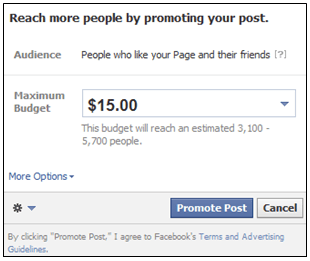
You spend years building up the Likes on your Facebook Page. Now, you pay for Promoted Posts to reach your own fans? Yes, that doesn’t seem quite right to me.

But I’m a pragmatist. “It is what it is” and you know what? It works. Spend $10-$15 and get more awareness to your own followers (Likes). You’ll also reach people outside of your network and have the potential to generate new Likes (of the post), shares and Likes (of your page).

4) Extends the life of your social posts.

So you wrote an awesome case study, then crafted a creative tweet to promote it. Chances are 95% of your followers didn’t see the tweet. And of those who missed it, another 95% will never, ever see it (the other 5% may see it because you included a hash tag that they follow).

With paid social ads, you can set a budget and your ads (posts) will be promoted until the budget runs dry. If social media posts suffer from radioactive decay, then social ads double your half-life.

5) New targeting options available.

You can now target Twitter ads by keywor

Twitter recently launched keyword targeting for Twitter Ads. Now, you can target your Twitter ads to users who engage with certain keywords in their timeline or in search.

Let’s say you tweeted about your daily special at your hot dog stand. You can now promote that tweet via these keywords: hot dog, ketchup, mustard, frankfurter, relish. The targeting can help not only with awareness, but also in driving conversions (leads).

Conclusion

The fun thing about social media is the fast pace of change. And while I’ve focused on Facebook and Twitter ads in this post, I’m sure new advertising options will emerge. In addition, there are existing options to explore, such as LinkedIn Ads. So experiment, measure and adjust. And have fun!


10 Reasons Storytelling is The New Product Marketing

April 20, 2013

Storytelling is the new product marketing

Introduction

Whether it’s a white paper, product sheet, case study or video testimonial, product marketers need to tell good stories. People enjoy stories. They don’t enjoy white papers.

I once interviewed a client for a case study and told them, “I want to tell a story and present you as the hero. So help me understand how you achieved something heroic.” They liked that analogy and set out to help me assemble the story.

Do you see what I just did? I used a story to make a point about storytelling. Did you like my story? Let’s consider ten reasons why storytelling is the new product marketing.

1) We grew up with them.

We’ve consumed stories our entire lives. It started with the bedtime story, continued into poems and fables and then into novels, books, film and TV. Stories get passed down from one generation to the next. If only your product collateral could do the same.

2) There’s a beginning, a middle and an end.

Yes, I know. All content has a beginning, a middle and an end. The difference with a story is that we come to expect a rather clear sequence. Once upon a time…

3) We all love a good plot line.

It keeps you glued to the television. It keeps you up all night with the reading light on. A good plot line keeps the reader engaged, because they need to know what happens next, as well as the final outcome. Your product marketing won’t be as suspenseful, but create a good plot and you’ll hold your reader.

4) We associate with protagonists and heroes.

We associate with heroes, like Rocky Balboa

Photo source: Wikipedia. Who doesn’t love Rocky?

And of course, in the story, the hero uses your product. Who says product placement doesn’t work?

5) Places your candy into an attractive wrapper.

B2B content can be quite dry. Speeds, feeds, dimensions, features, specifications and the like. Conveying this information via storytelling places that boring and sugar-less candy into a neat looking (and recognizable) wrapper.

6) It works in presentations as well.

Product marketers are called on to give presentations to customers, prospects, partners, media and analysts. Captivate your audience by telling good stories. I try to fit a story in during the beginning, middle and end – this makes the entire presentation a story in itself.

7) Stories create an emotional connection.

A good white paper engages with your mind. A good story engages with your heart. Which would you rather have? Find stories in customer use cases of your product. Can any use cases be presented in a way that makes an emotional connection with the reader?

8) It has the chance to entertain.

An entertainer is a form of content marketing

Photo source: flickr.

A white paper or product sheet rarely entertains. Tell a good story, however, and you may be able to entertain your reader. Once you do that, you had them at “entertain.”

9) It increases retention and recall.

Think about everything we’ve covered: plot line, emotional connection, suspense and entertainment. Achieve all that and I can nearly guarantee that your readers will have better recall of your content. As Maya Angelou once said, “People will forget what you said. People will forget what you did. But people will never forget how you made them feel.” As product marketers, it’s our mission to create memorable feelings (not just content).

10) It’s fun!

Hopefully, you produce stories that are fun for the reader. Better yet, you produce that are fun to make! I have a lot more fun producing product content when it’s formed around a story.


Online Marketing Wisdom, Sales Funnel Sagacity and Lead Generation Genius from The @Funnelholic

April 16, 2013

The Funnelholic urges you to mind the funnel

Introduction

Craig Rosenberg, The Funnelholic, has been publishing a series of “madlibs” with marketing thought leaders. Here’s a set of the madlibs published to date (there are more to come):

  1. Steve Gershik
  2. Ardath Albee
  3. Michael Brenner
  4. Gary Hart
  5. Dave Brock
  6. Carlos Hidalgo
  7. Jill Konrath
  8. Your’s truly, Dennis Shiao

I love reading these madlibs. The only problem? We don’t get to hear from Craig himself. So I decided to come up with a set of questions and asked Craig to answer them. Here’s the Q&A.

Lead Generation

Q: Aside from folks like Marketo and HubSpot, what B2B marketer is doing lead gen really well?

A: Tough question. Kissmetrics is a model for online marketing but I’ll give you a surprise one: Sales Benchmark Index. They are a services company and these types of companies typically struggle with demand generation — they have built a content marketing, lead generation machine.  They post every day, create an ebook/month and do a webinar. Their content is specific and comprehensive. They offer templates for download.  They are an impressive use-case for content marketing.

Q: For lead gen, what’s one social network no one is talking about?

A: YOUTUBE. It’s the second most popular search engine and no one in b2b has it figured out.  There are about to be some amazing stories of b2b success on youtube.

Q: If you could select just one metric, what should B2B demand gen folks be measured by?

A: Influence on pipeline. In b2b, 9-25 touches take place before a buyer buys. Why aren’t we tracking every touch and attributing that to marketing success?

Q: Peanut butter is to jelly like marketing automation is to?

A: Demand generation success. Strategy, process, people, and then marketing automation/software. You don’t sell without CRM anymore, you shouldn’t digitally market without a platform. (Craig note: I added “/software” to marketing automation in order to include Hubspot who does not like the term marketing automation).

Q: Retargeted display ads to drive anonymous web site visitors back to your lead capture pages. Yes, no, maybe so?

A: Yes. I recommend retargeting. I don’t just worry about lead capture, I feel like retargeting is highly effective from just a pure branding perspective. I personally don’t click on display but when I get retargeted, I notice and remember the company. It’s like “everywhere I turn, I see you.” I know we are all metrics focused, but there is something to be said about the overall branding aspect to retargeting. You may even consider it another from of nurturing to go with a company’s frequent emails.

Selling and The Sales Funnel

Photo source: Carla Gates on flickr. Follow here here on Twitter: @CarlaGates247

“Cold calling doesn’t have to be cold any more.”

Q: What’s the number one thing to keep in mind when cold calling?

A: That cold calling does not have to be “cold” any more. There is so much information on social networks and the internet about your prospect that you can turn what was formerly known as a cold call into a warm call.

Q: Sales development reps are often disconnected from prospects’ activities in social. How can marketers fix that?  

A: The problem with social and sales isn’t the ability to get information, it’s teaching them to know what to do with it. There are a number of tools: LinkedIN Sales Navigator, Hootsuite, InsideView, for enterprise. Radius Intelligence for SMB that can give a rep social visibility. It doesn’t matter what you provide them if they don’t know what to do with the information. You have to coach reps on how to weave that information into your communications.

Event marketers: create video, white papers and webinars from your event content.

Q: With regard to the sales funnel, what’s the biggest opportunity that event marketers are NOT doing?

A: Here is my view on event marketing: they need to take a step back and try to understand what the buyer journey is today and how live events can fit in. Then they need to look at the vendors and understand how they are selling, and try to tie that back to live events.

What is going to add the most value to the buyers and sellers at my event? That may be too general, but I have a long list of things that I’d like event marketers to do besides re-think the overall structure. Content still has to improve to meet the standard set on the overall internet, one-to-many content (they are SO focused on the live event but they should be creating video, whitepapers, webinars, etc. from the event content), more digital interactivity during the event and after.

Miscellaneous

Q: It’s been said that Google tested 40 shades of blue to determine the right color for links. Email marketers talk a lot about A/B testing. What about A/B/C…N testing. Your thoughts on testing numerous flavors?

A: Let’s discuss pros and cons.

Pro: My belief is that is the consumer internet guys are typically the best at on-site conversion, etc. so copy them. If Google A-N tested to find the best conversion, b2b marketers should learn from that. Today’s agile marketer views the world as “stand it up, then test, test, test.” B2B marketers tend to focus on really big problems which is fine, but to really online market,  you want to optimize every conversion point.

Con: You need to have a big enough sample to even A/B test. When do you have enough data to make a good decision?

Q: I just graduated from college and started a career in B2B marketing. Besides subscribing to the Funnelholic RSS feed, what’s the first thing I should focus on?

A: Well you completed step one. When young people ask me about getting into marketing, I tell them: get a job in marketing anywhere, anyhow.

The problem with b2b marketing is there isn’t enough education on the discipline. You will not learn it in school. So get a job, then soak it in. Then educate yourself: build your feedly with 15-20 b2b marketing sites — but my favorite starter sites are Neil Patel’s QuickSprout and Kissmetrics blogs. My brother wanted to get up-to-speed on internet marketing: he started reading Neil’s stuff and is now pretty much up-to-speed.

“Set aside 1 hour to learn every day.”

The marketing software vendors have GREAT blogs like Marketo, Hubspot, Act-On. Set aside 1 hour to learn every day. The other thing is to find mentors and ask them everything you can. Also, network, network, network — I tell young people, network with peers and ask them everything. I still do that every day. I learn a little here and there from my friends.

Finding The Funnelholic

The Funnelholic is here to help

Q: You’re now providing consulting services for organizations’ sales and marketing teams. Tell us about your services and where can folks contact you for more information?

A: I am a consultant again! And I am having the time of my life. I forgot what it is like to work with amazing people on the complex challenges they face in today’s rapidly changing sales and marketing environment.

The supply chain of business has repeatable, metrics driven processes that deliver/over-deliver products. We help organizations design, build, and/or optimize their Revenue Chain to predictably deliver/over-deliver revenue. We create actionable, specific playbooks in the following areas: content strategy, social strategy, demand generation, lead management, marketing technology, lead qualification, inside sales, sales technology, and sales process.

People can find me on www.funnelholic.com.


How to Be a Twitter Rock Star at Conferences and Events

April 13, 2013

Introduction

With its 140 character payload and ability to follow hash tags, it seems Twitter was designed for events. For me and many others, participating in Twitter conversations significantly enhances my event experience. I find more, learn more and meet many more people than I otherwise would have. Let’s consider tips that can transform you from a conference tweeter to a Twitter rock star.

How to Gain Visibility

ALWAYS include the conference hash tag.

Do this before you pick up your badge: determine the conference hash tag. It’s usually on the event page or printed on signage at the event. If not, simply ask staffers for it. Include the hash tag in ALL of your tweets. If you don’t, your tweets will not be seen. And if the conference doesn’t have a hash tag, create one yourself and encourage others to use it.

Temporarily place the hash tag in your Twitter profile.

If the hash tag is “#conference2013,” then consider adding something like this in your Twitter profile: “Attending #conference2013 this week. Tweet me if you’re there!” Now, when attendees see your tweets and check out your profile, they’ll be more inclined to follow and interact with you.

Share photos.

Take photos of the keynote session, exhibit floor, signage – basically, anything interesting. Users love them.

Engage with influencers.

Influencers include session speakers, along with knowledgeable and well-followed attendees. Follow them and engage with them. If they reply back to you or RT you, others will be sure to take notice.

How to Gain Followers

Liberally follow others.

I use the Twitterific iPhone app at conferences

Pictured: The Twitterific app for iPhone. I scan for users, view their profiles and follow liberally.

Fellow attendees have at least one thing in common with you (after all, you went to the same event). So wouldn’t they be good people to follow? Follow the folks who are actively tweeting. The follow helps promote your existence. They may miss your insightful conference tweets, but when you follow them, chances are they’ll check out you (and follow back).

Retweet and Interact with others.

Let’s face it, sometimes at a conference, you really just need to focus on the conference itself. You’re sitting in a captivating session and learning a ton of things. You can’t afford to compose a thoughtful tweet. What you can do, however, is quickly scan the tweet stream for others’ insights. Retweet (“RT”) those insights and share your thoughts by replying to some users. Now, quick! Get back to that awesome session.

Quote interesting nuggets from sessions.

https://twitter.com/ewsalus/status/321658514063900672

Just like you curate (and share) great content on Twitter, your “job” at a conference session is to curate interesting nuggets and quotes. Did the presenter just say something that made the audience go, “Oooh”? If so, quote the presenter via a tweet. You’re likely to get RT’s and follows.

Give shout-outs to exhibitors.

If you visit an exhibitor booth or have lunch with an exhibitor rep, give a shout-out to them (on Twitter). They’ll love it! And they’ll likely tweet you back, follow you, RT you and offer you some nifty conference swag.

General Tips

Always tweet IN CONTEXT.

I once took a photo as I walked into the keynote session. It was a humorous image, tied to the theme of the event and I really wanted to share it. However, once the keynote kicked off, everyone was tweeting about what the presenter was saying. If I tweeted the photo then, it would have been entirely out of context. So I waited. I tweeted the photo during the break, so it could get more visibility.

Facilitate face-to-face meet-ups with other Twitter users.

Another attendee and I tweeted quite frequently at a conference. When I rode the same elevator as her, I recognized her via her Twitter profile photo. I introduced myself and we chatted about the conference (for as long as an elevator ride would permit). “Upgrading” from a Twitter connection to a face-to-face meet-up is a great thing.

Take a break.

This won’t make you a Twitter rock star, but make sure you take adequate breaks from Twitter and enjoy the conference. For highly active Twitter users, there’s a delicate balance that must be managed. You don’t want to be so active on Twitter that you miss out on the great things the conference has to offer (kind of like visiting the Grand Canyon, tweeting too much and missing the view).

For Exhibitors: tweet in context with the sessions.

Let’s say there’s a breakout session on social media marketing and you’re an exhibitor that provides social media marketing software.

The session is scheduled for 2pm. At 2:15pm, issue a tweet such as, “Want a dashboard to manage social media marketing for your entire team? Visit us in booth #127 after the session.” Bonus points if the presenter is talking about dashboards precisely at 2:15pm.

For presenters: share your slides as you go on stage.

Jeremiah Owyang (@jowyang) was the first (that I’ve seen) to establish this practice. Some presenters provide their slides after their session. Jeremiah provides his slides before or during the session.

Some presenters will schedule a tweet to share their slides as they’re taking the stage (and then mention the fact during their opening segment). Attendees always request the slides, so proactively sharing them is a good practice.

Addendum: Jeremiah provides additional details:

Conclusion

So there you have it. Follow these tips to gain visibility, gain new followers and make new connections at your next conference. Be sure, though, that you’re getting the most out of the conference. Twitter is fantastic, but it can also consume your attention and time and create missed opportunities. Find the right balance and you’ll be rocking the conference in full Twitter style.


7 Similarities Between Online Marketing and Downhill Skiing

April 8, 2013

Downhill skiing has similarities to online marketing

Image source: Squaw.com.

Introduction

I recently spent a week skiing at Squaw Valley in Northern California. While riding the ski lift one day, it occurred to me that skiing has similarities with online marketing. Let’s consider seven similarities.

1) Start with the bunny slope, then work your way up.

As a beginner skier, you’d never do your first run on a double black diamond. Instead, you might go for a private lesson on the bunny slope and learn how to do “pizza formation” with your skis.

With online marketing, you could also go for private instruction. Or, read a lot of blogs, attend webinars and watch other online marketers in action. When you’re ready for your first “slope,” start small. Build upon your initial success and learn from your early mistakes. Pretty soon, you’ll be skiing blues, on the way to online marketing black diamonds.

2) Take advantage of downtime.

With skiing, a large percentage of your day does not involve skiing. You spend over an hour driving to the mountain and putting on ski gear. You wait for other members of your group. You stand on the lift line, then sit on a chair up the mountain.

What’s left is the time you actually ski. It’s similar with online marketing. The posting, publishing, tweeting, pinning and email blasting occur around periods of inactivity. While skiing, I use downtime to catch up with friends, take in the view and breathe in fresh air. With online marketing, use downtime to read content, curate content, build plans and review data. Your resulting marketing will be the better for it.

3) Check weather and trail conditions.

Squaw Valley conditions report

Before heading down the online marketing trail, check the relevant data: performance from past campaigns, open rates, click rates, unsubscribe rates and such. The last thing you want to do is find yourself on a double diamond (with moguls) when you’re not ready for it.

4) It’s all about the data.

Stats from the Squaw app

Pictured: the Squaw app. My statistics may be slightly skewed.

As online marketers, we have the benefit of more data than we’ve ever seen. And that’s true for skiiers, too. Online marketers have suites of analytics tools. Skiiers have smartphone apps to track descents, average speed, maximum speed and distance traveled. Both can use the data to inform their future plans.

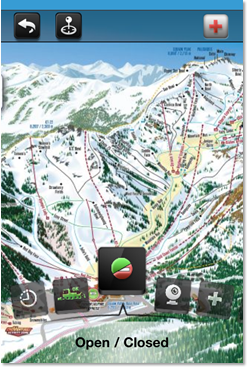
5) Use a trail map to plan your journey.

The trail map at Squaw, as seen on their smartphone app

Pictured: Squaw’s trail map, as seen in their smartphone app.

Skiers use trail maps to identify terrain that matches their ability. They’ll also figure out how to get from the top of the mountain down to the base lodge. As online marketers, we need to build our own trail map before doing any marketing.

6) It’s good to help others.

When I see someone ahead of me fall and lose their skis, I always stop and offer to hand the skis down to them. Why? Because it’s easy for me to do that, while it’s more difficult for a skier to climb up the mountain. When I receive an email blast that has a prominent typo, I’ll reply to the sender to let them know. If a company lists a broken link in their Twitter profile, I’ll give them a heads up via a direct message. Helping others is a good thing.

7) It’s OK to bask in your success.

After a full day of carving up the mountain (mixed in with a little waiting), nothing beats the thirty minutes soaking in the hot tub. It helps sooth over-worked muscles and is quite relaxing. With online marketing, it’s fine to take pause and bask in your hot tub of success: sales leads, unaided awareness, lift in page views from organic search, etc.

Conclusion

Online marketing can be quite enjoyable. But remember that navigating the terrain won’t always be an easy descent. Make sure you have a trail map, check the conditions and always ski to your ability. Learn (and apply) your mistakes and you’ll be sitting pretty in that hot tub at the end of the day (campaign).


10 Reasons to Skip the Web Site in Favor of Twitter (When Researching a Company)

March 25, 2013

The profile page for Twitter

Exception to the rule: when researching Twitter, you’re more than welcome to visit Twitter.com.

Introduction

Let’s say you’ve never heard of a company before, but want to learn more. You land on the company’s home page and need to answer some rudimentary questions:

  1. What does the company do?
  2. Where are they headquartered?
  3. What’s been going on lately?

You’d typically look for pages such as “Contact,” “About Us,” and “News” and perhaps you’d get some answers. Lately, I skip those pages and simply look for the Twitter icon (which 90+% of companies have). Visiting their Twitter profile tells me everything I need to know.

Let’s consider ten reasons to skip the web site in favor of a company’s Twitter profile.

1) Character limit increases clarity.

What does a company do? On an “About Us” page, they have an unlimited amount of space. The description on your Twitter profile has a limit of 160 characters. As with tweets, the economy of characters forces you to be simple and efficient. The description on a company’s Twitter profile is far better than the text on their “About Us” page.

2) A picture is worth a thousand words.

Photos posted to Twitter by @VirginAmerica

Photo source: the profile page of @VirginAmerica.

Twitter’s profile page displays six of the company’s most recently posted photos (in thumbnail size). These images helps paint a picture of the company and are more personal (i.e. “real”) compared to what they might post on their web site.

3) Find out where they’re based (right away).

I like to know where a company is based. On some web sites, you’ll get a “Contact Us” page, but no physical address. You might have to navigate to the Press Releases page and find out where the releases were issued from. It’s all too hard. The Twitter profile asks for “Location” and most companies list their headquarters’ location. Just what I need.

4) Find related Twitter accounts.

Other Twitter handles from Constant Contact

Photo source: the profile page of @ConstantContact.

Companies will use separate Twitter accounts for assorted functions (e.g. customer support). Sometimes, knowing about these additional accounts can be useful.

5) Now what do you REALLY do?

McAfee's Twitter profile

Companies that sell complex products can lose us when they begin to describe just what it is they do. The first instance of jargon brings with it the potential for confusion. The description (above) by McAfee doesn’t go into detail on products or solutions. But it’s an elegant and simple statement that we can all understand.

6) What have you been up to lately?

Read a company’s five most recent tweets. More often than not, you’ll have your answer. Here’s an example of a recent tweet from @Bunchball:

https://twitter.com/Bunchball/status/314843977029410817

7) What’s your “social persona”?

A company’s Twitter profile can tell a lot about their approach to social. Consider these questions you can ask:

  1. Do they follow back?
  2. Do they retweet others?
  3. Do they interact with other users via “@ mentions”?
  4. Do they post photos?
  5. Do they share others’ content, in addition to their own?

8) View creative images you won’t see on the web site.

I love seeing the creativity used by some companies in their Twitter profiles. When Twitter launched header images (to complement your photo), it unleashed a torrent of creativity. Check out the image combination from @Ford:

Ford's Twitter profile - love that steering wheel

9) What’s your personality and culture like?

A company’s tweets tell us about their employees and their culture. In addition, the Twitter account embodies an answer to the question, “hey company, what’s on your mind?” And that’s something social media provides that a web site cannot.

10) Are you following me?

OK, I had to add this one as a form of “Twitter vanity.” If you’re checking out a company and they’re already following you, make sure you follow them back (if you’re not already doing so)!