What the TV Commercials Tell Us About Twitter

June 14, 2012

Introduction

Twitter launched its first television commercials in conjunction with an event: The 2012 Pocono 400 NASCAR race. The commercials helped publicize the new hashtag pages from Twitter – they created a hashtag page for NASCAR that was promoted within the TV spots.

While I’m not a NASCAR fan, I had my TV tuned to TNT on Sunday afternoon, hoping to catch some of the commercials. Bad timing, combined with the shortness of the ads, prevented me from viewing them live. As a result, I went to YouTube to watch them there (the next day). Here’s one of the commercials:

So what do the commercials tell us about Twitter?

Core Value Proposition

Facebook and Google? They’re well understood by the average consumer. Twitter? Not so much. If you say “share what’s happening in 140 characters or less,” some people will “get it,” while others will get confused.

Judging by this first set of commercials, Twitter is defining its core value proposition around consumption, not sharing and publishing. In other words, you don’t have to tweet in order to find Twitter useful.

And it’s really a two-pronged value proposition:

  1. Consumption: for those who are inclined to “follow.”
  2. Sharing: for those who wish to stay connected with fans and followers.

On the consumption side, Twitter gives you behind the scenes access to your favorite celebrities, whether they’re athletes, actors, actresses, authors or politicians. Just look at the captions used in the six commercials – they’re all about receiving, rather than sharing:

  1. See what he sees.
  2. Follow them past the finish line.
  3. Where off the record is on the record.
  4. Get the POV from a VIP.
  5. What they see is what you get.
  6. See what else he writes.
  7. Put the pieces together.

Never before has the average consumer been able to connect (and even engage) so easily with celebrities. Now, you can journey inside a NASCAR racecar. And you can tweet to @justinbieber and get retweeted by him.

Striving for Mass Adoption, Part 1

Here was Google’s first foray into television commercials:

Notice the stark contrast? Google’s commercial was all about experiencing the product (Google searches), whereas Twitter’s commercials never showed the product (e.g. Twitter.com, Twitter desktop applications or Twitter mobile apps).

This relates directly to the core value proposition (above). The TV commercials show examples of how racing fans can become further engaged in following their sport. But it’s clearly a 50,000 foot view that doesn’t get into the mechanics of Twitter itself.

Twitter is clearly going after mass adoption – and that means our mothers, fathers, aunts, uncles, cousins and grandparents. I expect subsequent ad campaigns that continue the story to demonstrate how users go about using the product.

Striving for Mass Adoption, Part 2

While this particular campaign targeted a precise audience (fans of NASCAR), it’s interesting that Twitter chose television advertising over online advertising. Television still works, it seems, in its ability to efficiently reach a broad audience at a moment in time (and of course, online afterwards, via YouTube).

I expect Twitter’s TV commercials to address a broader audience going forward. A Super Bowl ad in 2013, perhaps?

Twitter and Events: Perfect Together

Ever since Twitter launched, event professionals (and attendees) found a natural use of the service at events: quoting speakers, sharing insights, generating awareness and following the event’s hash tag. On the NASCAR hash tag page, you’ll see the following:

Next race: Quicken Loans 400, Sun 12pm ET on TNT

Twitter and NASCAR are clearly looking to the hash tag page as the online focal point to NASCAR’s ongoing events. In addition to NASCAR, Twitter has organized some activities around the NBA Finals. In a post titled “Courtside Tweets” on their blog, Twitter shares related hash tags and lists 13 athletes who will provide color commentary (via Twitter) during the Finals.

My expectation: Hash tag pages become available for all types of events, especially in B2B for trade shows, conferences, product launches and more. Before long, every B2B event may get its on hash tag page. And beyond that, I expect to see Twitter roll out additional products and services suited to events. After all, Twitter and events are perfect together.

Conclusion

So what to the TV commercials tell us about Twitter? They tell me that Twitter is focusing on mainstream adoption. On the one hand, they want the mainstream to understand what the service is all about. On the other hand, they’re sending a message to stars and celebrities to use Twitter to connect with fans (rather than a Facebook page, for instance).

And at the same time, they’re making it known to brands (including event brands) that these hashtag pages (with perhaps more products to come) are a great way to connect with your customers, fans and attendees.

Note: I invite you to connect with me on .


How to Use “Brain Rules” to Make Your Next Event More Impactful

June 7, 2012

Pictured: John Medina at 2012 PCMA Convening Leaders. Photo courtesy of MEETINGSNET.

Introduction

At PCMA Convening Leaders 2012 in San Diego (in January), John Medina gave the opening keynote. Medina is the author of “Brain Rules: 12 Principles for Surviving and Thriving at Work, Home and School,” published by Pear Press in 2008.

I was unable to attend the Medina’s keynote, but judging by the chatter afterwards (both online and in the convention center), his talk was well received. I spoke to a few attendees who mentioned direct ties between “Brain Rules” and event planning. When I finally got around to reading the book, I had this “event angle” in mind.

Corporate Events

Attendees of corporate events are pre-disposed to interact with one another. You may know 20-60%+ of the attendees — and, even if you’ve never met someone before, you’re tied by the common bond of being part of the same company.

Monitor and Track your Corporate Learners

Rule #3 is called “Wiring” and can be summarized by the line “Every brain is wired differently.” Because everyone processes information (and learns) at different rates, Medina suggests smaller class sizes in schools. Why? So “the teacher can better keep track of where everybody is.”

Corporate training events should avoid the 3-hour PowerPoint presentations. Medina’s Rule #4 (“Attention”) says that “audiences check out after 10 minutes.” If you have a dry, 3-hour PowerPoint, chances are 2 hours and 50 minutes are wasted. Medina recommends that lectures be broken up into 10 minute segments.

To that I’d add that interactive technology be utilized to create a “presenter’s dashboard.” Throughout the session, short questions would be transmitted to all attendees via handheld devices. The question could be survey oriented (e.g. “Are you following the subject matter?”) or could “test” attendees to validate whether they’re following effectively.

All responses would be anonymous and presenters would be trained to effectively adapt and adjust their session based on the regularly-collected feedback. For instance, this method may identify segments that need to be slowed down, repeated or presented in more detail.

Repetition for Key Themes and Information

Rule #6 covers Long Term Memory and includes this nugget: “the way to make long-term memory more reliable is to incorporate new information gradually and repeat it in timed intervals.” To maximize learning at corporate events, then, consider the following:

  1. Schedule “recap sessions.” Featuring the original presenter, who provides a 5 minute summary of the key points from the original session. The remainder is a Q&A concerning the topic of the session.
  2. Reinforce during meals and drinks. In the common areas where food and drink are served, utilize large display monitors with rotating slide shows – the individual slides reiterate key points covered during the day’s sessions.
  3. Follow-on events. Schedule company-wide webcasts a few days (or a week) after the main event to reinforce key points covered.

In addition to repetition, Rule #4 (“Attention”) notes that “the brain needs a break.” This rule notes that a common flaw of instruction is “relating too much information, with not enough time devoted to connecting the dots.”

So here’s my own rule: each hour is divided into 50 minutes of instruction and 10 minutes of break. During these breaks, snacks are served and attendees are invited to connect the dots on whiteboards.

Gamify Your Corporate Event

Gamification of events has been widely discussed; however, a particular Brain Rule tells me how gamification can make a significant impact. In Rule #5 on Short-Term Memory, Medina notes, “The more elaborately we encode information at the moment of learning, the stronger the memory.”

How do we apply this rule? Create collaboration games in which you divide attendees up into teams. Teams are challenged to solve a problem. The act of solving the problem needs to involve elaborate steps (or considerations). And the end goal of learning is facilitated by the game itself (i.e. solving the challenge).

The result? Learning that results in stronger retention and recall (i.e. it made a larger impact) and a little team building thrown in for good measure.

All Types of Events

Exercise and Naps

You should incorporate exercise and naps into your event. Seems a bit crazy, right? Well, Rule #1 is “Exercise” and Medina notes that our evolutionary bodies are wired to walk 12 miles per day. In addition, he notes that exercise “stimulates the protein that keeps neurons connecting.”

The need to nap is covered in Rule #7 (“Sleep”) and notes that a NASA study “showed that a 26-minute nap improved a pilot’s performance by more than 34 percent.”  While Medina notes that this need to nap is independent of eating a large meal, I recall far too many events during which I nodded off in the session immediately following lunch.

My idea: reserve the hour immediately following lunch for the following options:

  1. A visit to the napping room (perhaps a sponsored napping room at a trade show or conference).
  2. Organized yoga sessions.
  3. Guided walks around the venue (e.g. a historical perspective on the city).
  4. Group discussion walks (i.e. a brisk walk with stops for the group to discuss topics related to the event).
  5. Free time – your chance to catch up on email, return voicemail, etc.

Connect with Attendees Emotionally

In Rule #4 (“Attention”), Medina writes that “emotionally arousing events tend to be better remembered than neutral events.” Reading this reminded me of the famous Maya Angelou quote, “I’ve learned that people will forget what you said, people will forget what you did, but people will never forget how you made them feel.”

But how do you connect with your attendees’ emotions? Here are a few thoughts:

  1. The music you select and play (and, when it’s played).
  2. The quality of the presenters you feature (how will they make your attendees feel?).
  3. Considering the five senses for all touch points (e.g. sight, sound, touch, taste and even smell/aroma).
  4. The element of surprise (in a good way).
  5. The quality of your after-event events.
  6. The friendliness and helpfulness of your event staff.
  7. Over-deliver on attendees’ expectations.
  8. Be unique and differentiated.
  9. Inspire them to go back to the office and act upon something they learned.
  10. Find and provide things that attendees can’t get anywhere else.

Conclusion

Reading “Brain Rules” convinced me that if we can better understand how the brain works, we can effect change (for the better). To invite John Medina to speak at their annual conference, the event planners at PCMA must have drawn the connection between “Brain Rules” and impactful events. Use the Comments area below to share your thoughts on how events can me more impactful. Thanks!

Note: I invite you to connect with me on .


10 Reasons Social Media Addicts Should Go Camping

May 31, 2012

Introduction

I’m a borderline social media addict: I spend a lot of time tweeting, posting to Facebook, checking my Twitter interactions, pinning to Pinterest, adding people to Google+ Circles and, from time to time, checking my Klout score.

So when Memorial Day Weekend arrived, I was excited to go on a camping trip with family and friends. Not only would it be fun, I reasoned, but I’d get to spend a few days completely “off the grid” – no email, no Twitter, no Facebook. A complete loss of voice and data coverage, in fact!

Along the way, I found many benefits on the camping trip. If you’re a borderline (or full) social media addict, you should consider a camping trip this summer. Here’s why.

1) Teaches you to manage scarce resources.

During our “everyday lives,” we take many things for granted. We often assume unlimited resources: the heat can stay on all night, we can microwave leftovers any time we’d like and if our fridge is empty, we can run out to the convenience store, any time of night.

On a campground, however, it’s clear that your resources are limited and scarce. You’ve only brought along so much firewood, ice and supplies. You have no electrical outlets. And the fire only burns so long – and you can’t bring it into the tent with you!

The result? You learn (quickly) how to efficiently manage the resources available to you.

2) Gets you off the grid.

With widespread 3G/4G coverage and WiFi available in most stores, restaurants and hotels, we’re never far from reach of phone calls, downloading email and sending status updates. We’re online all day long and when we turn out the lights to sleep, our blinking or glowing smartphones are often right next to us. It was actually a pleasant departure to be completely off the grid for nearly 48 hours.

3) Teaches you to find creative solutions.

In the picture above, the item on the right looks like a hearty chicken drumstick. Wrong! It’s dough. We discovered some online articles (before we left) on how to make biscuits on a campfire. We used biscuit dough, browned them thoroughly over the flame, then dipped them in melted butter, cinnamon and sugar.

While walking along a stream, we met another group who was fishing for crawfish. They found long, straight branches, affixed a strand of string, weighed the string down by tying on a rock, then attached bacon to the end of the string. They waited for crawfish to swim out from under rocks, then pulled them up when they went for the bacon.

4) Gives you face-to-face time for an extended period.

When spending time with family and friends, how often do we sneak a peek at our smartphones? There are times when I try not to, but invariably, I can’t resist the temptation to see how many unread emails I have waiting for me. Or, whether I have new interactions on Twitter.

And that’s the great thing with camping and being off the grid. You experience the outdoors with loved ones and there are no distractions pulling at you. You have everyone’s undivided attention and they have your’s. It was great.

5) Reminds you how to act responsibly within a community.

To be effective and respected in social media circles, you need to act responsibly and follow the “local” customs. A campground keeps you sharp on this front: no noise past 10pm, camp fires should be extinguished, etc. If you don’t act properly, you can affect the entire community (e.g. leaving a campfire unchecked).

6) Allows you to connect with nature.

It was great to be immersed in nature for an extended period of time. I walked through the woods and along streams. I skipped rocks through the water. The air was crisp and one morning, I awoke to the sounds of woodpeckers drilling a few holes into the trees above me.

7) Makes you appreciate what’s most important in life.

I got to spend significant quality time with family and friends. It made me realize that they are most important to me, far more than online friends, followers, tweets, retweets and Likes. If you feel like the pace of life has become overwhelming (to your family), a camping trip may be just the thing you need.

8) Makes you humble.

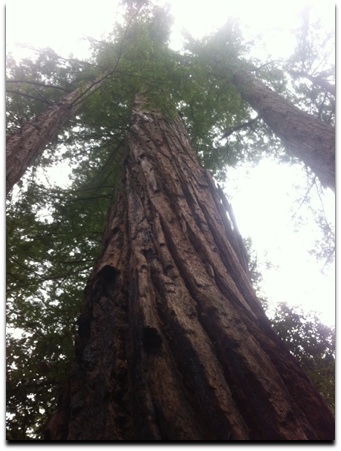
I got to sleep underneath tens (if not hundreds) of enormous redwood trees. When I’d stand at the bottom and look up, I could barely see the top of the tree. These trees, like other wonders of nature, make me feel humble. And feeling (and acting) humble is a good thing for interacting online in social media.

9) Makes you appreciate what you have.

With overnight temperatures in the 40’s, the sleeping environment was uncomfortably cold! I’d put on a ski jacket, then proceed to zip my sleeping back up to my neck. When I returned home, I had a renewed appreciation for my house: the heat, the stove, the shower, the TV. I swear that my first shower back home was one of the most enjoyable ever.

10) Makes you return with a new focus or perspective.

You may return with a new focus in life – or, your time away may lead you to develop a new focus or perspective on your social media activities. You could, like me, decide to blog about the experience. The respite from social media may be just what you needed.

Conclusion

In summary, consider going camping! Those of you who are regular campers may now consider me a wimp. But if you’ve never gone camping – or, you haven’t been in a while, take a break from our super-connected, 24-hour-news-cycle world and go pitch a tent in the woods!

Note: I invite you to connect with me on .


How Social Networks Facilitate Discovery and Engagement

May 24, 2012

Introduction

Successful social networks rely on a combination of user growth and “stickiness” – discovering users, discovering content, connecting with users, and engaging with users and content. As I study some of the most successful social networks, I find that they use a common set of techniques to create and maintain this stickiness. Let’s take them one by one.

Second Degree Activity

“Second degree activity” refers to actions that your friends take within a social network.

The Quora home feed (pictured above) is a great example. When I login to Quora, my home feed does not display topics I’m interested in. Rather, it takes the set of users that I’m following on Quora and lists the actions they’re taking (e.g. “following a question,” “voted up,” “commented,” etc.).

The concept: if I’m following someone, then I’m interested in what they think and do. If they’ve published a comment, then I may want to read it (“what they think”) and if they’ve voted up an answer, then I may want to check it out (“what they do”).

Other examples of second degree activity include:

  1. Twitter’s Activity tab, which can be found on Twitter.com by visiting Discover -> Activity. For folks you’re following, it lists actions that they’re taking: follows, favorites, addition to lists and more.
  2. LinkedIn’s Home feed, which lists new connections (made by your existing connections), status updates, profile updates and more.
  3. Facebook’s Newsfeed, which lists new friends (made your by your existing friends), Like’s (on friends of friends status updates) and more.

Featuring Popular Content

Pictured: The “Popular” tab in the mobile app Instagram.

Featuring popular content is an excellent stickiness tactic, as it provides proof to users that there’s great content to discover and consume. Popularity is democratic, in that it’s measured by the “votes” of the social network’s users (e.g. views, likes, comments, etc.).

That being said, “popularity begets more popularity,” which means that once content is marked popular, it tends to get more popular, at the (perhaps) disservice of similarly worthy content. You see this same phenomenon with “Most Popular” and “Most Emailed” lists on many online news sites.

Examples of featuring popular content include:

  1. Instagram’s “Popular” tab.
  2. Pinterest has a “Popular” tab that lists popular pins.
  3. Google+ has an “Explore” tab that reads “Explore What’s Hot on Google”.
  4. Facebook posts receiving a high degree of engagement get “pinned” to the top of your Newsfeed.

Recommendations

Pictured: “Who to follow” on Twitter.

Amazon was an innovator in algorithmic recommendations, with its “Customers Who Bought This Item Also Bought…” LinkedIn, for some time, has had a similar feature, “People You May Know,” which is listed prominently in the upper right corner of the LinkedIn home page.

In addition to recommending other users, social networks have begun to recommend content. The thought behind this, of course, is the more interesting content you find, the longer you’ll stay.

Examples of User Recommendations

  1. Twitter’s “Who to follow” tab.
  2. Twitter’s “Browse categories” tab, which provides curated lists of Twitter users within particular categories. Here’s the category list for Technology: https://twitter.com/#!/who_to_follow/interests/technology
  3. LinkedIn’s “People You May Know.”
  4. Google+ lists people “You Might Like” on its “Explore” page.

Examples of Content Recommendations

  1. Twitter’s Discover tab, which lists a series of “Stories.”
  2. Twitter’s Trending Topics – an innovative feature that is particularly unique to Twitter.
  3. LinkedIn TODAY, “The day’s top news, tailored for you.” – visible in the top area of your LinkedIn home page.
  4. Facebook’s “Recommended Pages.”

Email Notifications

It seems we’ve been writing off email for years. The rise of social media has brought into question whether email is still relevant. Well, it is. Despite claims to the contrary, we continue to be dependent upon our inbox.

In fact, I consider email to be “the glue” that connects (and returns you) to your assorted social networks. Email helps inform you of activities that occurred on a social network – and, it provides reminders for you to return.

Examples of email notifications:

  1. New followers or connections.
  2. A mention (of you) by other user(s).
  3. Getting tagged in an uploaded photo.
  4. A new comment or “like” to a post that you’ve liked.
  5. Follow-up comments to a comment you left – this is particularly useful on blogs, as well as discussions within LinkedIn Groups.
  6. Direct or private communications from a particular user.

Full-Mesh Communities

Pictured: The home feed on Nextdoor.

Nextdoor is a neighborhood-based social network that was recently profiled in The New York Times. There’s a Nextdoor community in my neighborhood (The Highlands in San Mateo), for which I’m a member. Nextdoor uses a “full-mesh model,” (my term) in which everyone “follows” everyone else by default. The newsfeed on your home page, in fact, displays posts from everyone.

There’s an absence of a follow/follower model altogether. If the size of a community is manageable (i.e. the number of members is at or below the Dunbar Number), then this full mesh model is ideal:

  1. It “removes friction” for establishing connections. I don’t have to worry about whom to follow, since the system’s done that for me.
  2. It “removes the risk” of my missing an important post because I’m not following the poster.
  3. It allows for “everyone to know everything,” and I think that’s completely fine in an online community based on your neighborhood.

I think the full mesh model is well suited to the online communities of small to medium sized businesses (i.e. for tools like Chatter, Yammer and Jive).

In a small business, I’d argue that similar to Nextdoor, everyone should know everything – and of course, private groups are always an option for things like compensation and employee reviews.

Conclusion

A quick recap of what we’ve discussed:

  1. The more (and better) social networks can recommend users and content, the stronger they’ll be.
  2. Second degree activity is an effective way to promote both users and content.
  3. Popularity and recommendations are additional avenues for discovering users and content.
  4. Email is the glue that ties your social networks together and keeps you coming back.
  5. Full mesh networks can be effective for particular use cases.

Subscribe

Did you enjoy this blog posting? If so, you can subscribe to the feed here: https://allvirtual.me/feed/

Note: I invite you to connect with me on .


Harness the Power of Your Personal Brand

May 17, 2012

Introduction

In 2006, TIME magazine declared “You” their Person of the Year. TIME’s selection was based on the rise of YouTube and other social web sites that allowed individuals to become publishers. TIME’s cover concluded, “You control the Information Age. Welcome to your world.”

Some six years later, we have even more tools to publish, interact and discover. Facebook is approaching 1 billion global users, while the past 12 months has seen the rise of Instagram and Pinterest, to name a few.

In the midst of your status updates, posts, blog comments and photo uploads, I think there’s a larger meaning (and value) that you can achieve: migrating from simply “You” to “Your Personal Brand.” Let me explain.

Brand Around Your Passions

When I speak about personal branding, people often ask, “just where do I start?” I encourage people to identify their passions. For me, it’s sports, social media and virtual events! For others, it might be food, wine or art. Your personal brand has the highest potential when it’s based around your passions.

Personal Brand Benefits: PASSION

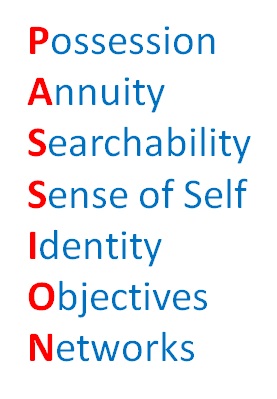
Now, let’s consider the benefits of your personal brand. I use the acronym PASSION. Let’s take them one by one.

Possession

Whether you’ve been at your current job for 20 years or 20 months, as an “at will employee,” you can be asked to leave tomorrow. Your personal brand, however, has guaranteed possession. No one can take it away from you – it’s your’s for the rest of your life.

Annuity

An annuity is defined as “a specified income payable at stated intervals for a fixed or a contingent period, often for the recipient’s life.” As you manage and grow your personal brand, it routinely “pays you income” in the form of recognition, authority, presence and “real” income (if you so desire).

It’s important to realize, however, that while your personal brand’s annuity pays out over time, it’s an investment that must be actively managed to guarantee continued payout. It’s a bit more involved than a conventional annuity: it’s more like a mortgage, in the sense that you need to “pay back” (contribute) each month (or each day!).

I love the part about “for the recipient’s life” in the definition, because it ties back to Possession: the annuity, like your personal brand, is your’s for life.

Searchability

Most businesses think and talk a great deal about “Search Engine Optimization” (SEO). It’s critical for your web site(s) to “get found” when potential customers are searching online. As you construct and develop your personal brand, a natural benefit is “searchability,” or the ability to “get found.”

In a 2008 blog post titled “Downsized? Fired? Here are the new rules of finding a job,” David Meerman Scott (@dmscott) tells us about Heather Hamilton, who describes herself as “Microsoft Employee Evangelist, Quasi-Marketer and Truth-Teller.” Hamilton performs an inverse of the typical job search process. Instead of posting a job description and receiving resumes, she proactively searches the web. As Meerman Scott writes, “So if you’re not publishing, you won’t be found by Microsoft.”

[As a side note, the above blog post by Meerman Scott is singularly responsible for the start of my own personal brand.]

As you join new social networks, it’s critical that you fully populate your profile there. This is a critical first step in establishing your personal brand. On LinkedIn, for instance, ensure that your profile is 100% complete. Don’t settle for 95%, make sure it’s a full 100%.

As you gain a presence across different parts of the web, be sure to “cross link” your presences within your social profiles. For instance, on my Twitter profile page, I link to this blog and to my book on Amazon. You’ll also notice that on this blog, I cross-link to many other “personally branded presences” on the right side of the page.

Now, let’s return to Heather Hamilton. If you’ve published content related to Hamilton’s search terms, then the following may appear in Hamilton’s search results:

  1. Your blog.
  2. Your LinkedIn profile.
  3. Your Twitter profile or a recent tweet.
  4. Your answer on Quora or Focus.com
  5. An eBook that you published on your blog.
  6. An article in which you were quoted.

So in conclusion, the more you invest in your personal brand, the more visible you can be. And with more visibility comes more chances of others finding you.

Sense of Self

By “sense of self,” what I mean is that you learn about yourself as you build your personal brand! I’ve been blogging since 2008. It’s helped highlight (for me) my passions, my strengths and my weaknesses. In a post about her own blogging journey, Amber Naslund (@AmberCadabra) writes, “One of my favorite quotes is from the writer Joan Didion, who once said ‘I write to discover what I think.’”

As I became active on Twitter and LinkedIn, I discovered something about myself that otherwise wouldn’t have been obvious: I love to find, meet and connect with others. Twitter has been amazing in its ability to find and follow others, share thoughts and ideas and get to thoroughly know (in my mind) someone I’ve never met in person. This discovery has led me to consider ways in which I can continue this “connecting” in offline settings, as well.

Identity

While your personal brand should align with your passions, going niche (vs. broad) gives you a lot of advantages. Building a personal brand around “technology” is challenging. Go a step deeper, based on what interests you. Consider “social web technology” or better yet, “social and mobile web technology.”

My personal brand focuses on virtual events and social media. The social media part is challenging, in the sense that many, many others are more knowledgeable than me. The virtual events realm is smaller and more focused, so there’s more of an opportunity to build an identity around it.

By “identity,” I mean that your personal brand comes to be known for something. My personal brand is closely tied to virtual events – I suppose the name of this blog says it all.

Objectives

Having a personal brand helps you set objectives around it. For some, it can be as basic as “continue to grow the brand.” For others, it might revolve around Twitter followers, a Klout score or page views on your blog. Yet others may seek to parlay their personal brand into a new job in a new industry. Your personal brand will evolve over time and objectives are there to help guide you.

Networks

Based on your employment history (or your small business), many of you have amassed a “network” of connections on LinkedIn. A personal brand allows you to significantly extend that network. Via social networks, your blog, comments on other blogs, guest posts on other blogs and articles submitted to publications, you can meet and engage with new people.

It can all start with a single Twitter hash tag. On Twitter, there’s a vibrant community of event professionals who gather around the hash tag #eventprofs. By simply reading, responding and re-tweeting (via this hash tag) over the years, I’ve gotten to know lots of event professionals that I otherwise would not have “met.”

Many #eventprofs are sole practitioners or run a small event business. So personal branding is critical to them, as their personal brand and their business’ brand are one and the same. In addition to the “#eventprofs network, I’m part of many others, including the networks on Quora, Focus.com, Instagram and Pinterest.

Actively engaging in networks helps raise the visibility of your personal brand and brings with it annuity, searchability and many other benefits.

Conclusion

Got a passion? Then put some PASSION around your passion. Developing your personal brand can lead to business opportunities, speaking gigs, fame and fortune. Why not get started today?

Related Links

  1. Blog Post: 7 Tips for Building Your Personal Brand Online 
  2. Slides: How to Build Your Personal Brand and Advance Your Career with Social Media

Note: I invite you to connect with me on .


It’s All Popular: Top 2012 Posts at It’s All Virtual

May 10, 2012

Introduction

This blog used to be about virtual events – all day, every day (or almost every day). It’s branched out, of course, to cover a number of additional topics, including social media. This shift is reflected in the list of most popular posts for 2012. Without further ado, here’s the list, in ascending order of popularity.

5) 5 Tips for Organizing Your Google+ Circles

If you’re just getting started with Google+ now, take the time to set up and organize your Circles up front. I added people to the same one or two Circles and had to invest the time to go through them and assign them to more specific Circles.

It was worth it, however, as an organized set of Circles made my use of Google+ all the more productive and beneficial. Read the full post:

https://allvirtual.me/2012/02/06/5-tips-for-organizing-your-google-circles/

4) 5 Reasons I’m Breaking Up With You, TweetDeck

I once made heavy use of a Twitter client called TweetDeck. Now, I find myself relying exclusively on Twitter.com, from my browser. This post details why I decided to break out with TweetDeck. Read the full post:

https://allvirtual.me/2012/02/27/5-reasons-im-breaking-up-with-you-tweetdeck/

3) 5 Tips for Hosting Google+ Hangouts


Google+ Hangouts are pretty darn neat. The first time I hosted a Hangout, however, I ran into a number of snags. The goal of this post was to share my mistakes and subsequent lessons learned. Read the full post:

https://allvirtual.me/2012/01/30/5-tips-for-hosting-google-hangouts/

2) 5 Things Virtual Event Platforms Can Learn from Pinterest

“It’s All Visual.” That’s a core attribute that makes Pinterest so popular. I couldn’t determine which was more popular: Pinterest (itself) or articles and blog postings on the topic of Pinterest. So I decided to try out the service – and then tie Pinterest together with virtual events. Read the full post:

https://allvirtual.me/2012/02/13/5-things-virtual-event-platforms-can-learn-from-pinterest/

1) Why My Third Grader Loves Second Life


While visiting the Tech Museum in San Jose, I was surprised to find a set of workstations installed with Second Life – or perhaps I shouldn’t have been surprised, given that it’s a technology museum. My third grader loved interacting with this custom version of Second Life, so I decided to analyze just why that was. Read the full post here:

https://allvirtual.me/2012/02/08/why-my-third-grader-loves-second-life/


Want More Klout? Here’s How To Get It.

May 5, 2012

Introduction

In a widely read (and shared) piece in Wired titled “What Your Klout Score Really Means,” Seth Stevenson describes Klout as “a service that purports to measure users’ online influence on a scale from 1 to 100.”

The most talked-about aspect of Stevenson’s article is the story of how Sam Fiorella was turned down for a VP position (at a marketing agency) because his Klout score was too low. Fiorella’s score, at the time, was 34 and the job was given to someone with a score of 67.

My Views on Klout.

Opinions on Klout seem to be at two extremes: either you love it or you hate it. I find myself in the middle: I find that “metrics” (like a Klout score) are useful for comparing things against a standard of measure, but I wonder whether aspects of Klout’s measurement “algorithm” are completely valid (add to that the fact that the algorithm itself is clouded in some secrecy).

Previously, I shared my thoughts on the changes Klout made to its scoring model.

Get More Klout, If You Want To.

OK, so here’s the piece in the article that no one is talking about. Stevenson spoke to Klout product director Chris Makarsky and asked him how he could boost his Klout score. If you care about your Klout score, check out these tips:

  1. Improve the cadence of your tweets – that is, tweet a lot more.
  2. Concentrate on one topic, instead of spreading yourself thin.
  3. Establish “relationships with high-Klout people,” as a way to extend your influence.
  4. Keep things upbeat. “We find that positive sentiment drives more action than negative,” said Makarsky.

So there you have it. I’d be interested in your take on Klout. Does Klout score matter to you?

Related Links

  1. The author, Seth Stevenson on Twitter (@stevensonseth).
  2. Sam Fiorella on Twitter (@samfiorella).
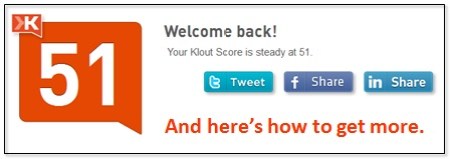
  3. My profile on Klout. I was at 59 before their scoring change and currently stand at 51.

Other Tips to Get More Klout

  1. Mashable: 7 Surefire Ways to Increase Your Klout Score.
  2. Ask Aaaron Lee: 6 Unofficial Ways to Increase Your Klout Score 
  3. Inc.com: The Right Way to Increase Your Klout Score

Note: I invite you to connect with me on .


So Just What Is Product Marketing?

May 3, 2012

Introduction

Riding up a ski lift with a buddy of mine, we got to talking about our jobs. He asked the question, “so just what is product marketing?” I unleashed a number of overused terms, such as “positioning,” “messaging,” and “go to market strategy,” at which point my buddy’s eyes glazed over. Returning home from the ski trip, I was determined to develop a better definition.

Here goes:

Product Marketing is the art and science of generating attention, interest and adoption of your organization’s products and services.

Let me explain further by breaking it down.

Attract attention

It’s the job of many groups within an organization to generate and attract attention: the “C Suite,” corporate marketing, product marketing, sales and others. Attracting attention is all about getting your foot in the door (and then hoping that door stays propped open for you). Typical ways a product marketer can attract attention:

Launch Campaigns.

In the bygone days, a launch campaign involved a large venue, invited press, analysts and customers, loud, rollicking music and copious amounts of food and beverage. These days, a launch campaign may comprise a series of blog posts (and guest blog posts) reinforced via your social media channels. However they’re structured, one of the goals of a launch campaign is to generate attention by introducing new products (or product features) to the market.

Content Marketing.

Write informative (and eloquent) posts and articles about your industry and you’re bound to attract attention. Post your words of wisdom on your blog – and when possible, sprinkle in customer case studies, as well as insights from customers about how they’re using your products.  You’ll not only attract the attention of prospects, but search engines as well (and they play critical roles in attention gathering).

Simple Products or Simple Pricing.

A great product is one that sells itself. If you can make your product simple to understand (and also easy to use), then you may not need to take explicit steps to attract attention. If I can start using your product this minute – and then pay you $10 per week to continue using it, that’s a great thing. And as long as I continue to like the product, I’m apt to tell others about it. The product that sells itself becomes even more powerful when others sell it for you.

Sustain Attention

Now that you’ve got your foot firmly planted in the door, it’s time to wedge the door further open. Here are a few tools used by product marketers.

Email Newsletters.

A subscription to your email newsletter amounts to an electronic contract: “send me occasional content (via email) and if you provide value and don’t send too often, I’ll remain subscribed.” If you’re successful honoring this contract, then email newsletters can be the start of a great relationship. Every month (or every few weeks), you can “re-sustain” your attention.

Regular Webinars.

Product marketers should think of an ongoing webinar campaign as the “pulse” of their “sustaining attention drive.” Expose your best product managers, customer service staff, engineers, customers and partners to the world. Have them pitch in to your sustainability (of attention) efforts. I’m sure your target audience wants to hear more of them (and less of “marketing”).

Road Shows.

If budget (and your ROI analysis) permits, hitting the road for a multi-city road show gives you the opportunity to meet with customers and prospects face-to-face. They give you the chance to generate new business from existing clients and help move prospects further along the sales cycle. You may also combine road shows with launch campaigns.

Drive Attention Towards the Close

Sales has engaged with prospects during certain phases of the “attention period,” and may need to further engage product marketing to move prospects further down the sales funnel. Here, product marketers may need to focus on:

Competitor Matrices.

At this stage of the buying cycle, prospects often want to see the vendor’s view of the market. Often done in matrix form, they’ll want to see comparisons around feature set and pricing. Product Marketing ought to maintain up-to-date versions of these matrices and be prepared to develop custom versions for particular business opportunities.

Detailed Product and Feature Sheets.

A prospect may need to drill down and understand how particular product features work. It’s the Product Marketer’s job to maintain this library of collateral – and, to provide information (or help track it down) as needed. For instance, if there’s a Sales need to provide documentation around an upcoming release feature, Product Marketing is called on to deliver on that.

Pricing Sheets and Rate Cards.

If Product Marketing owns pricing, then they’ll be called upon to maintain pricing sheets and rate cards – and help in the pricing of complex programs as necessary. Product Marketing may also be called upon to approve pricing discounts on particular deals.

Customer Retention.

I omitted “customer retention” in my definition (above) because every single employee is responsible for it.  That being said, here’s where Product Marketing plays a role in customer retention:

Good Product Marketing Breeds Retention.

This may be presumptuous to say, but good product marketing can make for more satisfied customers. If your marketing collateral is top notch, your customer case studies insightful and your content marketing frequent and informative, then customers will be more likely to keep giving you their business (assuming other conditions are also met).

Customer Advisory Boards.

Invite selected clients and partners to join a Customer Advisory Board (CAB). Schedule regular CAB meetings to discuss your particular product features – or, brainstorm on where the market is headed. You not only show customers that their input is important, but you help feed Product Management and Engineering with important feedback to inform the product roadmap.

Promote Your Customers.

While often the domain of Corporate Marketing or Marketing Communications, product marketers can help turn their customers into rock stars. Write a blog posting about your customer’s successful program – or, shoot a YouTube video of them and publish it to your followers. Pitch and promote customers when fielding media inquiries. I find that media would much rather cover a customer’s use of a product over anything else.

Conclusion

Phew. After reading all that, you might think a product marketer’s job is never done. Don’t worry, though. I intentionally took a broad view of things. Many organizations will segment these responsibilities across a number of people (or groups) – and some may skip particular ones altogether. Let me know your thoughts on product marketing. Did I miss any roles or responsibilities?

Related Posts

  1. 12 Most Powerful Ways to Use Social Media to Improve Your Products
  2. Product Marketing Is Dead. Long Live Product Marketing!
  3. New Book: 42 Rules of Product Marketing

Note: I invite you to connect with me on .


Post Your Slogan for Virtual Event Experiences

April 26, 2012

Photo source: mckaysavage on flickr.

Introduction

Recently, Mike Swift published an interesting article in The Mercury News, “Ship code or ship out: Bootcamp for new Facebook engineers.”

The article provided a fascinating, behind-the-scenes look at Facebook’s boot camp for new engineers. I loved reading about the slogans that Facebook reinforces within its team. As Swift notes, “Facebook recruits are exposed to a series of slogans that are intended to encapsulate the company’s values.”

Facebook’s Slogans

Swift’s article lists the following Facebook slogans:

Move Fast and Break Things
What Would You Do If You Weren’t Afraid?
The Foolish Wait
Our Work Is Never Over
We Hack Therefore We Are
Are You Fearless?
Done Is Better Than Perfect
Code Wins Arguments

Slogans for Virtual Events

It occurred to me that we should develop slogans regarding what virtual event experiences should aspire to. So fresh off reading Swift’s article, I went to Twitter to ask. After all, for soliciting slogans, what better a place than one that deals in 140 characters or less?

And the Twittersphere spoke:

“Think big and be creative!”  — @EmilieBarta
“Where less is more”   — @scottlum
“Less steps, less windows, less mess = less stress!”  — @EmilieBarta
“DIY-Do It Yourself”  — @virtualpioneer
“Be Effective. There’s too much doing too little reasoning” — @webcaston
“Connect everywhere, anytime with everyone”  — @mike_arias
“Content Engagement”  — @firstlegion
“Make Every Seat The Front Row” — @bXbOnline

And here are my slogans:

Minimize Load Times
Simple Always Wins
Less Clicks
Connect People to People
Connect People to the Right Content
Make Them Want to Come Back
Delight and Overdeliver

Let’s Hear From You

There’s got to be plenty of great slogans out there. Use the Comments section below to leave your slogan. Thanks!


Why (and How) Realistic Avatars Can Be More Effective

April 23, 2012

The following is a guest post from Craig McAllister of Integrated Virtual Networks (IVN). Craig discusses the effectiveness of realistic (vs. graphical) avatars and introduces us to Silhouette, technology that his company has developed to render realistic avatars within a 3D virtual world. Be sure to check out the video demo (below), as I think this could be a game changer.

Introduction

To many people, today’s avatars represent elaborate animations. Recently, however, much fanfare has been made about new technologies enabling animated avatars to mimic a wide range of users’ facial expressions. If you smile, your avatar smiles with you. If you frown, your avatar frowns. This development allegedly translates into greater realism. But is this realism “real” enough? If the objective is to make an avatar truly “real”, why not have it actually be real?

Animated Avatars

Certainly there exists specific segments of the Virtual world population for whom animated avatars are preferred. These groups might include children under 10; teenaged gamers; and non-gaming adults in virtual worlds like Second life. In each of these examples, customization, fantasy, and/or anonymity take precedence over true realism.

Realistic Avatars

There are, however, a number of possible virtual world environments where users are likely to be interested in seeing avatars that are as realistic as possible.  In fact, wouldn’t a live streaming video avatar of an actual person be a viable alternative to the currently available animations? This technology would allow for real time, face-to-face meetings in virtual worlds. People could actually see each other.

Realistic Avatars for Online Dating

One example of a real need for this technology is in the area of virtual world dating. As Violetta Krawczyk-Wasilewska and Andrew Ross said in their paper entitled “Matchmaking Through Avatars: Social Aspects of Online Dating”, “Once you have experienced the virtual delights of avatar dating in an online venue, taking that last fateful step and going for a real, physical, face-to-face meeting with your avatar date can only be a let-down.”

Talk about a blind date! How could you even be certain of the gender of the animated avatar you were dating, let alone know what that person actually looks like in the real world?

Realistic Avatars for Online Job Interviews

Another good example of the value of realistic avatars would be virtual world job interviews. Recently, at a state government job fair in Second life, an applicant “came to the job fair as a” tiny cat with a red bow tie on.” How can anyone really know for sure whom they are actually talking to? For all you know, you could be interviewing some kid’s Dad!

How about social networking? Imagine virtually attending your 10th high school reunion, and being able to see your fellow classmates face-to-face (how did that cute girl/guy who used to sit next to you turn out?) Instead of experiencing an animated depiction fixing you with a facsimile smile, you could see your classmates actually laughing. The experience using a live streaming video avatar would be totally different, and potentially a lot more satisfying.

Realistic Avatars for Distance Learning

Distance learning and virtual campuses are other areas with enormous potential. Teachers and students could see each others’ actual faces in the virtual world, thereby facilitating a much richer and personally interactive learning experience.

Imagine playing online poker with a table full of animated avatars. There is no way to read your opponents’ “tells” that you would otherwise pick up in a face-to-face situation. Given that the human face is capable of making over 50,000 different individual expressions, real time avatars clearly provide the advantage in such a nuanced environment. Otherwise, everyone will have their avatars set to “poker face”.  So much for nuance.

Lastly, imagine engaging in sensitive and/or high stakes business negotiations with “a tiny cat wearing a red bow tie…” N’uff said.

Introducing Silhouette

Ultimately, the list of situations where it would be preferable to have real time avatars is almost limitless.  So the question becomes, when can we expect to see live video avatars? The answer is… now. A company called Integrated Virtual Networks (IVN) has been developing patented live video avatar software called Silhouette.

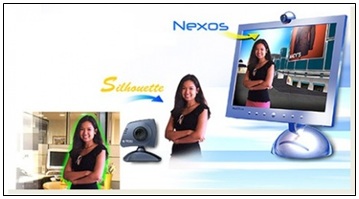
With Silhouette, each user in a virtual world is able to see and be seen as a live streaming video avatar at real time frame rates, along with synchronized audio. Silhouette works with a single high-speed web camera to extract a user’s video image from the user’s actual environment, without the need for a monochromatic (e.g. blue or green screen) background. Silhouette could be used for all those virtual world situations where “real” actually needs to be real.

You can see the direction IVN is going with its live video avatar software by looking at its rough in-house “proof of concept” video which was done completely in-world:

As indicated in the beginning of this post, live video avatars will not be for everyone, but once the technology is fully developed, it could bring a needed dose of reality to virtual worlds.

About the Author

Craig McAllister is affiliated with Integrated Virtual Networks (IVN) in Los Angeles, CA.