10 Reasons Print Rules in The Digital Age

November 12, 2012

Image source: User delusionalcubsfan on flickr.

Introduction

I subscribed to a magazine just once in my lifetime: it was in high school and I responded to a promotional offer for a 12-month subscription of SPORT magazine. According to Wikipedia, the magazine was shuttered in August 2000.

I’m now onto my second-ever magazine subscription, which is somewhat ironic in this day and age. Why did I do it? Because an airline (which I don’t fly any more) sent me a notice in the mail, indicating that a significant number of my frequent flyer miles were about to expire.

One way to consume those miles is to purchase magazine subscriptions. And I did just that, opting for 12 month relationships with Sports Illustrated and The Economist. In this era of tablets and smartphones, I’ve discovered a number of benefits of old fashioned print. Here are ten of them.

1) Raises questions from the kids.

I have one child, so when I say “kids,” I mean my daughter and her grade school friends. Today’s generation engaged with technology moments after exiting the womb. And it amuses me how much technology shapes their world.

When kids saw the DVD display in the ceiling of my car (a technological marvel when it was installed), they were amazed that a physical disc is needed to watch a film. One child asked, “Can’t you download the movie onto that?” So with magazines, it’s great when kids ask me what is “that thing” I’m reading? After all, it doesn’t reside on a tablet.

2) Opening and viewing a two-page spread is (still) magical.

A two-page spread in Sports Illustrated, featuring Oscar De Lla Hoya

Yes, the iPad, with its retina display, provides visually stunning images. But there’s something about opening up a two-page spread in Sports Illustrated (SI) and “taking in” the image for a little while. After the 2012 World Series, SI published a three-page spread, with the third page tucked underneath the first page. The top half was a panoramic shot of the Giants’ AT&T Park. The bottom half was Comerica Field. And it was awesome.

3) Gives you an excuse to go offline.

It’s rare to be offline these days. We’re always an email, text or phone call away from work, family and friends. But with a magazine, I can head to a park bench, tuck my phone in my pocket and read an entire issue from front to back. Note: despite that statement, I’m rarely able to make it happen.

4) Creates an appointment-based experience.

I love checking my mailbox for the week's issue of SI

I’m a creature of habit, a lover of routines. So I love going to my mailbox every Thursday and grabbing the SI from among the circulars, junk mail and related offers. It’s like the days when I was a Netflix subscriber and I’d look first for that red envelope. I save portions of my Thursday evenings for reading the latest issue of SI. And that routine is supreme.

5) Allows you to fully immerse in something.

Related to being offline, the magazine allows me to go somewhere quiet and fully immerse myself. SI keeps me up to date on the sports world, while The Economist keeps me current on the world. How often can you claim that you’re fully immersed in anything these days?

6) It’s so retro, it’s in.

Publishers are shuttering magazines and newspapers and moving things online (if at all). In relative terms, there’s a dearth of print publications out there. So I when I walk through town toting my SI issue, I’m not afraid to show it. I’m retro and I know it.

7) Engage with advertisements. Yes, advertisements.

I pay attention to the ads in SI

Sure, magazines have been far less successful of late in selling ad pages. If magazines were pizza, we’d all learn to appreciate the thin crust variety. But what I’ve found is that the ads that do make it in are quite contextual to the adjacent pages. And that’s good for readers.

Unlike online banner ads, I pay full attention to the ads in magazines. Banner ads can be contextual, but the amount of targeting and re-targeting done is reaching the point of creepiness. So  I love knowing that my viewing of a print ad is not being track by Big Brother Online. At least not yet!

8) Page turning feels right.

Yes, we’re all used to the swipe of an index finger to turn a page. But we do that so much that I’ve come to enjoy the physical page turning involved in magazines. And that also applies to books, for which I’ve been reading the old fashioned format (print).

9) Multiple ways to hold and fold.

On a tablet, it’s portrait or landscape. With a magazine, there are more ways to hold the pages. Do I spread out both pages, or do I fold the two in half? Or, do I fold half of the right page over the back of the left page? The possibilities are endless.

10) Exercise more fingers.

With a tablet, it’s all about the index finger, with occasional thumb action. With print, I’m able to keep more fingers in shape by involving them in the experience.

Note: I invite you to connect with me on .


5 Reasons to Join a Tribe on @Triberr

September 29, 2012

Introduction

Over a year ago, Jenise Fryatt (@JeniseFryatt), the Master Connector, invited me to join a tribe that she organized on Triberr – a “community-building platform for bloggers” and “reach multiplier.” Jenise had organized a tribe of meetings and events professionals and thought that my blog (on virtual events) would be a good fit for the group.

The idea is that you share (promote) tribe members’ blog postings on Twitter and they do the same in return (for you). When you join the tribe, you supply your blog’s “feed URL” (also known as the RSS feed URL) and every time you publish, the rest of the tribe “sees” your new post.

From there, each tribe member can click “Approve” to auto-publish a link to your post via Twitter. If you approve multiple posts at once, Triberr staggers the schedule, so that the tweets don’t all go out at once. When I first joined the tribe, I figured it would be a nice way to receive additional traffic to my blog. That’s been a given, but Triberr has provided me with a whole lot more.

So here are five reasons to consider finding (and joining) your own Triberr tribe.

1) Expands the reach of your blog postings.

Before Triberr, I’d publish a new blog posting, tweet a link to it, then repeat that tweet a few more times during the week. I’d hope that others would see my tweet – and if I was lucky, retweet me (thus sharing my link with their followers).

With Triberr, I get a “built-in endorsement network,” a set of people who see (and may choose to share) each and every post that I publish. The tribe brings a quantity and quality of reach. Combined, they have a significant quantity of followers on Twitter. But it’s the quality that’s more important to me: the tribe brings a diversity in followers that’s impossible to achieve alone.

2) Find interesting posts and articles to read.

I love to find interesting and thought-provoking articles to read. Twitter (and related apps, such as Flipboard) have helped in the discovery process, since a prominent activity on Twitter is the sharing of links. Triberr helps in my quest to discover great content.

On a daily basis, I’ll check the “New Posts” area of Triberr to see what my tribe has recently published. And this ends up becoming part of my reading list for the day. If you find the right tribe, they’ll constantly feed you great content (their own!).

3) A community assembles and grows.

I love how Triberr calls itself “a community-building platform.” It’s so true. Going in, I knew a number of my tribe members already (mostly via Twitter!). But being part of the tribe has helped build a sense of “team” and togetherness.

I’ve gotten to know my tribe-mates better, as we’ve bonded via our collective writings. And by extending my blog’s audience by way of the tribe, I’ve found and discovered new contacts in the industry – and they’ve discovered me as well (i.e. subscribed to my blog, followed me on Twitter, etc.)

4) Provides great content for you to tweet.

While some may find this hard to believe, there are times when I don’t have much to tweet about. Consider it a 140-character form of writer’s block. That’s when I turn to Triberr. Sometimes when I forget to check “New Posts” for a day or two, there will be 5+ posts queued up there. And if I’m short on tweets that morning, I’ll review, read, then approve the posts and wha-la! I’ve just scheduled 5 tweets to go out that morning.

5) Spark ideas for new blog posts.

When my writer’s block moves from Twitter to my blog, I can look to my tribe and consider what they’ve written about recently. That can give me topic ideas for my own blog. I consider it “food for thought” to help feed my own blog’s editorial calendar.

Conclusion

Triberr, and especially the “Got Your Back” tribe to which I belong, has been fantastic. Between “blog promotion” and “being part of a community,” I value the latter the most. Whether you’re just starting out or have been blogging for years, consider finding a tribe to join. If you can’t find one, create a new tribe and invite your network to join!

Useful Resources on Triberr

  1. How Triberr Works,” from WikiMommy.
  2. A Guide to Getting Started on Triberr,” from AllTriberr.

Note: I invite you to connect with me on .


The 5 Things I Do in the First Hour of My Day (Before Breakfast)

September 13, 2012

Introduction

Complete serenity. Early morning is my favorite time of the day. The coffee is brewing while the sun has yet to rise. There’s not a sound in the house (besides the slow drip of the coffee) and I’m basking in solitude. I suppose it’s “me time.” The first sip of coffee gets me started and I’m off to the races. I don’t try to solve the world’s problems in the first hour of my day, but I do just enough to set up the day for success.

Here are the five things I do in the first hour of every day.

1) Check on things that require an immediate response.

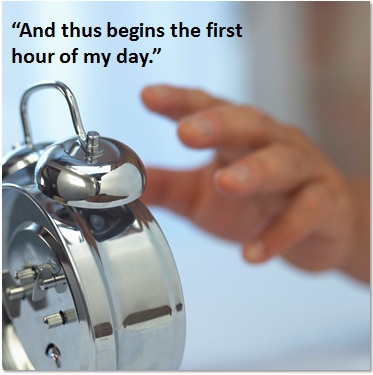
Sometimes, I’ll wake up (fully rested) before my alarm goes off. That’s usually a sign of a very productive day to come. More often, I’ll waken to the sound of my iPhone alarm. Then, without turning on the light, I’ll spend the next 5 minutes checking work and personal email.

It’s mostly a quick scan through the emails that arrived overnight, to see if there are any matters requiring immediate attention or response. Once I’ve completed the email check, I’ll get out of bed and fire up the coffee maker.

While the coffee is brewing, I’ll check Twitter. I don’t check on tweets, but I go specifically to “Interactions” to look at mentions, retweets, new follows, etc. Based on that, I suppose you could call me vain (and I’d admit it). I usually don’t check Facebook this early in the morning – that will come in the second or third hour of my day.

2) One word: COFFEE

The morning serenity is great, but nothing is more enjoyable to me than the morning cup of coffee. And I don’t do just a cup, mind you. I fill up a Thermos with about 14 ounces of fresh brewed Joe. My daily grind is two third’s Starbucks French Roast and one third Peet’s Major Dickason’s blend.

Call it a French Major, if you want – it tastes great. I like to savor the coffee, too – I’ll find myself taking the last sip more than an hour later. So coffee, if you will, completely comprises the first hour of my day.

3) Determine what to read, but I don’t actually read it.

Next step: grab the newspaper off the front stoop. Whoops! All of my newspapers are online. I have a set of 5 core web sites that I check every morning. If I’m ambitious, I’ll also peek at my RSS subscriptions in Google Reader.

The goal is to cobble together the interesting articles that I should be reading. At the same time, I’m identifying whether there are time-sensitive articles that I need to read right away. For the most part, though, I spend the first hour of my day curating, rather than consuming.

For each article I find interesting, I paste the content into a text document using Notepad on my Windows laptop. After I’ve completed my curation, I’ll paste the entire text document into Google Docs. From there, I can read all of the articles when my schedule permits – on laptop, tablet, smartphone, etc. – without all the banner ads, site navigation, pop-ups and web site overlays.

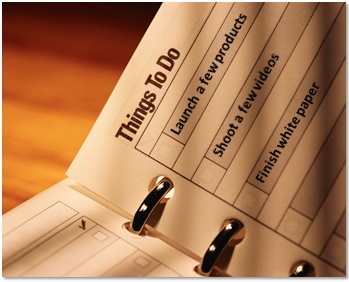
4) Create a short list of things that must get done (today).

There are more things to get done than the day is long. So I try to be realistic. I’ll prioritize my task list and figure out the handful of the most important things (that must get done today).

Of course, as time permits, I’ll get to other items on the list, but I find that narrowing the list is quite effective. It ensures that I’m focusing on what matters most (that day) – and, I find that I do a better job on the smaller bites that I’m chewing.

5) Set up the rest of the day for success.

Like my approach to curating the morning headlines (rather than reading the articles entirely), I don’t try to accomplish everything in the first hour of my day. Instead, my goal is to get the framework in place to make the rest of the day productive.

I’ll scan my Outlook Calendar for scheduled meetings and mentally prepare for them. I’ll do some research to get me prepared for an upcoming meeting. I’ll also do some mental preparation around the short list that I’ve compiled. If I need to write a blog post or a product sheet, I’ll start thinking about headlines and outlines.

Conclusion

Right about now, I’m finishing up the last few sips of my coffee. I’m an hour into my day – and while I haven’t taken the world by storm, I’ve gotten the pieces in place for a good one. And with that, it’s time for … breakfast!

Note: I invite you to connect with me on .


Summer Reading List: Books on Happiness, Neuroscience, Games and More

August 9, 2012

Introduction

I know just what you’re thinking: summer is just about over. The cross-country flight has been flown and the week at the beach is over. I hear ya.

But a long weekend is but a few weeks away (Labor Day) and it’s never too late to pick up some great books for the Fall (or for, gasp, the holidays).

What follows are recommendations for books I’ve read recently. I must warn you: the list contains neither the super-latest releases nor any current New York Times bestsellers. Without further ado, here’s my list of five:

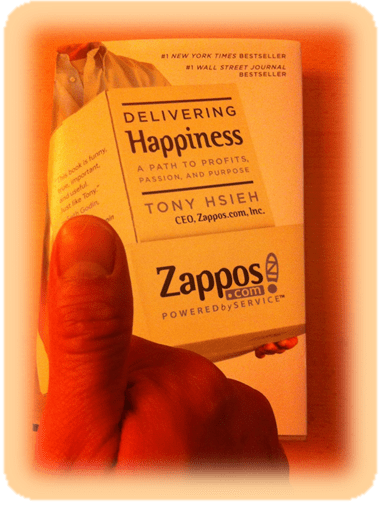
1) Delivering Happiness by Tony Hsieh

I read this book one year ago. I purchased the book expecting to hear about Tony Hsieh’s approach to delivering great customer service at Zappos. And while the book does include insights related to that, it’s scope is really much more.

Hsieh relates a compressed life story (his own) and how he sought to discover meaning and happiness. The book is filled with a series of entertaining personal anecdotes. Hsieh wraps things up by discussing the science of happiness and declares that the meaning of life is to discover it.

This is my favorite book of all time and has completely changed my outlook on life. For the better.

  1. Read my prior book review on Delivering Happiness.
  2. Check out the book at Amazon.

2) Brain Rules by John Medina

Earlier this year, Medina was the keynote presenter at a conference I attended. I couldn’t attend Medina’s session, but I knew from the related tweets that the audience found it interesting. Later, I’d bump into other attendees and Medina’s session was mentioned often.

I decided (then) to add “Brain Rules” to my reading list and it didn’t disappoint. Medina is a neuroscientist and the book helps us understand how the brain works. This understanding can help us design more effective meetings, classes, events and more.

  1. Read my prior post on how to use Brain Rules to make your next event more impactful.
  2. Check out the book at Amazon.

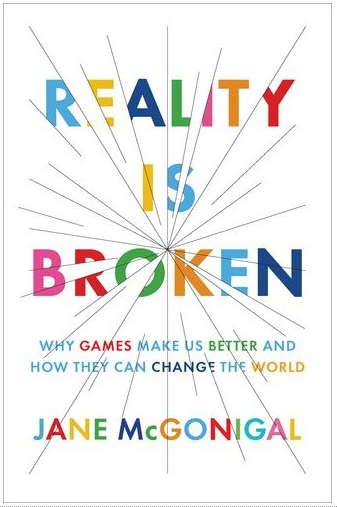
3) Reality Is Broken by Jane McGonigal

Coincidentally, Jane McGonigal also provided a keynote presentation at the same conference (as Medina). While I also missed McGonigal’s session, I had already read her book. McGonigal presents research from a number of scientists to explain “why games make us happy” and describes how games can be applied to solve problems at a global scale.

I liked this book so much, in fact, that I organized a digital book club in which we assembled via Google+ Hangouts to discuss portions of the book.

  1. Read my favorite quotes from the book.
  2. Check out the book at Amazon.

4) The Third Wave by Alison Thompson

Thompson’s book makes an impact right from the first page. She describes rollerblading down the street. They were the streets of New York City and she was headed south towards the World Trade Center. And it was September 11, 2001.

Thompson, who has training as a nurse, provided emergency response to victims (on the streets) and witnessed the collapse of the second tower. She volunteered day and night in the days immediately following 9/11 and returned there for weeks afterwards, lending a hand each and every day.

Thompson traveled to Sri Lanka to assist victims of a 2004 tsunami and provided relief efforts to earthquake victims in Haiti. “The Third Wave” is Thompson’s “volunteer story.”

It’s not just touching, it’s inspirational. Reading about Thompson’s selfless acts have inspired me to “do more” for the larger world around me.

  1. Check out the book at Amazon.

5) Start Something That Matters by Blake Mycoskie

This book is the story of TOMS, a shoe company who matches “every pair of TOMS (shoes) purchased with a new pair given to a child in need.” (they now sell more than just shoes). Like “Delivering Happiness,” the book does more than just tell the story of a company’s growth.

Mycoskie provides prescriptive advice on how you (the reader) can start something that matters, yourself. With chapter headings such as “find your story,” “face your fears” and “be resourceful without resources,” Mycoskie made me think about jobs in my future – and how they ought to have a meaning larger than just “maximizing profits.”

  1. Check out the book at Amazon.

Conclusion

I hope you found my recommendations useful. If you end up reading any of these books, return here to leave a comment. I’d love to hear your feelings and reactions to reading them.


How You Can “Imagine” to Be More Creative

June 29, 2012

Image source: Amazon.com

Introduction

I recently read the book “Imagine: How Creativity Works” by Jonah Lehrer. While Lehrer has gotten himself into a bit of hot water over re-purposing past work in new places (including portions of “Imagine”), this news didn’t impact my enjoyment of the book.

I found it fascinating to read stories of how creative insights were born and to understand some of the neuroscience behind what sparked them. What follows is ways I plan to apply the book to spark more creativity in my own life.

1) Sleep with a Notepad and Pen on the Nightstand.

I’m amazed at the crazy stories my brain dreams up overnight. I once had a murder mystery dream that involved the Queen of England and the tennis player, Peanut Louie. One of these days, I’ll analyze what that dream really meant.

“Imagine” describes the prefrontal cortex, an area of the brain that “holds back our imaginative murmurs.” When we sleep, “the prefrontal cortex shuts itself down; the censor goes eerily quiet.” In 1965, Keith Richards of The Rolling Stones fell asleep with a tape recorder running. When he played back the tape the next day, he heard a lot of snoring, but he also found the whole verse of a song. That verse would become “(I Can’t Get No) Satisfaction.”

I often dream about work. Once, I dreamed about working through a web application (related to work), but doing it in an entirely new (and odd) way. I don’t recall precisely the details of that new way, but imagine if I was on to something a la Richards and his hit song. As such, I now keep a notepad and pen on my nightstand.

This allows me to record the details of my dreams (if needed) when I wake up, whether that’s in the morning or in the middle of the night. I’m often stirred awake by an interesting dream (in the middle of the night), ponder its “weirdness” for a few minutes, then forget all the details by morning.

It’s time to increase bedtime ROI – product feature ideas, marketing campaigns and more. All conceived in my dreams.

2) More Productive Use of Showers and Outdoor Runs.

Chapter 2 of “Imagine” is titled “Alpha Waves (Condition Blue).” A portion of the chapter covers why creative insights happen often during warm showers. Why is that? Because warm showers are relaxing and “when our minds are at ease … we’re more likely to direct the spotlight of attention inward.” And when the spotlight is directed inward, we’re able to make the connections that lead to insights.

In fact, in a prior post, I wrote about my use of the shower: “10% of my tweets are now conceived while I’m in the shower, where I generate random thoughts or random observations.”

I also find my mind at ease when I go for long, outdoor runs. While on the running trail next to the reservoir, I feel disconnected from the hustle and bustle of daily life and that allows my mind to wander and roam. It’s far different than running on a hotel’s treadmill, as the activity of other exercisers and the sound from the overhead TV don’t allow me to disconnect as well.

While I’ll often wander into random insights during showers and runs, I’ll now look to utilize them during specific times of need. For instance, if I need to develop a feature or campaign and I feel a bit stuck, I may “disconnect” and brainstorm a bit. I’ll head out for a run, followed by (of course) a warm shower.

3) Talk to Everyone in The Organization.

“Imagine” describes how the late Steve Jobs designed the office space at Pixar Animation Studios. He placed the meetings rooms, cafeteria, coffee bar, gift shop and restrooms in the center of the building. He said, “everybody has to run into each other.”

One producer at Pixar noted that it worked: “I get more done having a bowl of cereal and striking up a conversation or walking to the bathroom and running into unexpected people than I do sitting at my desk.”

In the same chapter, we learn about an MIT professor who studied office conversations and workplace data. His finding? “Increasing the number of colleagues with whom an employee consults contributes independently to performance.”

As a product guy, I plan to spend more time striking up random conversations with colleagues – especially those outside of my own functional area. After all, when you’re building products, your customers are more often the folks in Finance, Human Resources and Customer Service, rather than your peers in Product Management or Marketing.

Colleagues in other departments have different expertise and they’re likely to think differently. This means that they’re bound to have valuable insights you can tap into and apply (either directly or indirectly) into creating better products. In fact, I believe that product organizations ought to crowdsource product ideas across the entire organization.

4) Daydream More.

A psychologist from the University of Memphis discovered that students with attention deficit hyperactivity disorder (ADHD) got significantly higher scores (than non-ADHD students) on difficult creative tests.

ADHD (and the inability to focus) can be a “creative blessing” – “when we need to work, we force ourselves to concentrate – this approach can inhibit the imagination.” Lehrer goes on to note that if you relax and indulge yourself in distractions, insights arrive once you stop looking for them.

Later in the book, Lehrer relates how the famous “Just Do It” campaign (from Nike) was conceived by an ad executive via a random thought about a convicted murderer (Gary Gilmore). When Gilmore was asked if he had any final words before his execution, he said, “Let’s do it.” How did the ad exec think of this? “He just popped into my mind.”

So in times where my running and showers don’t produce, I’ll do some daydreaming. I’ll also embark in other random diversions, such as watching a movie, listening to music or reading a book. Perhaps they’ll spark some creative genius (a la the Nike example) – or, by taking a break, I’ll find what I was looking for.

Conclusion

By now, you’re probably suspicious about my desire for creativity. You think it’s just a ploy to sleep earlier, go for more runs, daydream more often and watch more movies. Well, we’ll see. I may in fact be doing a lot of that, but it’s all in the interest of science. If I can prove “how creativity works” and produce some of it at the same time, then the showers and sleep will have been worth it.

Note: I invite you to connect with me on .


It’s All Popular: Top 2012 Posts at It’s All Virtual

May 10, 2012

Introduction

This blog used to be about virtual events – all day, every day (or almost every day). It’s branched out, of course, to cover a number of additional topics, including social media. This shift is reflected in the list of most popular posts for 2012. Without further ado, here’s the list, in ascending order of popularity.

5) 5 Tips for Organizing Your Google+ Circles

If you’re just getting started with Google+ now, take the time to set up and organize your Circles up front. I added people to the same one or two Circles and had to invest the time to go through them and assign them to more specific Circles.

It was worth it, however, as an organized set of Circles made my use of Google+ all the more productive and beneficial. Read the full post:

https://allvirtual.me/2012/02/06/5-tips-for-organizing-your-google-circles/

4) 5 Reasons I’m Breaking Up With You, TweetDeck

I once made heavy use of a Twitter client called TweetDeck. Now, I find myself relying exclusively on Twitter.com, from my browser. This post details why I decided to break out with TweetDeck. Read the full post:

https://allvirtual.me/2012/02/27/5-reasons-im-breaking-up-with-you-tweetdeck/

3) 5 Tips for Hosting Google+ Hangouts


Google+ Hangouts are pretty darn neat. The first time I hosted a Hangout, however, I ran into a number of snags. The goal of this post was to share my mistakes and subsequent lessons learned. Read the full post:

https://allvirtual.me/2012/01/30/5-tips-for-hosting-google-hangouts/

2) 5 Things Virtual Event Platforms Can Learn from Pinterest

“It’s All Visual.” That’s a core attribute that makes Pinterest so popular. I couldn’t determine which was more popular: Pinterest (itself) or articles and blog postings on the topic of Pinterest. So I decided to try out the service – and then tie Pinterest together with virtual events. Read the full post:

https://allvirtual.me/2012/02/13/5-things-virtual-event-platforms-can-learn-from-pinterest/

1) Why My Third Grader Loves Second Life


While visiting the Tech Museum in San Jose, I was surprised to find a set of workstations installed with Second Life – or perhaps I shouldn’t have been surprised, given that it’s a technology museum. My third grader loved interacting with this custom version of Second Life, so I decided to analyze just why that was. Read the full post here:

https://allvirtual.me/2012/02/08/why-my-third-grader-loves-second-life/


Want More Klout? Here’s How To Get It.

May 5, 2012

Introduction

In a widely read (and shared) piece in Wired titled “What Your Klout Score Really Means,” Seth Stevenson describes Klout as “a service that purports to measure users’ online influence on a scale from 1 to 100.”

The most talked-about aspect of Stevenson’s article is the story of how Sam Fiorella was turned down for a VP position (at a marketing agency) because his Klout score was too low. Fiorella’s score, at the time, was 34 and the job was given to someone with a score of 67.

My Views on Klout.

Opinions on Klout seem to be at two extremes: either you love it or you hate it. I find myself in the middle: I find that “metrics” (like a Klout score) are useful for comparing things against a standard of measure, but I wonder whether aspects of Klout’s measurement “algorithm” are completely valid (add to that the fact that the algorithm itself is clouded in some secrecy).

Previously, I shared my thoughts on the changes Klout made to its scoring model.

Get More Klout, If You Want To.

OK, so here’s the piece in the article that no one is talking about. Stevenson spoke to Klout product director Chris Makarsky and asked him how he could boost his Klout score. If you care about your Klout score, check out these tips:

  1. Improve the cadence of your tweets – that is, tweet a lot more.
  2. Concentrate on one topic, instead of spreading yourself thin.
  3. Establish “relationships with high-Klout people,” as a way to extend your influence.
  4. Keep things upbeat. “We find that positive sentiment drives more action than negative,” said Makarsky.

So there you have it. I’d be interested in your take on Klout. Does Klout score matter to you?

Related Links

  1. The author, Seth Stevenson on Twitter (@stevensonseth).
  2. Sam Fiorella on Twitter (@samfiorella).
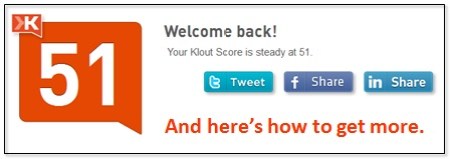
  3. My profile on Klout. I was at 59 before their scoring change and currently stand at 51.

Other Tips to Get More Klout

  1. Mashable: 7 Surefire Ways to Increase Your Klout Score.
  2. Ask Aaaron Lee: 6 Unofficial Ways to Increase Your Klout Score 
  3. Inc.com: The Right Way to Increase Your Klout Score

Note: I invite you to connect with me on .


New Book: 42 Rules of Product Marketing

April 2, 2012

Book: 42 Rules of Product Marketing

Introduction

A great new product marketing book has been published. It’s called “24 Rules of Product Marketing,” and it was assembled by Phil Burton, Gary Parker and Brian Lawley.

You get to hear from 42 product marketers, who share rules, tips and insights from the product marketing trenches. According to the listing at Amazon, “This book will expose you to the experience and knowledge of a group of the world’s leading product marketing experts with a range of perspectives in both consumer and business markets.”

In addition, the book includes some “bonus rules” from Phil, Gary and Brian.

My Top 10 Favorite Rules

Here are my Top 10 favorite rules from the book:

  1. Learn from Your Customers’ Digital Body Language
  2. Help Your Prospect Know “What’s In It For Me?”
  3. Make Your CFO a Social Media Fan
  4. Remember Your Internal Customers
  5. Use Online Metrics for Product Marketing Success
  6. Help Your Sales Team Communicate Your Message
  7. Always Test Your Message
  8. Speak in the Customer’s Language
  9. Turn Your Audience into Advocates
  10. Create Simple Messages for Complex Products

My Contribution

In the interest of disclosure, I contributed to the book. I authored Rule #10, “Make Social Media a Listening Platform.”

While product marketers can drive value (and results) by tweeting, posting to Facebook and uploading videos to YouTube, I suggested that we spend an equal amount of time listening.

I made the analogy that in any conversation, I learn more by listening than I do by speaking. Social media can provide an effective listening platform for market research, insights and pain points, that can all be used to inform you marketing language, launch plans and strategy.

You can purchase the book at Amazon:

http://www.amazon.com/42-Rules-Product-Marketing-Leading/dp/1607730804

Note: I invite you to connect with me on .


5 Ways, Tips, Things and Reasons on Virtual Events and Social Media

March 26, 2012

Introduction

Regular readers (and pattern matchers) know that many of my 2012 posts have been lists of five. Continuing with my fondness for lists, I thought I’d make a list of lists. So without further ado, here are assorted “lists of five” posts that I recently published.

Google+

5 Ways to Get Started with Google Plus.
5 Tips for Organizing Your Google+ Circles.
5 Tips for Hosting Google+ Hangouts.
5 Reasons Google Plus May Be the Social Network of the Future.

As a special bonus, I’ve organized the four posts (above) into an eBook, which you can download here.

Events

Top 5 Ways Virtual Events Are Like Football Games.
5 Ways Face-to-Face Events Are Like Family Reunions.
5 Hybrid Event Tips for Trade Associations.

Social Media

5 Things I’ve Learned About Pinterest.
5 Things Virtual Event Platforms Can Learn from Pinterest.
5 Reasons I’m Breaking Up With You, TweetDeck.
5 Reasons “Words With Friends” Is Awesome.


5 Ways Face-to-Face Events Are Like Family Reunions

January 13, 2012

Introduction

This week, I attended my fourth Virtual Edge Summit and my second PCMA Convening Leaders. The two events were collocated with one another at the San Diego Convention Center. As I made my way throughout the event, I kept noticing the same thing: people embracing one another in enthusiastic hugs.

I noticed the hugs just about everywhere: in the hallways, on the elevators, on line for coffee and in the session areas. I made the realization that members of an industry comprise a family – and with our busy schedules these days, the “family” may see each other a few times per year. Or perhaps, a few times every five years!

Let’s consider how face-to-face events are like family reunions.

1) Scheduled time together.

At a family reunion, there’s the luncheon, picnic or perhaps a tea party at grandma’s house. There’s the obligatory group photo. Face-to-face events are largely defined by their scheduled activities: sessions, demonstrations, meals, classroom learning and evening networking events.

2) Unscheduled time spent in smaller groups.

A face-to-face event is wonderful at creating serendipity and somewhat random encounters: running into an old colleague while walking from one session to the next; meeting a like-minded professional on the food line; bumping into your former boss on the elevator.

While an event’s scheduled activities are valuable, a lot of enjoyment comes from the meetings and interactions we have during the unscheduled activities, which we tend to experience in smaller groups. Family reunions are similar. The one-on-one time with a cousin or aunt are great, as you reminisce about the “good old days.”

3) Nothing’s the same as face-to-face.

Families have Skype, Facebook and email to stay in touch. Industries have blogs, online communities, Twitter and Google+. All of these tools are very effective for keeping up with one another and staying in touch.

But nothing can reproduce the experiences, dynamics and value of meeting face-to-face. I’ve developed relationships with others online, but it’s not until I spend time with them face-to-face that I truly feel like I “know” them. Industries, like families, need to convene face-to-face from time to time.

4) You realize how quickly the kids grow up.

Kids grow up way too quickly. Go two years without seeing a young niece, nephew or cousin and you may not even recognize them. With business moving as quickly as ever, our friends and colleagues may get promoted or switch jobs without us knowing (although LinkedIn does a great job about letting us know!). It’s at events that we can see how the kids (and colleagues!) are growing.

5) It’s hard to say goodbye.

It’s hard to say goodbye at the end of a family reunion. After spending 2-3+ intense days at a face-to-face event, it’s equally tough to say bye. You’ve spent hours speaking, learning, (hugging) and socializing with a close-knit group of individuals. When it’s time for everyone to head to the airport, you wish that the event lasted one more day.

Conclusion

I had a great week with “family” in San Diego. For some, it’s my hope that I’ll see them again during 2012. For others, I may have to wait for 12 months. Perhaps I’ll combine the face-to-face event with a family reunion – Convening Leaders 2013 takes place in Orlando.

Note: I invite you to connect with me on .