I Finally Joined Google Plus, So Let’s Circle Each Other

November 18, 2011

Introduction

I like to show up fashionably late to most parties. While most of you set up your Google Plus profiles several months ago, I’m just getting around to that now.

Google Plus and Girl Scouts

The Girl Scouts sing a song called “Make New Friends.” The song includes the following lyrics:

A circle is round, it has no end
That’s how long I want to be your friend.
Here is my hand, and here is the other
Let’s put them together and we have each other.

Let’s Circle Each Other

Let’s put our circles together. You can view my profile here:

http://gplus.to/dshiao

Add me to your Circle and I’ll add you back!


The New Klout Scoring Model Reflects a Shift to Klout 2.0

November 7, 2011

Introduction

Key happenings in October 2011: the NFL in full swing, Halloween, a World Series that was a true October classic and a new scoring model from Klout. I think the World Series received the most commentary, with the Klout scoring changes finishing a close second.

For the most part, people’s Klout scores went down. And not surprisingly, that created a stir, with reactions that ranged from annoyance to sheer outrage.

My Klout score dropped quite a bit. And while I was initially dismayed by the drop, further reflection leads me to conclude that the scoring changes reflect a shift (on their part) from Klout 1.0 to Klout 2.0. Let’s first summarize Klout 1.0.

Klout 1.0

Klout 1.0 was all about generating awareness. Klout was happy to have leading social media experts tweeting about the service and logging in daily to check on their score (and how much it rose in the past day). In addition, Klout kept us all hooked via a crafty use of game mechanics. These game mechanics had us checking our score each day (on klout.com) and engaging with the service. Examples:

Appointment.

While a time was not pre-determined, we did feel an “appointment need” to login to the site each day to check on our latest “rewards.”

Progression.

On your Dashboard page, Klout listed out the following steps:

  1. Connect with Twitter
  2. Connect with Facebook
  3. Follow Klout on Twitter
  4. Like Klout on Facebook
  5. Share Your Klout Score
  6. Visit your profile

When you completed a step, it was visually “crossed out.” The progression dynamic certainly worked on me, in the same way that I was compelled to make my profile “100% complete” on LinkedIn.

Virtual currency.

Second Life has Linden dollars, Klout has “+K” (and they do not cost any US Dollars, unlike Lindens). Each Klout user has an allotment of “+K” that they can award to other users for selected topics. If I think a friend is an expert in social media, I can award her “+K” on that topic. It’s not clear whether receiving +K’s has an impact on your Klout score, though.

Points.

Your Klout score is a form of “points.” And Klout makes you all too aware of your score and its comparison to other users’ scores. In fact, Klout.com allows you to compare yourself to another user. Klout will tell you things like:

  1. You have a higher Klout score
  2. You have a larger Network Influence
  3. You have a larger Amplification Probability
  4. You have a larger True Reach

Status.

Klout’s algorithm assigns you into a particular category (or status). I’m a “Specialist,” which Klout describes as such:

You are a Specialist. You may not be a celebrity, but within your area of expertise your opinion is second to none. Your content is likely focused around a specific topic or industry with a focused, highly-engaged audience.

Klout 2.0

Klout 1.0 made savvy use of game mechanics to stir up early interest and engagement. In the 1.0 world, user advocacy was a big thing, as early adopters who told other early adopters allowed awareness and usage to spread.

The change of scoring method, however, signals a clear shift from the users of Klout to the underlying score itself. Frankly, Klout could care less about noisy users (who are unhappy with their scores dropping). Their focus, instead, is to become the gold standard for online influence.

comScore is “a global leader in measuring the digital world and preferred source of digital business analytics.” Nielsen provides “the complete view of what consumers watch and buy through powerful insights that clarify the relationship between content and commerce.”

Today, Klout sells Klout Perks programs to advertisers.  In the near future, I think Klout wants to become the comScore and Nielsen of online influence.

Conclusion

I have to admit that when my Klout score decreased, I logged into the site much less frequently. But for Klout, that’s OK. What they care about is the fact that the right methodology is now in place behind my current score – one they can track and maintain over time, for the benefit of “watchers” (e.g. advertisers and other future clients).

What are your thoughts on Klout? Share them with us in the Comments section below.

Subscribe

Did you enjoy this blog posting? If so, you can subscribe to the feed here: https://allvirtual.wordpress.com/feed/


Pondering The Future With PCMA, VEI and … Event Camp?

October 16, 2011

Note: The thoughts expressed in this post are my own.

Introduction

Recently, the Virtual Edge Institute (VEI) announced that it received a strategic investment from the Professional Convention Management Association (PCMA). Michelle Bruno, in her Fork In the Road blog, provided some great insights on this partnership, in a posting titled “Why PCMA’s Investment in the Virtual Edge Institute Means More than Just Cash.”

Michelle commended PCMA for endorsing an open source model “to unlock the innovation around virtual and hybrid event technology.” I think PCMA should create a trifecta by making a strategic investment in Event Camp (EC). Commenting on this point via Twitter, Michelle tweeted, “Agree. Event Camp Europe gave me the idea about open source innovation in event context.”

Let’s dive into the potential benefits.

Funding

Event Camp has achieved great things to date. They’ve used their own hybrid events (“Event Camps”) to experiment and innovate on meeting and event planning. They’ve reached these heights primarily from the passion of their volunteer organizers and secondarily from supporting sponsors.

And while I believe that innovation can result from budgetary constraints, imagine the possibilities with an investment from an organization such as PCMA. I believe that a stronger financial foothold will create ever more innovative and engaging Event Camps.

Colocation

Event Camp meetings would have a lot to gain by colocating with PCMA gatherings, in the same way that Virtual Edge Summit benefited from its colocation with PCMA Convening Leaders.

In the future, this trifecta could kick off the calendar year with colocation of three events (in one): PCMA Convening Leaders, Virtual Edge Summit and Event Camp National Conference. Given that several PCMA members are key contributors to Event Camp, colocation makes all the more sense.

In addition, there are additional PCMA events that may stand to benefit from VEI and EC involvement, such as the mid-year PCMA Education Conference.

Feeder Organization

Talk about synergy. Event Camp can spin out innovation via experimentation. The innovation fostered is then fleshed out, refined and documented. In this way, Event Camp becomes a feeder organization into Virtual Edge Institute’s certification programs and PCMA’s educational programs.

Open Source Innovation

Jenise Fryatt (@JeniseFryatt) did a great interview with Nick Balestra (@nickbalestra) about Event Camp Europe titled, “Using Open Source to Remix Your Event.” According to Balestra, “creating events can be somehow similar, so taking an open-source approach while thinking about your events can lead to  smarter ways to create them.”

As Michelle Bruno stated in her piece, PCMA and VEI are supporting an open source model for the benefit of the entire events community. Event Camp, with their model built around “innovation from experimentation” would be a perfect fit for this open source event model to further grow and flourish.

Conclusion

I have a dream to one day visit every major league baseball park in the U.S. and Canada. On the meetings and events side, perhaps I’ll one day be able to attend PCMA Convening Leaders, Virtual Edge Summit and Event Camp in one fell swoop. As for the MLB parks, that’ll have to wait till retirement.

Related Posts

  1. My Thoughts: Virtual Edge Institute’s Digital Event Strategist Certification

Subscribe

Did you enjoy this blog posting? If so, you can subscribe to the feed here: https://allvirtual.wordpress.com/feed/


How to Build a Personal Brand and Advance Your Career with Social Media

August 31, 2011

Introduction

On Friday, September 2, 2011, I’ll be presenting a “Lunch and Learn Workshop” organized by the EMC West Coast Women’s Leadership Forum.

What, Where and When

Title: How to Build a Personal Brand and Advance Your Career with Social Media

Date: September 2, 2011

Time: 11:30AM – 1:30PM PT

Location: EMC, 2831 Mission College Blvd, Santa Clara, CA, The San Francisco Conference Room

Session Abstract

Facebook is not about friends.  Or at least it doesn’t have to be.  In this session, Dennis Shiao provides strategies, tips and tactics for using social media to build a personal brand and advance your career.  Whether you want to build a following online or gain a promotion at work, Dennis’ presentation will cover ways social media can help you, both personally and professionally.

Dennis will first cover some strategies for taking advantage of social networks, including the important activities of listening, connecting and participating. Next, he’ll draw upon his own experiences and cover specific tips from blogging, LinkedIn, Twitter, Facebook, YouTube, SlideShare and Quora, to name a few. You’ll leave this session with tips and ideas that you can apply right away to your own social networks and your own brand.

Presentation Slides

For those interested, you can view the slides from my workshop below.


Favorite Book Quotes from “Reality Is Broken”

August 31, 2011

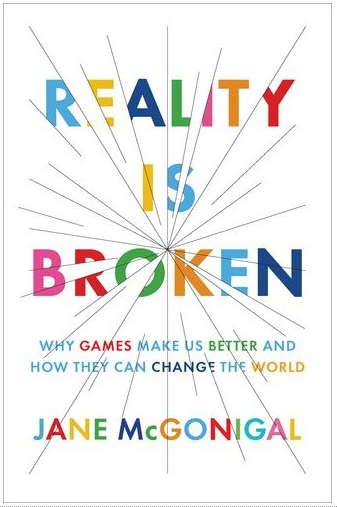
Note: Image courtesy of the book’s web site.

Disclosure: This post contains affiliate links to the book’s listing on Amazon.com.

Introduction

I’m reading Jane McGonigal’s book “Reality Is Broken: Why Games Make Us Better and How They Can Change the World.” The book has three parts:

  1. Why Games Make Us Happy
  2. Reinventing Reality
  3. How Very Big Games Can Change the World

As of August 31, 2011, I’m reading part one, which provides a fascinating look at the psychology behind games (i.e. the neurological factors behind why gamers engage in game play).

I’m continually finding great quotes in the book, so I thought I’d use this blog posting to keep a running collection of my favorites. Feel free to check back from time to time, as I add to the list!

Favorite Quotes

Added: 10/03/2011

Life is hard, and games make it better.” (page 349)

Added: 09/29/2011

We need to play games that stretch our collective commitment months, years or even decades ahead. We need to start playing with the future.” (page 295)

Added: 09/27/2011

Collaboration isn’t just about achieving a goal or joining forces; it’s about creating something together that would be impossible to create alone.” (page 268)

Added: 09/10/2011

Based on Clay Shirky’s estimate that all of Wikipedia took 100 million hours to create, the WoW community alone could conceivably create a new Wikipedia every three and a half days.” (page 231)

Added: 09/05/2011

Games are showing us exactly what we want out of life: more satisfying work, better hope of success, stronger social connectivity, and the chance to be a part of something bigger than ourselves.” (page 114)

Compared with games, reality is hard to get into. Games motivate us to participate more fully in whatever we’re doing.” (page 124)

Added: 09/04/2011

The single best way to add meaning to our lives is to connect our daily actions to something bigger than ourselves – and the bigger, the better.” (page 97)

Added: 08/31/2011

To develop foresight, you need to practice hindsight.” (page 5)

As for the future, your task is not to see it, but to enable it.” (page 13, attributed to Antoine de Saint Exupery)

Games, in the twenty-first century, will be a primary platform for enabling the future.” (page 13)

Computers were made to work for us, but video games have come to demand that we work for them.” (page 55)

The quote (above) is attributed to Nick Yee, “a leading researcher of MMOs and the first person to receive a PhD for studying WoW.”

Leave a Comment

Have you read the book? If so, let me know your take via the comments section below.

Related Resources

  1. Buy the Book: On Amazon.

2011 Professional and Industry Speaker Survey

August 30, 2011

Take the survey: http://www.surveymonkey.com/s/speaker-survey-vc

Introduction

Velvet Chainsaw Consulting and Tagoras have partnered on a research study. Together, they’re collecting data about industry and professional speakers at conferences with 500 or more attendees.  The basis for their research study will be a “2011 Professional and Industry Speaker Survey.”

Survey Details

The purpose of the survey is “to better understand how organizations in the United States and internationally use professional and industry speakers at their meetings (e.g., conferences and other events).”  The survey will take 10-12 minutes to complete.

When you’ve completed the survey, “you may register, if you wish, to receive a synopsis of key data from this survey when it is completed. By registering, you will also automatically be entered into a drawing for a $50 Visa gift card that we will give away to five randomly selected survey participants.”

Responses are due by September 9, 2011.

Dave Lutz (@VelChain) from Velvet Chainsaw Consulting notes, “Thank you in advance for taking time to help improve conference education and learning. Please share this with other association professionals that plan meetings with 500 or more attendees and secure both professional and industry speakers. The more high quality responses we have, the better!”

Take the Survey

You can take the survey here:

http://www.surveymonkey.com/s/speaker-survey-vc


#eventprofs Profile: Jenise Fryatt (@JeniseFryatt) on Event Evolution and More

August 5, 2011

“Events will change, but they will also thrive because nothing is more satisfying than turning our online relationships into real-life face to face friendships”

Introduction

Jenise Fryatt (@JeniseFryatt, @IconPresentsAV) is Co-Owner and Marketing Director for Icon Presentations, an independent audio visual company that provides sound, video, projection & lighting support for events. Jenise is based in Southern California. Online, however, you can find her everywhere.

Jenise founded the #EIR movement by creating the associated hash tag and promoting Twitter users who “Engage, Inform and Retweet.” She’s a power user and influencer in the #eventprofs community, sharing a constant stream of useful resources that rivals the pace of Jeff Hurt (@JeffHurt).

In addition, Jenise is Community Manager for Engage365, an online community for event professionals that focuses on technology and innovation. She’s also a co-organizer for Event Camp Europe, taking place this Fall in London.

Thoughts on: Event Camp

Event Camp is a collection of events that was formed by the #eventprofs community on Twitter. Its mission is “to bring together like-minded professionals, to share best practices, and learn new strategies, for leveraging social media and technology to create enhanced event experiences.”

Event Camp Twin Cities (#ectc11) is fast approaching and Jenise recommends you attend. “Last year ECTC blew everyone away with its masterful hybrid event presentation,” said Jenise. “I’m happy to say that this year I will be sharing improv concepts and a game or two with the ECTC participants,” continued Jenise.

Event Camp East Coast gives event pros the opportunity to experience a completely attendee-driven event.  According to Jenise, “That one changed my life last year starting me on a new career path sharing improv games with non-performers.“

Thoughts on: Hybrid Events

Jenise attended her first hybrid event in 2010 (Event Camp).  She was immediately captivated by the power of hybrid events. “I particularly like what people like Emilie Barta (@EmilieBarta) have done to improve the presentation quality by blending platforms and including remote and onsite audiences as participants in one event,” said Jenise.

Thoughts on: Event Evolution

Jenise is excited by the movement in the event industry to “recognize and make use of the collective knowledge of our event participants.” According to Jenise, “I have performed and studied improv for several years and know first-hand that magic happens when you give a group the proper tools for collaborating and just let them go.”

I expect this model of active attendee involvement to accelerate. Millenials, who grew up with the web at their fingertips, are frustrated by passive audience models. Jenise expects to see “creativity in new technology and formats like virtual events, gaming elements in events and participant driven events.”

Thoughts on: Event Evolution for Associations

“One thing to watch is the threat that these new ways of meeting and collaborating so easily and inexpensively pose to the traditional ways associations are run.  Associations will have to evolve to remain relevant. Events will change, but they will also thrive because nothing is more satisfying than turning our online relationships into real-life face to face friendships.”

Thoughts on: Social Marketing for Small Business

To market a small business online, Jenise partakes in a steady diet of content creation. She maintains two blogs, Sound n’ Sight and Eventprov. She uses Twitter to promote her blog posts – and at the same time, uses Twitter to share related content that clients may find useful.

Jenise guest blogs whenever asked, moderates Twitter chats for #eventprofs and #Engage365 and regularly posts on Facebook, LinkedIn and Google+. Like I said earlier, she’s everywhere. It’s hard work, but it pays off for Icon Presentations. According to Jenise, “We now rank #1 for almost all of our key words. And I have had many business opportunities as a result of my online friendships.”

For other small businesses looking to market themselves online, Jenise has this bit of sage advice: “Change your perception about marketing.  It’s not about one-way broadcasting anymore.  It’s about building relationships with potential clients as well as those who will help to sing your praises.”

Thoughts on: Google+

Jenise has been experimenting with Google+, noting that the most active people are the early-adopter, social media geek types. So far, she likes how Google+ combines some of her favorite attributes of Facebook and Twitter.

She’s excited by Google Hangouts, the group video feature of Google+. “A few of my online friends and I have been meeting for group video chats for more than a year and have struggled with tech difficulties on several platforms we’ve tried. When we tried Hangouts it was easy and all the tech problems were gone.”

Related Resources

  1. Web site: Icon Presentations
  2. Blog: Sound n’ Sight
  3. Blog: Eventprov
  4. Web site: Engage365
  5. Web site: Event Camp Twin Cities

Subscribe

Did you enjoy this blog posting? Subscribe to the feed here: https://allvirtual.wordpress.com/feed/


Book Review: Delivering Happiness by Tony Hsieh (@Zappos)

July 30, 2011

Pictured: My hand, simulating the Facebook “Like” icon.

Disclosure: This post contains affiliate links to the book’s listing on Amazon.com.

Reviewed: “Delivering Happiness: A Path to Profits, Passion and Purpose” by Tony Hsieh, CEO of Zappos, Inc.

Introduction

I enjoyed reading “Delivering Happiness” more than any other book of the past five years. It’s not your typical “business book.” Rather, it includes key insights that you can apply to your own business, but it provides so much more.

It covers culture, happiness, theories of happiness, inside stories about Zappos and entertaining stories about Hsieh’s life. Rather than provide a formal review, I’ll highlight sections that I found particularly interesting.

Great Stories

In the first paragraph of Chapter 1, we find the heading “Worm Farm.” Hsieh writes that at age 9, his parents spent $33.45 “for a box of mud that was guaranteed to contain at least one hundred earthworms.”

Hsieh built a worm box and every day he’d dump a few raw egg yolks on top of the “farm,” in hopes that the worms would reproduce. After 30 days, Hsieh checked on his “crop”, only to discover that the worms were all gone. He had placed chicken wire beneath the mud, and the worms had all escaped.

According to Hsieh, “my burgeoning worm empire was officially out of business.”  A book that begins with a story about a worm farm. I was immediately hooked.

The Inside Scoop

In this era of “inbox overload,” we tend to bad-mouth email. But reading this book made me realize how powerful email can be as an archival tool. Emails capture a moment in time and are great at telling stories. Hsieh supplements his great stories by including archived emails.

Hsieh includes emails from the earliest days of Zappos, through to 2009, when Zappos joined forces with Amazon. Hsieh includes his company-wide email concerning the Amazon transaction, which was posted publicly to the Zappos blog.

In addition to email as a storytelling tool, Hsieh draws upon the extended Zappos team to tell their own stories. As an example, page 61 features “My First Shoe Show as a Zappos Employee, by Fred,” which was contributed by Fred Mossler, a member of the founding team.

The Culture Book

The Culture Book started with a simple idea from Hsieh, “We should just ask all of our employees to write a few paragraphs about what the Zappos culture means to them, and compile it all into a book.”

The Culture Book is published once a year and contributions from employees are not edited or censored. The book documents how the Zappos culture evolves over time. In addition, the process of compiling the book has the positive side effect of gaining insights into employee satisfaction. Complaints and criticism, for instance, can serve as a wake-up call on a particular issue.

If you visit the Culture Book web site, you can fill in your mailing address to receive a free copy of the book!

Risking It All to Chase a Dream

All entrepreneurs chase dreams. When they reach a critical juncture, however, some entrepreneurs cut their losses, while others risk it all and forge ahead. Hsieh and his team are obviously the latter – they were down to 2 weeks of cash and Hsieh needed to sell a loft (40 percent below the price he paid for it) to keep the company afloat.

Hsieh writes, “Even if Zappos failed, we would know that we had done everything we could to chase a dream we believed in.”

A Movement to Deliver Happiness

“Delivering Happiness” is more than a book. It’s now a movement. On the movement’s web site, you can join an online community, take a pledge, read real stories,  submit your own story and find in-person meetups to connect with other deliverers of happiness.

Related Resources

  1. Buy the Book: On Amazon
  2. The book’s web site.
  3. Delivering Happiness Movement on Twitter (@DHMovement).
  4. Delivering Happiness on Facebook.
  5. How Twitter Can Make You a Better (and Happier) Person” – article by Tony Hsieh.
  6. The Zappos blog.
  7. A page showing tweets from Zappos employees.

Subscribe

Did you enjoy this blog posting? Subscribe to the feed here: https://allvirtual.wordpress.com/feed/

Note: I invite you to connect with me on .


Share Ideas Across iPads with Idea Flight

July 19, 2011

Introduction

According to a blog post introducing the service, Idea Flight “is a new tool to share ideas, presentations, documents, designs, and whatever else you can think of easily from one iPad to many. It enables one person, whom we call the Pilot, to control the screens of multiple iPads, whom we call the Passengers.”

The iPad app was developed within Conde Nast, by a small team focused on creating new digital opportunities for the company. “The inability to give controlled design presentations on the iPad” was a business challenge that inspired team member Don Eschenauer (Director of Design) to create the app.

Internal Pre-Launch

Prior to launching the app in the iTunes App Store, Idea Flight underwent a pre-launch beta internally, with users representing Sales, Design and Project Management.

Juliana Stock, Senior Director, Marketing & Product Development, indicates that the pre-launch helped their “discovery and roadmap validation” and that Conde Nast colleagues “tell us they use it in their personal lives to share photos or at their kids’ schools.”

Use Cases

Stock envisions the app being used “anywhere people have a lead who wants to keep everyone on the same page.” Potential users include:

  1. Education
  2. Cultural institutions
  3. Museums
  4. Choirs
  5. Sales teams
  6. Real estate brokers
  7. Event planners
  8. Companies that license computers and tablets
  9. Small businesses

Beyond Sharing

In an insightful post about the technical considerations behind Idea Flight, Robert Tolar Haining, the team’s Technical Architect, described the scenario that led to the app’s LinkedIn integration (i.e. a new employee who, during a meeting, asked Robert whom was speaking). The “passengers” in Idea Flight sign in to their LinkedIn account and the flight “manifest” lists information pulled from passengers’ LinkedIn profiles.

So the app goes beyond sharing to also address connecting. According to Stock, “as more people rely on devices for creation, communication and connecting, this app triangulates all three” [source of quote].

My Take on: Market Fit

Currently, Idea Flight works over WiFi and Bluetooth and supports a maximum of 15 passengers. As such, it’s suited to small, in-person gatherings and is not competitive with online meeting software, such as WebEx or GoToMeeting (both of whom already have iPad apps and allow presenters to share their entire desktop).

Improving small, face-to-face meetings” may be a good niche market to hone in on, with broader aspirations to follow later on. To achieve broader adoption, the team will want to look beyond the iPad, to support Android tablets and perhaps smaller form-factor devices (e.g. smartphones).

My Take on: Additional Use Cases

We’re sure to see many innovative uses of Idea Flight. Here are two that immediately come to mind for me.

College Lectures

For professors who are so inclined (and for schools with a high adoption of iPads among students), the whiteboard/blackboard goes away. Instead, the day’s lecture is prepared on an iPad, which enables the professors to embed hyperlinks to related content.  For instance, on the first day of class, professors often provide the list of required textbooks. These could be embedded in the PDF that is shared with passengers (students).

In addition, future revisions of Idea Flight could allow for the professor to push out exercises (e.g. quizzes, related reading, etc.) that students are asked to participate in. I’ll call this “hands on learning, enabled with a swipe”.

Conferences and Trade Shows

With iPads becoming prevalent at physical conferences and trade shows, Idea Flight could create a virtual event layered on top of the physical event.

First, attendees at the back of the room could view the presentation on their iPad, rather than squinting at faraway display monitors. Next, publishing the “manifest” to all “passengers” could allow attendees to view the LinkedIn identities of everyone else (connected to the service), enabling a stream of comments and connections.

More Efficient Meetings

New features could make all meetings more efficient. For instance, a “feedback loop” could allow passengers to vote up/down a particular slide, giving the pilot real-time feedback on the presentation.

In addition, a “raise hand” indicator could signal questions to the presenters, without having to interrupt them in mid-speech. Finally, a “leave a note” system could allow passengers to leave comment(s) on particular pages, that presenters could review during (or after) the meeting.

Conclusion

I’m interested in watching the adoption of Idea Flight, including the innovative uses that arise. Use the comments section below to let me know if you’ve tried it.

Watch a Short Video on Idea Flight

Related Resources

  1. Blog posting, “Charting the Course” (on Idea Flight)
  2. Blog posting, “Introducing Idea Flight for iPad
  3. The technical approach behind Idea Flight
  4. The team behind Idea Flight
  5. Idea Flight brochure [PDF]

Subscribe

Did you enjoy this blog posting? Subscribe to the feed here: https://allvirtual.wordpress.com/feed/