Summer Reading List: Books on Happiness, Neuroscience, Games and More

August 9, 2012

Introduction

I know just what you’re thinking: summer is just about over. The cross-country flight has been flown and the week at the beach is over. I hear ya.

But a long weekend is but a few weeks away (Labor Day) and it’s never too late to pick up some great books for the Fall (or for, gasp, the holidays).

What follows are recommendations for books I’ve read recently. I must warn you: the list contains neither the super-latest releases nor any current New York Times bestsellers. Without further ado, here’s my list of five:

1) Delivering Happiness by Tony Hsieh
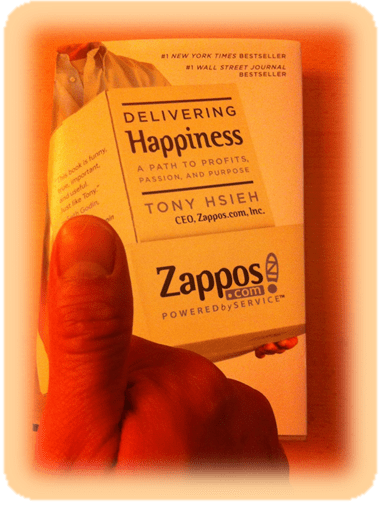
I read this book one year ago. I purchased the book expecting to hear about Tony Hsieh’s approach to delivering great customer service at Zappos. And while the book does include insights related to that, it’s scope is really much more.

Hsieh relates a compressed life story (his own) and how he sought to discover meaning and happiness. The book is filled with a series of entertaining personal anecdotes. Hsieh wraps things up by discussing the science of happiness and declares that the meaning of life is to discover it.

This is my favorite book of all time and has completely changed my outlook on life. For the better.

  1. Read my prior book review on Delivering Happiness.
  2. Check out the book at Amazon.

2) Brain Rules by John Medina

Earlier this year, Medina was the keynote presenter at a conference I attended. I couldn’t attend Medina’s session, but I knew from the related tweets that the audience found it interesting. Later, I’d bump into other attendees and Medina’s session was mentioned often.

I decided (then) to add “Brain Rules” to my reading list and it didn’t disappoint. Medina is a neuroscientist and the book helps us understand how the brain works. This understanding can help us design more effective meetings, classes, events and more.

  1. Read my prior post on how to use Brain Rules to make your next event more impactful.
  2. Check out the book at Amazon.

3) Reality Is Broken by Jane McGonigal
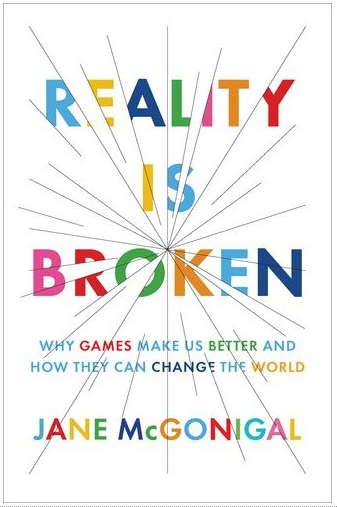
Coincidentally, Jane McGonigal also provided a keynote presentation at the same conference (as Medina). While I also missed McGonigal’s session, I had already read her book. McGonigal presents research from a number of scientists to explain “why games make us happy” and describes how games can be applied to solve problems at a global scale.

I liked this book so much, in fact, that I organized a digital book club in which we assembled via Google+ Hangouts to discuss portions of the book.

  1. Read my favorite quotes from the book.
  2. Check out the book at Amazon.

4) The Third Wave by Alison Thompson

Thompson’s book makes an impact right from the first page. She describes rollerblading down the street. They were the streets of New York City and she was headed south towards the World Trade Center. And it was September 11, 2001.

Thompson, who has training as a nurse, provided emergency response to victims (on the streets) and witnessed the collapse of the second tower. She volunteered day and night in the days immediately following 9/11 and returned there for weeks afterwards, lending a hand each and every day.

Thompson traveled to Sri Lanka to assist victims of a 2004 tsunami and provided relief efforts to earthquake victims in Haiti. “The Third Wave” is Thompson’s “volunteer story.”

It’s not just touching, it’s inspirational. Reading about Thompson’s selfless acts have inspired me to “do more” for the larger world around me.

  1. Check out the book at Amazon.

5) Start Something That Matters by Blake Mycoskie

This book is the story of TOMS, a shoe company who matches “every pair of TOMS (shoes) purchased with a new pair given to a child in need.” (they now sell more than just shoes). Like “Delivering Happiness,” the book does more than just tell the story of a company’s growth.

Mycoskie provides prescriptive advice on how you (the reader) can start something that matters, yourself. With chapter headings such as “find your story,” “face your fears” and “be resourceful without resources,” Mycoskie made me think about jobs in my future – and how they ought to have a meaning larger than just “maximizing profits.”

  1. Check out the book at Amazon.

Conclusion

I hope you found my recommendations useful. If you end up reading any of these books, return here to leave a comment. I’d love to hear your feelings and reactions to reading them.


How I Attended My 25th High School Reunion on Facebook

August 2, 2012

Introduction

Connecting with old friends. Thinking they looked the same as 25 years ago. A sumptuous meal, followed by fun on the dance floor. Memories to last a lifetime. It was my 25th high school reunion. But I wasn’t there.

I considered flying back to New York for the reunion, but a scheduling conflict came up. So instead, I experienced the reunion 2,900 miles away. On Facebook.

Like many other high school alumni groups, mine created a Facebook Group a number of years ago. It’s a great way to stay connected and keep up to date with classmates. And better yet, it’s a fantastic destination for news, updates, photos and comments about reunions. And as I discovered, it’s particularly useful to those unable to attend.

High School Years: A Special Time

While some look back on their high school years in horror, I consider it a very special time. In high school, we find ourselves in the early stages of transition into adulthood. We discover a bit about ourselves, including some definition of what we want to be when we grow up.

To me, it’s this transition that makes our high school years special – after all, who goes to middle school or elementary school reunions? And, high school, for most people, is associated with “home,” which means that a high school reunion (unlike, say, a college reunion) is a return to your roots – the community in which you grew up.

At the same time, high schools are comprised of well-defined social groups, who interact with each other only when necessary: jocks, geeks, band members, greasers (remember them?) and so on. Twenty five years later, our graduating class is simply one cohesive social group.

Jocks catch up with geeks and vice versa. In fact, the labels are completely gone – today, the jock from high school is a 40-something dad, husband or business person, just like every other classmate.

Facebook as the Online Platform for the Reunion

Why was Facebook such an effective platform to “host” the reunion? Well, just about everyone is on it. We were a graduating class of 296 and the Facebook Group has 160 members (54% of the entire class). That’s a significant percentage, when you consider the fact that some classmates have little desire to connect with us, while others may not be aware of the group’s existence.

As the reunion prepares to rock and roll, this photo is shared with the Facebook Group.

With the Facebook Group, “remote” classmates were able to catch a glimpse of the reunion venue before our attending classmates arrived. Others could post messages and tributes, wishing classmates a good time. Here’s a good example:

Facebook: It’s Real-time and Mobile, Too

Twitter gets the accolades for being that dial tone of the real-time web. But I think Facebook is just as real-time (and mobile) as Twitter. The main difference is that Facebook sharing tends to be “With Friends” as opposed to 100% public (on Twitter).

For many of my friends, being online equates to being “on Facebook.” Whether they’re surfing the web or at work, they’re constantly checking their Newsfeed, as well as the Notifications area (for new comments, Likes, Group postings, etc.). I’ll often post an update on Facebook and as the page refreshes to reflect my post, see an immediate “Like” from a Friend. That’s real-time.

On the evening of the reunion, I had forgotten it was happening. I was in Napa, CA and getting ready for dinner. I checked my phone and noticed a number of new notifications on Facebook. Classmates were posting pictures from the reunion. Neat!

Even though I was 2,900 miles away and 3 hours behind, in some sense, I felt like I was there. Some classmates I recognized right away, while others required me to explore the not-so-deep recesses of my memory. Later, at dinner, I’d see new notifications and view new pictures that were posted.

Facebook as the Online Platform for Our Graduating Class

The Facebook Group allows the conversation to continue year-round. In that sense, the reunion was simply an event, along a continuum of interactions and gatherings among our class. And it’s the Facebook Group that ties it all together.

This week, in fact, a classmate uploaded 60 photos from the reunion. Facebook’s Notifications area alerted me to new activity in the Group. The new photos provided more reasons to continue the conversation, as numerous Likes and comments surfaced. And of course, comments beget further comments.

Facebook as a Proxy for the Reunion

Of course, nothing beats face-to-face interactions, especially with classmates you haven’t seen in 10-20+ years. But for those of us unable to make it in person, Facebook was our only available outlet. Not only could I witness elements of the reunion (in semi-real-time), but I’d see the “presence” of other classmates by way of their Likes and comments.

I’d see a “Like” from a classmate, then click on his profile to see what he’s been up to. I might see pictures of his kids, where he’s worked recently and where he currently lives. I found this similar to the manner in which you “catch up” at an actual reunion.

As reunion attendees met, hugged and exchanged email addresses and phone numbers, some of us “Facebook attendees” sent Friend requests to one another. There was certainly an online element to this 25th Reunion.

Conclusion

On Sunday evening, I returned home from Napa. This time, I turned to my tablet to check out the Facebook Group. There, I was able to view 30+ additional photos from the reunion and skim through all of the Likes and comments left by classmates. Because many of the reunion attendees were busy traveling back home, the most active members of the Facebook Group were those who were not even there (in person).

It was amazing how viewing photos, reading comments and checking out classmates’ Facebook profiles triggered deep and meaningful emotions. When I was done, I truly felt as if I just attended the reunion. And while I’ll try my best to attend the next one in person, the Facebook experience was the next best thing.

In closing, I’d like to share a classmate’s comment, who sums it up perfectly:

Note: I invite you to connect with me on .


How iPads Transform Product Marketing

July 25, 2012

Note: The following is a guest post by Gavin Finn, President & CEO of Kaon Interactive, Inc.

Introduction

Most of us are very well aware of how mobile platforms (smartphones and tablets) are transforming sales for B2B companies. Many companies are now arming their sales forces with these tools, and we see what is happening right at the moment of each sales encounter: a very much more excited prospect. An iPad is much more than a mobile email and CRM platform for the salesperson to use on-the-go: it is a new way of engaging customers directly.

Mobile Device Content

“Marketers are generally delivering exactly the same brochures, videos, and presentations for use on the iPads as they were previously delivering on the laptop. What a missed opportunity!”

But what is less obvious, yet just as important, is a new focus on answering the question “what exactly is on these mobile devices?”  It’s all very well to put a mobile device in the hands of the sales force, but what content are you going to use to truly capitalize on this innovative platform?

In reality, today the answer, sadly, is that marketers are generally delivering exactly the same brochures, videos, and presentations for use on the iPads as they were previously delivering on the laptop. What a missed opportunity!

This new delivery environment is designed for a very different type of encounter — not so much a presentation as an interactive dialogue between the salesperson (or marketer) and the prospect. Why not take advantage of this interactive environment by creating and delivering truly interactive content?

Interactive Content

What is interactive content? This is a new kind of application that does not follow a linear demonstration or presentation sequence. It allows users to interact directly with the content itself, rather than watching a video or a pre-sequenced flow of slides.

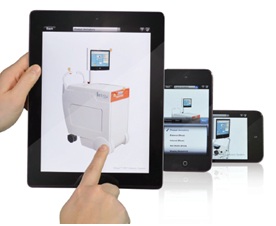
A great example of this is a fully interactive 3D Product Model — where the user sees a photo-realistic virtual representation of the physical product, and can touch the screen to rotate the product, zoom in to any area, measure, and explore the product in any area of detail that is of interest or importance to that user.

What’s unique about this encounter is that even though the information in the 3D product model is the same for every user, each customer experiences this product in a distinctive way. They each have a very specific path that they follow through learning about the product — spending as much time on any detail that they want, and looking at features or benefits in any order.

Interactive Content is Better

Why is this better? Cognitive studies have shown that when people are presented with information (either via a video or by a person) they retain a very small portion of the material (anywhere from 5 to 20%).

However, when a person is actively involved in the process of delivering this information, they remember dramatically more (anywhere from 66 – 75% for the same time period.)  So, it is much more effective to get the prospect involved in the delivery of the marketing or sales information through interactivity, because they will remember more of what you want them to know.

Interactive Sales Experiences

In order to make a sales experience interactive, it needs to engage the prospect in three ways:

  1. Intellectual: There has to be meaningful information conveyed: information that is of interest and is relevant to their needs;
  2. Sensory: One or more of the five human senses must be engaged (sight, smell, sound, taste, touch);
  3. Emotional: The experience has to evoke some specific emotion (anger, joy, fun)

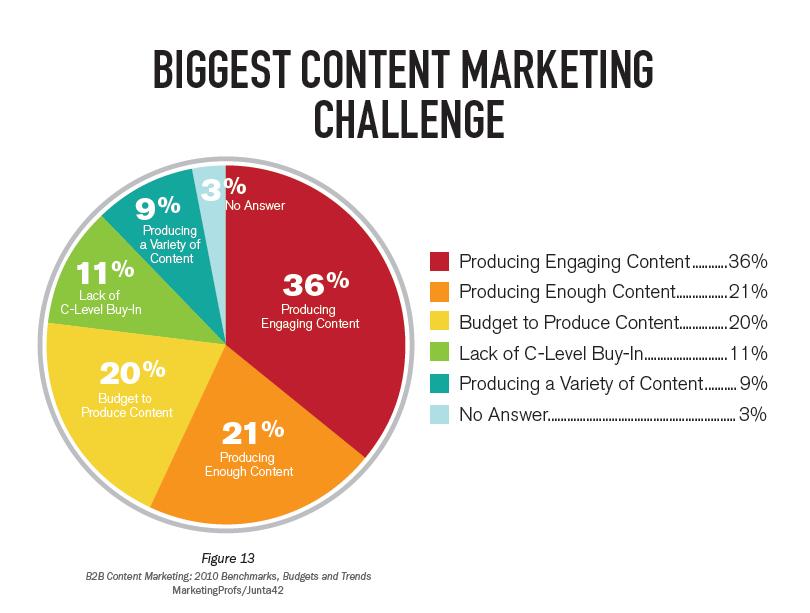
All of the developments in mobile platforms (and interactive content) come at a propitious time for marketers. MarketingProfs released a study that found that B2B marketers had a far greater need for content that was “more engaging” than simply “more” content.

What we know is that studies have shown that many sales people don’t use up to 60% of the content that marketers deliver, and it is not uncommon for sales teams to spend up to 40% of their time customizing or developing content of their own. In other words, there is a really strong demand for more engaging and effective content. Now, happily, there is also an ideal platform on which this kind of content can be delivered! The mobile device — smartphone or iPad.

“A mobile application is an easy way to put a product demo into the hands of a salesperson. Instead of carrying a big physical presentation around, it can be in their hands at all times and deliver collateral that engages the client.” –Michael Greene, Forrester Research Analyst

Kaon 3D Product App

The Kaon 3D Product App, mobile application is an example of the perfect combination of stunning visuals, interactivity, and ideal delivery device. When sales teams have the ability to show their customers every product in their portfolio, at every sales and marketing encounter, they are empowered to capture the most out of every planned and unexpected face-to-face customer touch point.

But when those sales encounters are turbo-charged by giving the customer control of their own interactive experience, a powerful and transformative experience is realized. Not only does the right message get conveyed at the right time, but it is also delivered in the most effective way possible — so that the customer retains the critical information necessary for them to understand the benefits resulting from the differentiation inherent in your products and solutions.

The direct sales and marketing benefits from this type of interactive solution on the iPad are many, and companies realize these benefits almost immediately.

Cisco Systems uses its Interactive 3D Product Showcase on the iPad to shorten sales cycles, in more than 100 countries. Ciena Corporation uses its Interactive Product Portfolio on the iPad to deliver its product and solution message at a variety of venues, helping to eliminate 85% of shipping and drayage expense from trade shows.

Other companies have developed interactive 3D Product catalogs on the iPad, using Kaon’s mobile applications, to deliver a consistent, compelling sales message to sales and channel partners all over the world, ensuring that everyone is selling using a common set of the most effective value propositions.

Conclusion

True interactivity, putting the customer in the “driver’s seat”, means more effective delivery of the right product information in a way that will have a positive effect on buying decisions.

Mobile platforms mean that no sales opportunity is missed — whether at a customer’s office, an unexpected airport meeting, or a trade show. Fully interactive 3D product models mean that marketers don’t have to ship physical products to every venue — saving a great deal of money, time, and effort, while achieving superior results. Isn’t that what every marketing and sales department wants? More sales, at a lower cost.

About the Author

Gavin A. Finn, Ph.D., is President and CEO of Kaon Interactive, Inc. For questions about this post, feel free to contact Gavin via email.


Let’s Hangout, Then Share Our Conversation with the World

July 21, 2012

Introduction

I’ve met neither Heidi Thorne (@heidithorne) nor Marti Konstant (@martikonstant) in person. I’ve known Heidi for quite some time (via Twitter) and earlier this week, she introduced me to Marti. It’s the sort of thing that I wrote about previously – how magical social media can be in forging new connections.

Here’s the sequence of events:

  1. I met Heidi (via Twitter) – several years ago.
  2. We followed (Twitter) and circled (Google+) each other.
  3. I caught up with Heidi (via Skype) – this week.
  4. Heidi introduced me to Marti (via Twitter), because she saw a similar background and set of interests (between Marti and me).
  5. Marti and I followed (Twitter) and circled (Google+) each other.
  6. Marti invited me to be interviewed in her Marketing Hack Chat (#marketinghack) on Google+.

Looking back on this sequence, I found it interesting that these connections and conversations occurred via Twitter, Google+, Skype and Google+ Hangouts. What was absent? Phones, emails and automobiles.

Marketing Hack Chats

I wanted to further highlight these Marketing Hack Chats that Marti has put together. You can view these on Marti’s Google+ Page and on her YouTube Channel. Let’s cover some reasons I find Marti’s chats appealing.

Simple Logistics: Video at the Speed of a Mouse Click

Marti’s own marketing hack involves the use of the “Hangouts On Air” feature, which live streams the interview to YouTube, but also records the session, for on-demand playback on YouTube – and in embedded players, such as Marti’s Google+ page.

The video logistics are super simple and so is the publishing process. In fact, there’s no “process,” as Marti can publish the “finished product” to her Google+ page instantly. In addition, the video becomes available for viewing (and search) on YouTube at the same time.

How’s this for efficiency: I joined Marti’s Hangout at 12PM PT and the video was published on her Google+ page a mere 22 minutes later. Nice.

Cost Effectiveness

With Google+ Hangouts, Marti doesn’t have to worry about a video studio, a video crew, editing software or purchasing mass amounts of storage. As you’ll see in these videos, Marti records them from home, with a staff of one (herself).

So, assuming Marti already had a computer, webcam, broadband line, etc., then her incremental cost for the Marketing Hack Chat is ZERO. She plans to interview and record 20-30+ marketing professionals from all over the world. Where else (besides social media and social technologies) can all of this be coordinated and executed at a cost of zero?

Now, of course, by “cost,” I mean hard costs. There is the time and energy required (by Marti) to network with marketers, recruit speakers, prepare for the interviews, hold the interviews, promote the videos, etc.

The Theme

Marti told me that the idea behind her program is to provide marketers with actionable advice that they can use right away. I love this principle. As a marketer herself, Marti is finding a great recipe to connect with other marketers:

  1. Advice from peers “in the trenches.”
  2. Video as the delivery mechanism.
  3. Useful information (a “hack”) that can be put to use right away.
  4. Shorter is better (3-5 minute videos).
  5. A hash tag (#marketinghack) to further brand and promote the program

Conclusion

Thanks for having me on your program, Marti! I enjoyed chatting with you. I’m working my way through all of the marketing hacks and look forward to the subsequent interviews you’ll publish. And for those of you interested, you can view my hack below:


Initial Impressions of Google+ Events and Hangouts

July 14, 2012

Introduction

I attended my first Google+ Event this week. It had no physical venue, taking place exclusively on Google+ and YouTube. The New York Times hosted the event. In the lead-up to the 2012 Olympics, the Times has been hosting Google+ Hangouts with Olympians. I came across the Hangouts while visiting the Times’ London 2012 Olympics page.

You can still check out the Google+ Events page. On that page, as well as on YouTube.com, you can view an on-demand video of the entire Hangout.

The Hangout was hosted by Ken Belson, a sports reporter from the New York Times and featured Shalane Flanagan (a U.S. marathon runner), Mary Wittenberg, (President of New York Road Runners) and Bob Sherman (a recreational runner, who’s completed 29 consecutive NYC Marathons).

I’d like to share my initial impressions of Google+ Events and Hangouts.

What I Liked

Logistics

As far as streaming technology goes, the Google+ Hangout experience (which broadcast via an embedded YouTube viewer) was quite good. The video picture was sharp and crisp. Google+ Hangouts auto-detect who’s speaking and switches the focus to that person.

These transitions worked so well that it reminded me of watching television (where there’s a human being controlling those switching decisions). As the host, Belson did a fine job of detecting ambient noise and asking whether a participant wanted to speak. He’d pause to ask, “did you want to jump in?”

Experimentation and Exploration

I commend the New York Times for exploring and experimenting with emerging technology. The Times has always been a primary news source for me, but the experience has revolved around articles, with occasional on-demand videos.

A live event brings an entirely new experience for Times’ readers. First, the event allows Times’ columnists (e.g. Ken Belson) to connect more closely to their readers. Second, readers can see and hear from personalities that otherwise would not have been possible (e.g. an Olympic athlete).

The use of emerging technology comes with some risk. For instance, at one point in the Hangout, Ms. Flanagan’s image froze, and then her presence dropped off completely. She re-joined a few minutes later and continued to field questions.

To me, that was completely fine. It’s a learning experience. The Times learned from this and we’ll all learn and evolve – I’m sure it was the same with television broadcasts in the early days. Let’s keep experimenting and exploring.

What I’d Like to See

The Times has done a great job of connecting U.S. Olympic athletes to its readers. And to start, it’s not surprising that they sought a controlled environment, with a host (Belson) who steered the conversation among the three guests.

As media outlets continue to use online (and social!) broadcasting tools, I’d like to see them take more advantage of the interactive and engagement capabilities that these platforms provide.

Stronger Connection from Audience to Guests

Users could post questions (for Ms. Flanagan) within the Google+ Events page and I noticed that a number of good questions had been submitted prior to the Hangout. In addition, during the Hangout, I noticed a number of comments and questions posted.

While Belson did pose a user-submitted question to Flanagan, it was from “a reader,” rather than a question posted within the activity stream. In the future, I’d love to see more questions selected directly from the social platform, with guests actively reviewing and commenting on thoughts posted by viewers.

A More Active Role for Audience Members

I’m sure the Google+ Team is busy at work on product features to support a more complete Google+ Events and Hangout experience. Beyond the existing commenting system, I’d like to see more tools for users to provide feedback and to collaborate with one another.

In addition, audience members should have the opportunity to help steer the direction of the conversation. How about integrating Google Moderator to allow audience members to read and vote on the submitted questions?

Conclusion

While I concluded my first Google+ Event wanting a bit more (interactivity-wise), I commend the Times for what they’ve done. There’s something about a Hangout (compared to a TV interview, for instance) that puts you closer to an Olympic athlete. You hear about their diet and their training regimen, all with the intimacy of seeing them from their laptop’s webcam.

I look forward to subsequent Hangouts. And to Shalane Flanagan, best of luck in London!


How Social Media Can Create Lifelong Friends (That You Never Meet)

July 12, 2012

Introduction

I thought it would be neat to create a Twitter List of people I’ve met “in real life” (you can find the list here: @dshiao/met-in-real-life). I’d scan both my Twitter stream and my “Interactions” tab and add people to the list.

And then a funny thing happened: for a few people, I had to think long and hard about whether we’ve met “in person.” For some people, I was about to add them to the list, then had to do a double take, think some more and realize that we’ve actually never met.

This exercise led me to conclude how wonderful social media can be. Some of these folks whom I’ve never met, I actually consider to be good friends. They may end up becoming lifelong friends, in fact, in which our interactions take place exclusively online.

Let’s consider a few other conclusions I’ve drawn from this.

The Killer Combo: Twitter and Facebook

In the early days of Twitter, I discovered #eventprofs, which I consider a community forged by a single hash tag. I followed active users, they followed me back and we’d check out tweets tagged with the #eventprofs hash tag regularly.

Some #eventprofs users (along with other, non-events folks I’ve “met” on Twitter) “friended me” on Facebook. I gladly accepted. In doing my Twitter List curation, I found Twitter+Facebook to form the killer combo. That is, if we follow each other on Twitter and are friends on Facebook, the lines blur to the point where I have to think hard whether we’ve met in person.

By looking at the links you share on Twitter, I’m able to better understand your interests (i.e. your interest graph). On Facebook, I learn about your interests – and much, much more. I’ll “hear” about your weekend plans, movies you’re watching, comments your kids made and updates on your favorite teams.

In addition, seeing pictures of your friends and your extended family makes me (by extension) a second order member of the family. The New York Times ran a piece about family estrangement in the Facebook Era, which made wonder whether I’m seeing pictures (in my Facebook Newsfeed) that some family members (of my Facebook friends) are not.

In any case, Twitter+Facebook are quite effective in sustaining friendships – and, in creating new friendships (online).

Status Updates Build a Complete Picture

Disney executive Bob Iger once said, “I’ve learned more about my daughters on their Facebook pages than I did while I was raising them.” (quote source).

I love that quote and happen to agree: family members can live in the same house, but learn more about each other from status updates. It’s a perverse thought that may be decried by the populace at large, to which I say: “it is what it is.” Here’s how status updates help to build a complete picture of yourself:

  1. Captures trivial moments. I may post about something that catches my attention or that I find entertaining. I may mention the moment to family members later on, but then again, I may not!
  2. Ongoing archive. Look back at your own Facebook Timeline. You’ll probably notice ideas, emotions, frustrations, elation and more. The series of status updates really do say a lot about you.
  3. Captures fleeting thoughts. Sometimes I’ll post a thought, idea or joke to Facebook that’s fleeting. If I didn’t post it at that moment, I might have forgotten about it. But I did, so it’s now part of that ongoing archive.
  4. Communicates goals and aspirations. Via status updates, people share what they want to do this weekend, what they want to achieve this quarter and what they want to do in life.
  5. Shows what’s important (to you) in life. Status updates also build a picture of what’s important in our lives: our family, our jobs, our values, etc.

Online Towns More Effective Than Physical Towns?

Let’s take all the people I’ve met online (and know fairly well) – let’s call it 250 people. Let’s put those same 250 in the same town as me. I wonder: would I have ended up meeting those people and getting to know them, in the same manner that I did online?

You know, I’m not so sure about that. Some of the 250, I may never have met in the first place – there are still families in my neighborhood less than ten doors away that I’ve yet to meet. This is again a perverse thought, but here’s why “online towns” facilitate more meet-ups:

Meeting doesn’t require serendipity.

In a small town, you often meet people via serendipity: you bump into someone at the post office or supermarket, or you take a run at the same time as a neighbor. There’s less serendipity online: people have a fixed presence and you can always find them, even if they’re not currently “online.”

Lower barrier to interaction.

When you meet someone face-to-face, there are certain social norms and customs that we follow. When you “meet” someone online, the social norms take a different dynamic and there’s often less holding us back.

For instance, I may tweet to someone about their awesome profile photo (on Twitter), whereas I’m less inclined to walk up to that same person (at the supermarket) and make a similar comment. As such, I wonder whether meet-ups and interactions I’ve had online would have worked out as well in person.

Lifelong Friends Should Meet (Eventually)

Now don’t get me wrong: despite my observations (above), I don’t believe in living life exclusively online. In fact, I crave face-to-face connections, especially meeting new people. So despite my observations of the “online town,” I’d love nothing more than a physical town, in which meeting others could be as convenient as happens online.

I have a colleague with whom I’ve had numerous conference calls, video conferences and related meetings. After a year working together, we had the chance to meet in person. I was prepared to say “great to finally meet you,” but she jumped in first. Her comment? “Nice to see you again.”

And that’s just the thing with these online friendships (or colleagues) – you develop such close ties online, that it’s a shame to never meet in person. At business conferences, I’ll run into people that I follow on Twitter (but have never met) and it’s a great feeling. You know each other so well that you tend to hug, rather than shake hands.

Conclusion

I often wonder what the world would be like if Facebook, Twitter and other social networks didn’t exist. Would I still meet new people? Would the Arab Spring have happened? I think the answer to both might just be “yes,” but one thing I know for sure: there’s just no way I could have “met” so many people from so many parts of the world without social networks. And when I come to a town near you, I may look you up (on Twitter).

Note: I invite you to connect with me on .


Lessons, Tips and Useful Thoughts on Social Marketing [PRESENTATION]

July 5, 2012

The following is a guest post by Autom Tagsa. Follow Autom on Twitter (@autom8).

Introduction

The recent and successful Canadian Association of Exposition Management’s 2012 annual conference (#caem2012) offered me a chance to share the preso below on the topic of social media and marketing. I am honoured to have had the opportunity to speak and am profoundly thankful to both SME Canada and the CAEM for granting me the privilege.

The Presentation

Those who occasionally thumb through my blog will know that the majority of the content in the preso is not terribly new. Nonetheless, the  points serve to remind seasoned SM users while offering pointers and “AHA” moments to those just beginning to sink their teeth into social.

All that I have read, tried, tested, learned, blogged about and assimilated through observation, conversation and practice since 2008 makes up this presentation. Inspiration comes easily with specific points of reference during one’s ongoing journey in social media. This is why I never tire of praising my Twitter follows (yes, y’all rock) for their continued feedback, support and constructive exchanges.

View the Presentation via Google Docs

The menu

AppetizerPersonal branding and some wild Stats

Main course:

  1. Tips on social strategy
  2. Blogging: key lessons
  3. Mobile is here and you’re already behind

Dessert:

  1. Influence vs reputation

Thank you Dennis Shiao (Director, Product Marketing, INXPO) and Joseph Fiore (Owner, RepuMetrix): gentlemen and scholars alike. Thanks again for your invaluable review and input.


How You Can “Imagine” to Be More Creative

June 29, 2012

Image source: Amazon.com

Introduction

I recently read the book “Imagine: How Creativity Works” by Jonah Lehrer. While Lehrer has gotten himself into a bit of hot water over re-purposing past work in new places (including portions of “Imagine”), this news didn’t impact my enjoyment of the book.

I found it fascinating to read stories of how creative insights were born and to understand some of the neuroscience behind what sparked them. What follows is ways I plan to apply the book to spark more creativity in my own life.

1) Sleep with a Notepad and Pen on the Nightstand.

I’m amazed at the crazy stories my brain dreams up overnight. I once had a murder mystery dream that involved the Queen of England and the tennis player, Peanut Louie. One of these days, I’ll analyze what that dream really meant.

“Imagine” describes the prefrontal cortex, an area of the brain that “holds back our imaginative murmurs.” When we sleep, “the prefrontal cortex shuts itself down; the censor goes eerily quiet.” In 1965, Keith Richards of The Rolling Stones fell asleep with a tape recorder running. When he played back the tape the next day, he heard a lot of snoring, but he also found the whole verse of a song. That verse would become “(I Can’t Get No) Satisfaction.”

I often dream about work. Once, I dreamed about working through a web application (related to work), but doing it in an entirely new (and odd) way. I don’t recall precisely the details of that new way, but imagine if I was on to something a la Richards and his hit song. As such, I now keep a notepad and pen on my nightstand.

This allows me to record the details of my dreams (if needed) when I wake up, whether that’s in the morning or in the middle of the night. I’m often stirred awake by an interesting dream (in the middle of the night), ponder its “weirdness” for a few minutes, then forget all the details by morning.

It’s time to increase bedtime ROI – product feature ideas, marketing campaigns and more. All conceived in my dreams.

2) More Productive Use of Showers and Outdoor Runs.

Chapter 2 of “Imagine” is titled “Alpha Waves (Condition Blue).” A portion of the chapter covers why creative insights happen often during warm showers. Why is that? Because warm showers are relaxing and “when our minds are at ease … we’re more likely to direct the spotlight of attention inward.” And when the spotlight is directed inward, we’re able to make the connections that lead to insights.

In fact, in a prior post, I wrote about my use of the shower: “10% of my tweets are now conceived while I’m in the shower, where I generate random thoughts or random observations.”

I also find my mind at ease when I go for long, outdoor runs. While on the running trail next to the reservoir, I feel disconnected from the hustle and bustle of daily life and that allows my mind to wander and roam. It’s far different than running on a hotel’s treadmill, as the activity of other exercisers and the sound from the overhead TV don’t allow me to disconnect as well.

While I’ll often wander into random insights during showers and runs, I’ll now look to utilize them during specific times of need. For instance, if I need to develop a feature or campaign and I feel a bit stuck, I may “disconnect” and brainstorm a bit. I’ll head out for a run, followed by (of course) a warm shower.

3) Talk to Everyone in The Organization.

“Imagine” describes how the late Steve Jobs designed the office space at Pixar Animation Studios. He placed the meetings rooms, cafeteria, coffee bar, gift shop and restrooms in the center of the building. He said, “everybody has to run into each other.”

One producer at Pixar noted that it worked: “I get more done having a bowl of cereal and striking up a conversation or walking to the bathroom and running into unexpected people than I do sitting at my desk.”

In the same chapter, we learn about an MIT professor who studied office conversations and workplace data. His finding? “Increasing the number of colleagues with whom an employee consults contributes independently to performance.”

As a product guy, I plan to spend more time striking up random conversations with colleagues – especially those outside of my own functional area. After all, when you’re building products, your customers are more often the folks in Finance, Human Resources and Customer Service, rather than your peers in Product Management or Marketing.

Colleagues in other departments have different expertise and they’re likely to think differently. This means that they’re bound to have valuable insights you can tap into and apply (either directly or indirectly) into creating better products. In fact, I believe that product organizations ought to crowdsource product ideas across the entire organization.

4) Daydream More.

A psychologist from the University of Memphis discovered that students with attention deficit hyperactivity disorder (ADHD) got significantly higher scores (than non-ADHD students) on difficult creative tests.

ADHD (and the inability to focus) can be a “creative blessing” – “when we need to work, we force ourselves to concentrate – this approach can inhibit the imagination.” Lehrer goes on to note that if you relax and indulge yourself in distractions, insights arrive once you stop looking for them.

Later in the book, Lehrer relates how the famous “Just Do It” campaign (from Nike) was conceived by an ad executive via a random thought about a convicted murderer (Gary Gilmore). When Gilmore was asked if he had any final words before his execution, he said, “Let’s do it.” How did the ad exec think of this? “He just popped into my mind.”

So in times where my running and showers don’t produce, I’ll do some daydreaming. I’ll also embark in other random diversions, such as watching a movie, listening to music or reading a book. Perhaps they’ll spark some creative genius (a la the Nike example) – or, by taking a break, I’ll find what I was looking for.

Conclusion

By now, you’re probably suspicious about my desire for creativity. You think it’s just a ploy to sleep earlier, go for more runs, daydream more often and watch more movies. Well, we’ll see. I may in fact be doing a lot of that, but it’s all in the interest of science. If I can prove “how creativity works” and produce some of it at the same time, then the showers and sleep will have been worth it.

Note: I invite you to connect with me on .


How Social Media is Similar (and Different) to Swimming

June 22, 2012

Introduction

I learned to swim in pre-school and continued with swimming lessons during my elementary school years. Besides wading in the water during pool parties, my swimming skills went largely unused for some time. Interestingly, to obtain my undergraduate degree, I was required to pass a basic swim test. So those early lessons helped me complete my education.

Recently, I supplemented my exercise routine by doing lap swimming at the local pool. It was there that I observed similarities (and differences!) between swimming and social media.

Similarities

It Works Out Every Part of Your Body

While I run more often than I swim, I find that swimming exercises far more parts of my body than running. After a long run, I may “feel it” in my legs and calves. After swimming many laps, I “feel it” all over.

I compare this to marketers’ use of social media. Effective social media marketing “exercises” many key ingredients of marketing:

  1. Understanding your market.
  2. Understanding your target audience.
  3. Curating content.
  4. Sharing and publishing content.
  5. Crafting the right messaging at the right time.
  6. Engaging with your target audience.
  7. Generating demand for your products and services.

Marketers who utilize social media marketing, then, are bound to stay in great shape.

Must Keep Moving to Stay Afloat

To stay afloat in the water, you need to move your arms and legs. But just staying afloat means that you’re not getting anywhere. It’s similar with social media: you need to maintain constant activity in order to feel like you’re getting somewhere.

If you launched a blog, but haven’t updated it in 4 months, then it’s basically under water. Users visiting a “non-current” blog are unlikely to subscribe to its RSS link. If you started a Twitter account, but haven’t tweeted in 2 months, then you may need a lifejacket.

The Hardest Part is Getting Your Face Wet

Sometimes, the hardest part about an activity is taking the first step. When I took my first swimming lesson, my biggest fears were (a) getting in the water and then (b) putting my face in the water.

With social media, the hardest step can be taking that first step. But once you sign up for that first account and get acclimated to the features and customs of the service, you may find that things start to come naturally – similar to how you quickly progressed from non-swimmer to beginner.

Play By the Rules

Whether it’s a pool or the beach, most swimming environments have a set of rules (e.g. no diving, no horseplay, etc.). If you violate the rules, you’ll be called out – and if you continue violating, you may be asked to leave.

In social media, the rules are less hard and fast. Instead, there are customs and acceptable behaviors, compared to defined rules. That being said, it’s similar to a pool: others will call you out if your behavior is unacceptable. And if your behavior is extreme, a service may ask you to leave by shutting down your account.

Jack of All Trades, Master of None

Photo credit: The Swim Channel’s Facebook page.

My best stroke happens to be the breast stroke. My current focus is to improve upon my freestyle. Not many of us can be Mark Spitz or Michael Phelps, all-time great swimmers who mastered a number of strokes.

Could you imagine if in swimming, new strokes were invented every week? Well, that’s what it feels like with social media. We all have a fixed amount of time to spend on social media, so it’s not practical to be a jack of all trades.

There’s Facebook, Twitter, Google+, Pinterest, Instagram and many other social networks. Find a handful of services to focus your time and energy on. The gold medal records (for social media) can wait.

Differences

Don’t Need Hands-On Instruction

It’s nearly impossible for toddlers (or adults, for that matter) to learn swimming on their own. Typically, children start out with a series of private lessons – they learn how to put their face in the water, how to float and how to perform the basic strokes.

With social media, you can learn by doing. I started on Twitter way back in 2007. Initially, I had a hard time grasping exactly what to do, so I got help from more experienced users. After that initial period, however, I learned by doing.

No Lifeguard on Duty

At most pools and beaches, there’s a lifeguard on duty. If you’re not able to stay afloat, the lifeguard will dive into the water and save you. There’s no lifeguard on social media. By tweeting or posting the wrong thing at the wrong time, people have lost their jobs and caused relationships to end. Social media can turn celebrities into villains and saints into Satan. So tweet with care.

Social Media is More Quantitative

You may not know it, but social media is highly quantitative, with a set of game mechanics built in. There’s connections on LinkedIn, followers on Twitter, friends on Facebook. Number of retweets, number of Like’s, number of re-pins. And of course, there’s influence scores, such as Klout and Kred.

If you’re a competitive swimmer, you time your laps and count how many you do in a given workout. But most people go to the pool or beach simply to hang out in the water and cool off. And there’s really nothing quantitative related to doing that.

You Don’t Need to Stay in Your Own Lane

When swimming laps at the pool, you must stay in your own lane. In social media, the lanes have been removed and that’s the great thing about it. You’re free to wander across the entire pool, meeting and learning from new people. You can join Twitter chats, publish comments on a blog posting and join Google+ Hangouts. This exploring and discovery has helped me learn a lot about social media.

Subscribe

Did you enjoy this blog posting? If so, you can subscribe to the feed here: https://allvirtual.me/feed/


In Case You Missed It: Posts on Pinterest, Twitter, Google Plus and Personal Branding

June 16, 2012

Topic: Pinterest

Topic: Twitter

Topic: Google Plus

Topic: Social Networks

Topic: Personal Branding