How to Avoid and Minimize Fake Social Media Reviews

October 22, 2012

Introduction

I was surprised to come across a press release from the research firm Gartner, which stated that “by 2014, 10-15 Percent of Social Media Reviews to Be Fake, Paid for By Companies.” As someone who relies on reviews to make purchasing decisions (e.g. on Amazon, Yelp, TripAdvisor and many other sites), this concerns me.

For actions such as views, Likes and followers, the “cost” (overhead) is low, while the action can be performed somewhat anonymously. A review, on the other hand, requires more “work,” and is often associated with some sort of identity (profile) of the reviewer.

In the press release, Gartner indicated that companies will emerge to assist brands: “Gartner analysts said they expect a similar market of companies to emerge specializing in reputation defense versus reputation creation.”

I have a better solution – and that’s to “attack” the root of the problem, which is the review site itself. Thankfully, many review sites are already structured to separate the quality reviews from the fake reviews.

Let’s look at some examples and consider some related ideas.

Review the Reviews.

“Meta,” according to Wikipedia, is “a concept which is an abstraction from another concept, used to complete or add to the latter.” To determine the worthiness of reviews, there’s nothing bet-ah (better) than meta (bad pun).

Let’s consider the reviews on Amazon. First, notice that the heading is “Most Helpful Customer Reviews.” Amazon allows users to indicate whether a review was helpful and then sorts their reviews list in order of “highest number of helpful review ratings” first.

The “Most Recent” reviews are listed off to the right column, in less prominent real estate. Also note that the reviewer is an “Amazon Verified Purchase,” which means that he purchased the book on Amazon.

Granted, one can still manipulate the system, as the New York Times detailed in a piece titled “The Best Book Reviews Money Can Buy.” But the Amazon system is effective because it relies on its users to tell us which reviews have been helpful. It also means that to display the “verified purchase” label, a fake reviewer would need to purchase the book on Amazon.

Establish “On-Site” Reputation.

In the Amazon example, the helpful reviews rose to the top, while the “non-helpful” reviews remained at the bottom. In this way, the Amazon reviews are similar to search engines, as few people click past Page 1 of search results pages (and the cream rises to the top).

In addition to rating the reviews, sites could establish reputation ratings for end users. eBay has been an innovator on this front, with their Feedback ratings. If you’ve ever purchased something on eBay, you probably viewed the seller’s ratings and read through comments (on that seller) left by other users.

Of course, an online review is a much different than an online purchase. Reviews won’t garner as much feedback as transactions. But the concept remains: allow users to establish reputation on the site, which will influence other users’ judgment on the published reviews.

Amazon, in fact, has a program called “Hall of Fame Reviewers” and Yelp has a program called the Yelp Elite Squad. Reviews that prominently display these sorts of reputation “achievements” (next to the reviewer) emphasize the “high reputation users” over those who may have ulterior motives (i.e. fake reviews).

Integrate Third Party Reputation Data.

Services such as Klout, Kred and PeerIndex aggregate public data (about you) to calculate online reputation scores. While not quite as useful as “on-site” reputation, linking reviewers to an online influence profile could help ward off fake reviews.

Influence equals credibility. And in considering whether a review is bonafide, I’d take an online influence score over nothing (i.e. an anonymous profile).
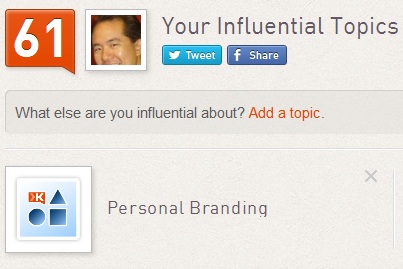
Deeper integrations between review sites and online influence services could tie “review topics” (e.g. books on Finance) to “influence topics” (e.g. Finance).

So, for instance, a review of a Finance book could link to the reviewer’s “Finance topic” page on the online influence site. Users reading the review could then determine how much weight to place on that particular review.

Integrate Third Party Social Identities.

Blogs and web sites use services such as Livefrye to conveniently integrate social identities (e.g. Twitter, Facebook, LinkedIn) to web site and blog comments. Tying reviews to a social identity is far better than anonymous reviews. At minimum, the reader can visit the social profile of reviewers to make a judgment on their worthiness.

Conclusion

Online reviews play an enormous role in worldwide purchasing decisions. As with any data source, effectiveness is closely tied to credibility.

If 10-15% of social media reviews are fake, then credibility suffers. And when that happens, people will look for other means of purchasing decision research. As such, web sites that provide reviews should look to successful examples from Amazon, Yelp, eBay and others to help avoid and minimize fake reviews.

Note: I invite you to connect with me on .


The Cost of Convenience on Social Networks

October 11, 2012

Introduction

Technology can do great things. It can save you time and save you money. With social media, it can connect you (via the device in your pocket) to people around the world – people you otherwise would never have “met.” But is there a drawback or cost to the convenience that technology provides?

An Example: The GPS

Consider the GPS (Global Positioning System). When I purchased my first GPS unit in 2005, I thought it was the world’s finest invention. Whether I was driving near home or in a remote town, I could plug in a street address and this magical device would take me there, turn by turn.

When I moved to the West Coast a few years later, my handy GPS helped me get around my new surroundings, from the department store to the movie theater to my new favorite restaurants. But now that I’ve been out West for five years, I’m finding a “cost” for the GPS that goes beyond the retail cost.

The “cost” was a dependence on this technological marvel, which meant that I didn’t truly know my own surroundings. Instead, I’d have the radio on, take the turns that the GPS called out, but not pay attention to the route I was taking (and, as a side note, I’ve since switched from a GPS device to the excellent Waze app on my iPhone).

Now, if I’m driving locally to a place I’ve never been before, I’ll plug the destination address into Google Maps and review the route. Then, I’ll drive to my destination without any technological guidance. And I find that curbing my dependence on the GPS has helped me better learn the local roads and routes. And not to worry, Waze – you’ll still come along for the ride when I go out of town.

Now, let’s consider the cost of convenience on social networks.

Liking a Comment on Facebook.

In 2010, Facebook rolled out the “Like” button on Comments. At first, I found this a bit curious: you have a button to “Like” the original post and now, Facebook is allowing you to “Like” interactions beneath that post. As I started using it, however, I discovered its elegance: you (the poster) could acknowledge interesting or witty comments with the click of a mouse.

The person whose Comment you Liked would see your action and perhaps they’d become more inclined to comment on your subsequent posts. There have been occasions where I ponder how to respond to a comment I’ve received. If it was a witty comment, I feel the need to return the favor with something equally witty. I’ll occasionally get “stuck,” and not know what to say. So instead I simply click “Like” (on the comment) and I’m done.

So what’s the cost? More substantial and meaningful interactions between you and the commenter.

Twitter’s Retweet Button.

In 2009, Twitter rolled out the retweet button (and function). The retweet (or, “RT” for short) was a capability conceived by Twitter’s users. And prior to the retweet button (or, the equivalent function in Twitter clients), users had to manually compose retweet’s by copying the tweet content, then sticking a “RT @USER” in front of the tweet.

The retweet function made it super convenient. With two clicks of the mouse (the first to retweet, the second to confirm it), you just published a tweet, while promoting the original tweet content. Because the retweet preserves 100% of the original tweet, the cost of this convenience is an absence of commentary (from you).

When I want to add my own thoughts (e.g. “Great post” or “Excellent points”) on a retweet, I’ll manually compose it (with a copy/paste of the original tweet), then change the “RT” to “MT” (for “Modified Tweet”). This makes the process less convenient, but I find the additional commentary worth it (and I bet the original tweeter may as well).

Location-based Checkins.

Location-based check-ins began on services like Foursquare. Their purpose was to alert friends (on the service) of your location. Perhaps you’re at Happy Hour and you see that some friends just checked in from the watering hole down the street. So you go there to find them.

So that was the original point – and a fine point it was. Soon, services such as Foursquare enabled you to broadcast your check-in to your social media accounts. And our tweet stream started to get filled up with tweets, like those shown above.

So the cost of the check-in convenience is a proliferation of rather trivial tweets. If I’m following you on Foursquare, then yes, a check-in is meaningful. However, if I’m following you on Twitter (only), your location at this particular point in time isn’t meaningful.

Facebook Check-ins

Similarly, Facebook has a check-in feature that enables you to list your location, along with tagging Facebook friends that you happen to be with. For friends and family on Facebook, I am, in fact, more interested in where you happen to be.

But, the convenience of the check-in means that more significant and meaningful descriptions (of  your location) go by the wayside. For instance, compare these two Facebook posts:

And here’s the more convenient one:

“Climbing to the peak – at Mount Everest”

Photo Uploads.

Don’t get me wrong: photos are great and pictures are, in fact, worth 1,000 words (or more). Sometimes, however, the convenience of uploading 50 pictures (to an album on Facebook) gives you the “excuse” that the pictures can tell the story (on their own). If a picture is worth 1,000 words, couldn’t you at least tag each one with 140 characters?

Conclusion

On the social web, we’re able to make connections and have interactions with people from across the globe. For me, that makes old fashioned, face-to-face interactions all the more meaningful. Similarly, the ease with which we can post, share, re-post and re-share on social networks means that we miss out on more meaningful dialog and interactions. This “cost tradeoff” is something to keep in mind as social networks continue to grow and evolve.

Note: I invite you to connect with me on .


The Role of Connectors (like @JeniseFryatt) in Social Networks

September 22, 2012

Introduction

In “The Tipping Point” by Malcolm Gladwell, there’s a chapter called “The Law of the Few: Connectors, Mavens, and Salesmen.” Gladwell introduces us to the concept of a Connector, “people with a particular and rare set of social gifts,” and he describes the most famous Connector in U.S. history: Paul Revere.

On the evening of Paul Revere’s famous ride (“The British are coming!”), a fellow revolutionary named William Dawes set out on a similar ride, but along a different path. Dawes’ ride, however, didn’t alert the community in the way that Revere’s did.

Local militia leaders were not awoken and compelled into action. It was a Connector like Revere who stirred people from sleep and rallied them to action.

10 Characteristics of Connectors

In the rest of the chapter, Gladwell tells the stories of modern day Connectors. By way of these stories, we come to learn common characteristics of Connectors:

  1. “An instinctive and natural gift for making social connections.”
  2. “More of an observer, with the dry, knowing manner of someone who likes to remain a bit on the outside.”
  3. Simply likes people, in a genuine and powerful way, and he finds the patterns of acquaintanceship and interaction in which people arrange themselves to be endlessly fascinating.”
  4. “Connectors are important for more than simply the number of people they know. Their importance is also a function of the kinds of people they know.”
  5. “People whom all of us can reach in only a few steps because, for one reason or another, they manage to occupy many different worlds and subcultures and niches.”
  6. “Finds everyone interesting … have some instinct that helps them relate to the people they meet.”
  7. “We rely on them [Connectors] to give us access to opportunities and worlds to which we don’t belong.”
  8. “Gregarious and intensely social.”
  9. “An uncanny genius for being at the center of events.” [in reference to Paul Revere]
  10. “They see possibility … while most of us are busily choosing whom we would like to know and rejecting the people who don’t look right…”

The Social Web’s Paul Revere: Jenise Fryatt

Chances are you know this person. Her name is Jenise and she’s a Connector. I “met” Jenise via Twitter – she’s quite active there (@JeniseFryatt), but also connects with people on Facebook, Google+, Pinterest and elsewhere.

If the “British are coming,” I’d want Jenise to be the one on that horse, shouting from the rooftops (and of course, she’d probably go on Twitter first, where she’d immediately receive 100 retweets).

When I got to “The Law of the Few” chapter while reading “The Tipping Point,” I said to myself, “Connector? You’ve just described  Jenise.” Coincidentally, Jenise recently wrote a piece on the Cvent blog about ways to think like a connector.

I had the pleasure of meeting Jenise (“in real life”) at PCMA’s Convening Leaders conference earlier this year. Prior to that, I had developed a friendship with Jenise entirely online. All ten of the Connector descriptions (above) apply to Jenise. Here are examples of how Jenise connected me to others (people, opportunities, etc.):

  1. Received mentions on Twitter (by Jenise) for #EIR. At first, I didn’t know what “EIR” stood for. Jenise was interviewed on Liz King’s blog and provides the background behind “Engage, Inform, Retweet.”
  2. Was asked by Jenise if she could re-publish some of my blog postings on Engage365.org (at the time, Jenise was that site’s Community Manager).
  3. Connected me with other users on Twitter, whom I otherwise would not have met. One example: Michael Eliopoulos (@TheReelMJE), with whom I exchange thoughts on the world of sports.
  4. Invited me into a “tribe” of event professionals on Triberr (a neat service that allows our “tribe” to share and promote each other’s blog postings).
  5. Jenise has an active and widely read blog called “Sound n’ Sight” and she often publishes guest posts from industry professionals. Jenise recently published a Q&A with me about blogging.

The Role of Connectors in Social Networks

For me, Twitter would be a far different (and less enjoyable) experience without Connectors. It’s through Jenise that I’ve met so many people on Twitter, both in our industry and outside it. In fact, when I met Jenise at Convening Leaders, I decided to join her group for dinner one evening, as I knew I’d have the chance to meet a bunch of other interesting conference-goers.

Let’s consider the role that Jenise (and other Connectors) play in social networks.

Makes the social fabric stronger.

Connectors are the ties that bind our social fabric. Like the ligaments in our body (that connect bone to bone), Connectors introduce people to one another – and from there, it’s up to those people to further build and nurture that connection.

Keeps participants engaged (and coming back).

If Twitter was just about sharing links (and, sharing what you had for lunch), it wouldn’t be as enjoyable. It’s the interactions and the connections to new people that make it exciting for me. When I first access Twitter, it’s the “Interactions” that I check first, not the tweets. And that’s what keeps me coming back, more than anything else. Without Connectors, we’d all have less Interactions.

Recruits future Connectors.

For those who are inclined to be Connectors themselves, it’s existing Connectors that serve as role models. For instance, Jenise’s #EIR (on Twitter) helps to acknowledge people who are actively interacting with others. This, in turn, causes some to share their own #EIR lists (much in the same way that #FF / #FollowFriday took off). And those who compile their own #EIR lists may become full fledged Connectors some day. And the more Connectors there are, the stronger the social fabric bonds.

Recruits from outside the network.

Social network Connectors help evangelize the service (e.g. Twitter) and encourage people to join (I bet Jenise has done this). They explain the benefits of having a Twitter account (for example), but it doesn’t stop there. They’ll provide guidance and mentoring on how to get started, along with a hearty amount of encouragement. Later, they’ll connect these new users to others. And once again, the social fabric bonds tighter.

Conclusion

Connectors play a critical role in social networks. If Gladwell were to re-write his chapter several years from now, perhaps he’d analyze the Arab Spring, rather than the American Revolution. With the Arab Spring, I’m sure that Connectors played a central role in rallying their peers to overthrow governments. Ironically, Gladwell would write that the revolution will not be tweeted. But I disagree.

Note: I invite you to connect with me on .


Top 10 Tips for Social Media Time Management

August 17, 2012

Introduction

Whether you use social media for work, pleasure, personal branding or all of the above, one of the trickier questions is, “How do I manage my time on social media?” Like New York, social media is the “city that never sleeps” and there seems to be a new social network emerging every week. So how do you keep up? Consider these ten tips.

1) Understand that you have a fixed amount of time.

Time (in the day) is a zero sum game, at least for those of us who require sleep. The 20 minutes I spend fixing the kitchen sink is 20 minutes I won’t have to do something else. So think of your social media activities as a continual give and take. Give the effort that you’re comfortable with, but don’t let it take over your life.

2) Let automated tools assist you.

On social media, you can find a tool (or app) for just about anything. A good number of tools are absolutely free, while others are paid (or freemium) tools. The Next Web published an excellent list of “50 (mostly) free social media tools you can’t live without in 2012.”

One tool that I like to use is Buffer, which allows me to schedule certain tweets at specific times. If I have an article to share late one night (on the West Coast of the U.S.), it won’t be seen on the East Coast, as most everyone has gone to bed. So I’ll use Buffer to schedule it to be posted (automatically) the next morning.

3) Know what you’re good at.

Figure out what you’re good at, along with what you enjoy the most (they’re very often one and the same). Then, schedule your activities such that you’re focusing 60% (or more) of your time on that very thing. My primary focus is Twitter. Other social networks may come and go, but I’ve enjoyed Twitter the most. And that’s where I spend most of my social media time.

4) Get into a routine.

Just like the morning coffee, the afternoon walk or the after-dinner dish cleaning, social media is incorporated into my daily routine. I have social media with my morning coffee, in fact. As I’m checking the morning headlines, I’ll tweet some interesting articles. As I see what’s written about my favorite sports teams, I’ll check whether any images are worth pinning on Pinterest.

5) Find the right blend.

Don’t stick to one sort of activity (e.g. tweeting links). Find a good blend of activities, which include publishing, sharing and interacting. Jenise Fryatt (@JeniseFryatt) coined the term “EIR” (Engage, Inform, Retweet) and routinely lists (and thanks) Twitter users with the hash tag #EIR.

When I started with Twitter, my activities were all about publishing. These days, I find roughly 25% of my tweets are interactions (e.g. at replies, retweets, etc.).

6) Use social networks’ mobile apps.

On my iPhone, I’ve downloaded mobile apps for Facebook, Twitter, Google+ and Pinterest (to name a few). The mobile apps have been tremendous for time efficiency.

Now, when I’m stuck on a 30 minute security line at the airport, that’s 25 minutes I get to check in with friends on Facebook, see what’s happening on Twitter, etc. (the other 5 minutes is consumed by fumbling for my driver’s license and untying my shoe laces).

7) Use email notifications to alert you.

While some have declared a death to email (partially due to social networks), I find it to be the “glue” that connects all of your social media activities. In particular, email is great for notifying you to take action.

For instance, I get an email when someone mentions me on Twitter. I can read the details (in the email) and if I’m on mobile, I can tweet back to the user right away. Similarly, I receive emails when someone comments on my Google+ post, so I know to reply back when I get a chance.

8) Spend 15% of your time experimenting.

Craft a 15% budget towards R&D (or, trying out new things). When Google+ first came out, I didn’t jump on board right away. But when I did, I spent a good chunk of my time on it, to learn about Circles, Hangouts and more. While Twitter rules the roost for me, that may not be the case forever. And it’s this experimentation that may identify whatever comes next.

9) Use aggregation and recommendation services.

The best example I can give is Summify – their service is so neat that they were recently acquired by Twitter. Summify creates a “daily summary of the most relevant news from your social networks.” In a given hour, you may have 7,000 tweets in your stream. You need to skim through a lot of text to find content that interests you.

Summify finds the particularly popular links that people you’re following have shared. It’s now incorporated into the daily email (sent by Twitter). The recommendations are so good that I click on more than half of the links.

Related services include LinkedIn Today and Twitter Stories.

10) Take a break.

You shouldn’t be on social media all the time. It may be hard to do, but allocate periods of time where you go completely offline. Trust me, you’ll enjoy the break and you’ll return with a fresh perspective on things. I took a break from social media to go camping – and it was fabulous.

Conclusion

So in closing, I’ll reiterate a few of the key points:

  1. Find what you’re good at (and enjoy) and spend most of your time doing it.
  2. Technology (tools, emails, aggregation services) will aid in time efficiency.
  3. Find the right blend of publishing, sharing and interacting.
  4. Use email notifications to alert you to take action.
  5. Take a break and go offline.

Note: I invite you to connect with me on .


How Social Media Can Create Lifelong Friends (That You Never Meet)

July 12, 2012

Introduction

I thought it would be neat to create a Twitter List of people I’ve met “in real life” (you can find the list here: @dshiao/met-in-real-life). I’d scan both my Twitter stream and my “Interactions” tab and add people to the list.

And then a funny thing happened: for a few people, I had to think long and hard about whether we’ve met “in person.” For some people, I was about to add them to the list, then had to do a double take, think some more and realize that we’ve actually never met.

This exercise led me to conclude how wonderful social media can be. Some of these folks whom I’ve never met, I actually consider to be good friends. They may end up becoming lifelong friends, in fact, in which our interactions take place exclusively online.

Let’s consider a few other conclusions I’ve drawn from this.

The Killer Combo: Twitter and Facebook

In the early days of Twitter, I discovered #eventprofs, which I consider a community forged by a single hash tag. I followed active users, they followed me back and we’d check out tweets tagged with the #eventprofs hash tag regularly.

Some #eventprofs users (along with other, non-events folks I’ve “met” on Twitter) “friended me” on Facebook. I gladly accepted. In doing my Twitter List curation, I found Twitter+Facebook to form the killer combo. That is, if we follow each other on Twitter and are friends on Facebook, the lines blur to the point where I have to think hard whether we’ve met in person.

By looking at the links you share on Twitter, I’m able to better understand your interests (i.e. your interest graph). On Facebook, I learn about your interests – and much, much more. I’ll “hear” about your weekend plans, movies you’re watching, comments your kids made and updates on your favorite teams.

In addition, seeing pictures of your friends and your extended family makes me (by extension) a second order member of the family. The New York Times ran a piece about family estrangement in the Facebook Era, which made wonder whether I’m seeing pictures (in my Facebook Newsfeed) that some family members (of my Facebook friends) are not.

In any case, Twitter+Facebook are quite effective in sustaining friendships – and, in creating new friendships (online).

Status Updates Build a Complete Picture

Disney executive Bob Iger once said, “I’ve learned more about my daughters on their Facebook pages than I did while I was raising them.” (quote source).

I love that quote and happen to agree: family members can live in the same house, but learn more about each other from status updates. It’s a perverse thought that may be decried by the populace at large, to which I say: “it is what it is.” Here’s how status updates help to build a complete picture of yourself:

  1. Captures trivial moments. I may post about something that catches my attention or that I find entertaining. I may mention the moment to family members later on, but then again, I may not!
  2. Ongoing archive. Look back at your own Facebook Timeline. You’ll probably notice ideas, emotions, frustrations, elation and more. The series of status updates really do say a lot about you.
  3. Captures fleeting thoughts. Sometimes I’ll post a thought, idea or joke to Facebook that’s fleeting. If I didn’t post it at that moment, I might have forgotten about it. But I did, so it’s now part of that ongoing archive.
  4. Communicates goals and aspirations. Via status updates, people share what they want to do this weekend, what they want to achieve this quarter and what they want to do in life.
  5. Shows what’s important (to you) in life. Status updates also build a picture of what’s important in our lives: our family, our jobs, our values, etc.

Online Towns More Effective Than Physical Towns?

Let’s take all the people I’ve met online (and know fairly well) – let’s call it 250 people. Let’s put those same 250 in the same town as me. I wonder: would I have ended up meeting those people and getting to know them, in the same manner that I did online?

You know, I’m not so sure about that. Some of the 250, I may never have met in the first place – there are still families in my neighborhood less than ten doors away that I’ve yet to meet. This is again a perverse thought, but here’s why “online towns” facilitate more meet-ups:

Meeting doesn’t require serendipity.

In a small town, you often meet people via serendipity: you bump into someone at the post office or supermarket, or you take a run at the same time as a neighbor. There’s less serendipity online: people have a fixed presence and you can always find them, even if they’re not currently “online.”

Lower barrier to interaction.

When you meet someone face-to-face, there are certain social norms and customs that we follow. When you “meet” someone online, the social norms take a different dynamic and there’s often less holding us back.

For instance, I may tweet to someone about their awesome profile photo (on Twitter), whereas I’m less inclined to walk up to that same person (at the supermarket) and make a similar comment. As such, I wonder whether meet-ups and interactions I’ve had online would have worked out as well in person.

Lifelong Friends Should Meet (Eventually)

Now don’t get me wrong: despite my observations (above), I don’t believe in living life exclusively online. In fact, I crave face-to-face connections, especially meeting new people. So despite my observations of the “online town,” I’d love nothing more than a physical town, in which meeting others could be as convenient as happens online.

I have a colleague with whom I’ve had numerous conference calls, video conferences and related meetings. After a year working together, we had the chance to meet in person. I was prepared to say “great to finally meet you,” but she jumped in first. Her comment? “Nice to see you again.”

And that’s just the thing with these online friendships (or colleagues) – you develop such close ties online, that it’s a shame to never meet in person. At business conferences, I’ll run into people that I follow on Twitter (but have never met) and it’s a great feeling. You know each other so well that you tend to hug, rather than shake hands.

Conclusion

I often wonder what the world would be like if Facebook, Twitter and other social networks didn’t exist. Would I still meet new people? Would the Arab Spring have happened? I think the answer to both might just be “yes,” but one thing I know for sure: there’s just no way I could have “met” so many people from so many parts of the world without social networks. And when I come to a town near you, I may look you up (on Twitter).

Note: I invite you to connect with me on .


Lessons, Tips and Useful Thoughts on Social Marketing [PRESENTATION]

July 5, 2012

The following is a guest post by Autom Tagsa. Follow Autom on Twitter (@autom8).

Introduction

The recent and successful Canadian Association of Exposition Management’s 2012 annual conference (#caem2012) offered me a chance to share the preso below on the topic of social media and marketing. I am honoured to have had the opportunity to speak and am profoundly thankful to both SME Canada and the CAEM for granting me the privilege.

The Presentation

Those who occasionally thumb through my blog will know that the majority of the content in the preso is not terribly new. Nonetheless, the  points serve to remind seasoned SM users while offering pointers and “AHA” moments to those just beginning to sink their teeth into social.

All that I have read, tried, tested, learned, blogged about and assimilated through observation, conversation and practice since 2008 makes up this presentation. Inspiration comes easily with specific points of reference during one’s ongoing journey in social media. This is why I never tire of praising my Twitter follows (yes, y’all rock) for their continued feedback, support and constructive exchanges.

View the Presentation via Google Docs

The menu

AppetizerPersonal branding and some wild Stats

Main course:

  1. Tips on social strategy
  2. Blogging: key lessons
  3. Mobile is here and you’re already behind

Dessert:

  1. Influence vs reputation

Thank you Dennis Shiao (Director, Product Marketing, INXPO) and Joseph Fiore (Owner, RepuMetrix): gentlemen and scholars alike. Thanks again for your invaluable review and input.


How Social Media is Similar (and Different) to Swimming

June 22, 2012

Introduction

I learned to swim in pre-school and continued with swimming lessons during my elementary school years. Besides wading in the water during pool parties, my swimming skills went largely unused for some time. Interestingly, to obtain my undergraduate degree, I was required to pass a basic swim test. So those early lessons helped me complete my education.

Recently, I supplemented my exercise routine by doing lap swimming at the local pool. It was there that I observed similarities (and differences!) between swimming and social media.

Similarities

It Works Out Every Part of Your Body

While I run more often than I swim, I find that swimming exercises far more parts of my body than running. After a long run, I may “feel it” in my legs and calves. After swimming many laps, I “feel it” all over.

I compare this to marketers’ use of social media. Effective social media marketing “exercises” many key ingredients of marketing:

  1. Understanding your market.
  2. Understanding your target audience.
  3. Curating content.
  4. Sharing and publishing content.
  5. Crafting the right messaging at the right time.
  6. Engaging with your target audience.
  7. Generating demand for your products and services.

Marketers who utilize social media marketing, then, are bound to stay in great shape.

Must Keep Moving to Stay Afloat

To stay afloat in the water, you need to move your arms and legs. But just staying afloat means that you’re not getting anywhere. It’s similar with social media: you need to maintain constant activity in order to feel like you’re getting somewhere.

If you launched a blog, but haven’t updated it in 4 months, then it’s basically under water. Users visiting a “non-current” blog are unlikely to subscribe to its RSS link. If you started a Twitter account, but haven’t tweeted in 2 months, then you may need a lifejacket.

The Hardest Part is Getting Your Face Wet

Sometimes, the hardest part about an activity is taking the first step. When I took my first swimming lesson, my biggest fears were (a) getting in the water and then (b) putting my face in the water.

With social media, the hardest step can be taking that first step. But once you sign up for that first account and get acclimated to the features and customs of the service, you may find that things start to come naturally – similar to how you quickly progressed from non-swimmer to beginner.

Play By the Rules

Whether it’s a pool or the beach, most swimming environments have a set of rules (e.g. no diving, no horseplay, etc.). If you violate the rules, you’ll be called out – and if you continue violating, you may be asked to leave.

In social media, the rules are less hard and fast. Instead, there are customs and acceptable behaviors, compared to defined rules. That being said, it’s similar to a pool: others will call you out if your behavior is unacceptable. And if your behavior is extreme, a service may ask you to leave by shutting down your account.

Jack of All Trades, Master of None

Photo credit: The Swim Channel’s Facebook page.

My best stroke happens to be the breast stroke. My current focus is to improve upon my freestyle. Not many of us can be Mark Spitz or Michael Phelps, all-time great swimmers who mastered a number of strokes.

Could you imagine if in swimming, new strokes were invented every week? Well, that’s what it feels like with social media. We all have a fixed amount of time to spend on social media, so it’s not practical to be a jack of all trades.

There’s Facebook, Twitter, Google+, Pinterest, Instagram and many other social networks. Find a handful of services to focus your time and energy on. The gold medal records (for social media) can wait.

Differences

Don’t Need Hands-On Instruction

It’s nearly impossible for toddlers (or adults, for that matter) to learn swimming on their own. Typically, children start out with a series of private lessons – they learn how to put their face in the water, how to float and how to perform the basic strokes.

With social media, you can learn by doing. I started on Twitter way back in 2007. Initially, I had a hard time grasping exactly what to do, so I got help from more experienced users. After that initial period, however, I learned by doing.

No Lifeguard on Duty

At most pools and beaches, there’s a lifeguard on duty. If you’re not able to stay afloat, the lifeguard will dive into the water and save you. There’s no lifeguard on social media. By tweeting or posting the wrong thing at the wrong time, people have lost their jobs and caused relationships to end. Social media can turn celebrities into villains and saints into Satan. So tweet with care.

Social Media is More Quantitative

You may not know it, but social media is highly quantitative, with a set of game mechanics built in. There’s connections on LinkedIn, followers on Twitter, friends on Facebook. Number of retweets, number of Like’s, number of re-pins. And of course, there’s influence scores, such as Klout and Kred.

If you’re a competitive swimmer, you time your laps and count how many you do in a given workout. But most people go to the pool or beach simply to hang out in the water and cool off. And there’s really nothing quantitative related to doing that.

You Don’t Need to Stay in Your Own Lane

When swimming laps at the pool, you must stay in your own lane. In social media, the lanes have been removed and that’s the great thing about it. You’re free to wander across the entire pool, meeting and learning from new people. You can join Twitter chats, publish comments on a blog posting and join Google+ Hangouts. This exploring and discovery has helped me learn a lot about social media.

Subscribe

Did you enjoy this blog posting? If so, you can subscribe to the feed here: https://allvirtual.me/feed/


In Case You Missed It: Posts on Pinterest, Twitter, Google Plus and Personal Branding

June 16, 2012

Topic: Pinterest

Topic: Twitter

Topic: Google Plus

Topic: Social Networks

Topic: Personal Branding


10 Reasons Social Media Addicts Should Go Camping

May 31, 2012

Introduction

I’m a borderline social media addict: I spend a lot of time tweeting, posting to Facebook, checking my Twitter interactions, pinning to Pinterest, adding people to Google+ Circles and, from time to time, checking my Klout score.

So when Memorial Day Weekend arrived, I was excited to go on a camping trip with family and friends. Not only would it be fun, I reasoned, but I’d get to spend a few days completely “off the grid” – no email, no Twitter, no Facebook. A complete loss of voice and data coverage, in fact!

Along the way, I found many benefits on the camping trip. If you’re a borderline (or full) social media addict, you should consider a camping trip this summer. Here’s why.

1) Teaches you to manage scarce resources.

During our “everyday lives,” we take many things for granted. We often assume unlimited resources: the heat can stay on all night, we can microwave leftovers any time we’d like and if our fridge is empty, we can run out to the convenience store, any time of night.

On a campground, however, it’s clear that your resources are limited and scarce. You’ve only brought along so much firewood, ice and supplies. You have no electrical outlets. And the fire only burns so long – and you can’t bring it into the tent with you!

The result? You learn (quickly) how to efficiently manage the resources available to you.

2) Gets you off the grid.

With widespread 3G/4G coverage and WiFi available in most stores, restaurants and hotels, we’re never far from reach of phone calls, downloading email and sending status updates. We’re online all day long and when we turn out the lights to sleep, our blinking or glowing smartphones are often right next to us. It was actually a pleasant departure to be completely off the grid for nearly 48 hours.

3) Teaches you to find creative solutions.

In the picture above, the item on the right looks like a hearty chicken drumstick. Wrong! It’s dough. We discovered some online articles (before we left) on how to make biscuits on a campfire. We used biscuit dough, browned them thoroughly over the flame, then dipped them in melted butter, cinnamon and sugar.

While walking along a stream, we met another group who was fishing for crawfish. They found long, straight branches, affixed a strand of string, weighed the string down by tying on a rock, then attached bacon to the end of the string. They waited for crawfish to swim out from under rocks, then pulled them up when they went for the bacon.

4) Gives you face-to-face time for an extended period.

When spending time with family and friends, how often do we sneak a peek at our smartphones? There are times when I try not to, but invariably, I can’t resist the temptation to see how many unread emails I have waiting for me. Or, whether I have new interactions on Twitter.

And that’s the great thing with camping and being off the grid. You experience the outdoors with loved ones and there are no distractions pulling at you. You have everyone’s undivided attention and they have your’s. It was great.

5) Reminds you how to act responsibly within a community.

To be effective and respected in social media circles, you need to act responsibly and follow the “local” customs. A campground keeps you sharp on this front: no noise past 10pm, camp fires should be extinguished, etc. If you don’t act properly, you can affect the entire community (e.g. leaving a campfire unchecked).

6) Allows you to connect with nature.

It was great to be immersed in nature for an extended period of time. I walked through the woods and along streams. I skipped rocks through the water. The air was crisp and one morning, I awoke to the sounds of woodpeckers drilling a few holes into the trees above me.

7) Makes you appreciate what’s most important in life.

I got to spend significant quality time with family and friends. It made me realize that they are most important to me, far more than online friends, followers, tweets, retweets and Likes. If you feel like the pace of life has become overwhelming (to your family), a camping trip may be just the thing you need.

8) Makes you humble.

I got to sleep underneath tens (if not hundreds) of enormous redwood trees. When I’d stand at the bottom and look up, I could barely see the top of the tree. These trees, like other wonders of nature, make me feel humble. And feeling (and acting) humble is a good thing for interacting online in social media.

9) Makes you appreciate what you have.

With overnight temperatures in the 40’s, the sleeping environment was uncomfortably cold! I’d put on a ski jacket, then proceed to zip my sleeping back up to my neck. When I returned home, I had a renewed appreciation for my house: the heat, the stove, the shower, the TV. I swear that my first shower back home was one of the most enjoyable ever.

10) Makes you return with a new focus or perspective.

You may return with a new focus in life – or, your time away may lead you to develop a new focus or perspective on your social media activities. You could, like me, decide to blog about the experience. The respite from social media may be just what you needed.

Conclusion

In summary, consider going camping! Those of you who are regular campers may now consider me a wimp. But if you’ve never gone camping – or, you haven’t been in a while, take a break from our super-connected, 24-hour-news-cycle world and go pitch a tent in the woods!

Note: I invite you to connect with me on .


How Social Networks Facilitate Discovery and Engagement

May 24, 2012

Introduction

Successful social networks rely on a combination of user growth and “stickiness” – discovering users, discovering content, connecting with users, and engaging with users and content. As I study some of the most successful social networks, I find that they use a common set of techniques to create and maintain this stickiness. Let’s take them one by one.

Second Degree Activity

“Second degree activity” refers to actions that your friends take within a social network.

The Quora home feed (pictured above) is a great example. When I login to Quora, my home feed does not display topics I’m interested in. Rather, it takes the set of users that I’m following on Quora and lists the actions they’re taking (e.g. “following a question,” “voted up,” “commented,” etc.).

The concept: if I’m following someone, then I’m interested in what they think and do. If they’ve published a comment, then I may want to read it (“what they think”) and if they’ve voted up an answer, then I may want to check it out (“what they do”).

Other examples of second degree activity include:

  1. Twitter’s Activity tab, which can be found on Twitter.com by visiting Discover -> Activity. For folks you’re following, it lists actions that they’re taking: follows, favorites, addition to lists and more.
  2. LinkedIn’s Home feed, which lists new connections (made by your existing connections), status updates, profile updates and more.
  3. Facebook’s Newsfeed, which lists new friends (made your by your existing friends), Like’s (on friends of friends status updates) and more.

Featuring Popular Content

Pictured: The “Popular” tab in the mobile app Instagram.

Featuring popular content is an excellent stickiness tactic, as it provides proof to users that there’s great content to discover and consume. Popularity is democratic, in that it’s measured by the “votes” of the social network’s users (e.g. views, likes, comments, etc.).

That being said, “popularity begets more popularity,” which means that once content is marked popular, it tends to get more popular, at the (perhaps) disservice of similarly worthy content. You see this same phenomenon with “Most Popular” and “Most Emailed” lists on many online news sites.

Examples of featuring popular content include:

  1. Instagram’s “Popular” tab.
  2. Pinterest has a “Popular” tab that lists popular pins.
  3. Google+ has an “Explore” tab that reads “Explore What’s Hot on Google”.
  4. Facebook posts receiving a high degree of engagement get “pinned” to the top of your Newsfeed.

Recommendations

Pictured: “Who to follow” on Twitter.

Amazon was an innovator in algorithmic recommendations, with its “Customers Who Bought This Item Also Bought…” LinkedIn, for some time, has had a similar feature, “People You May Know,” which is listed prominently in the upper right corner of the LinkedIn home page.

In addition to recommending other users, social networks have begun to recommend content. The thought behind this, of course, is the more interesting content you find, the longer you’ll stay.

Examples of User Recommendations

  1. Twitter’s “Who to follow” tab.
  2. Twitter’s “Browse categories” tab, which provides curated lists of Twitter users within particular categories. Here’s the category list for Technology: https://twitter.com/#!/who_to_follow/interests/technology
  3. LinkedIn’s “People You May Know.”
  4. Google+ lists people “You Might Like” on its “Explore” page.

Examples of Content Recommendations

  1. Twitter’s Discover tab, which lists a series of “Stories.”
  2. Twitter’s Trending Topics – an innovative feature that is particularly unique to Twitter.
  3. LinkedIn TODAY, “The day’s top news, tailored for you.” – visible in the top area of your LinkedIn home page.
  4. Facebook’s “Recommended Pages.”

Email Notifications

It seems we’ve been writing off email for years. The rise of social media has brought into question whether email is still relevant. Well, it is. Despite claims to the contrary, we continue to be dependent upon our inbox.

In fact, I consider email to be “the glue” that connects (and returns you) to your assorted social networks. Email helps inform you of activities that occurred on a social network – and, it provides reminders for you to return.

Examples of email notifications:

  1. New followers or connections.
  2. A mention (of you) by other user(s).
  3. Getting tagged in an uploaded photo.
  4. A new comment or “like” to a post that you’ve liked.
  5. Follow-up comments to a comment you left – this is particularly useful on blogs, as well as discussions within LinkedIn Groups.
  6. Direct or private communications from a particular user.

Full-Mesh Communities

Pictured: The home feed on Nextdoor.

Nextdoor is a neighborhood-based social network that was recently profiled in The New York Times. There’s a Nextdoor community in my neighborhood (The Highlands in San Mateo), for which I’m a member. Nextdoor uses a “full-mesh model,” (my term) in which everyone “follows” everyone else by default. The newsfeed on your home page, in fact, displays posts from everyone.

There’s an absence of a follow/follower model altogether. If the size of a community is manageable (i.e. the number of members is at or below the Dunbar Number), then this full mesh model is ideal:

  1. It “removes friction” for establishing connections. I don’t have to worry about whom to follow, since the system’s done that for me.
  2. It “removes the risk” of my missing an important post because I’m not following the poster.
  3. It allows for “everyone to know everything,” and I think that’s completely fine in an online community based on your neighborhood.

I think the full mesh model is well suited to the online communities of small to medium sized businesses (i.e. for tools like Chatter, Yammer and Jive).

In a small business, I’d argue that similar to Nextdoor, everyone should know everything – and of course, private groups are always an option for things like compensation and employee reviews.

Conclusion

A quick recap of what we’ve discussed:

  1. The more (and better) social networks can recommend users and content, the stronger they’ll be.
  2. Second degree activity is an effective way to promote both users and content.
  3. Popularity and recommendations are additional avenues for discovering users and content.
  4. Email is the glue that ties your social networks together and keeps you coming back.
  5. Full mesh networks can be effective for particular use cases.

Subscribe

Did you enjoy this blog posting? If so, you can subscribe to the feed here: https://allvirtual.me/feed/

Note: I invite you to connect with me on .