Videos On Virtual Event Best Practices

February 26, 2009

I created an open Facebook group for Virtual Event Strategists – my goal with this group is to foster discussion and collaboration around virtual event strategies and best practices.  I’ve seeded the content on the group page by developing a series of Virtual Event Best Practices videos – short, 2-3 minute clips where I cover one particular best practice each day.

Since Facebook provides a very convenient video recording and upload utility (right there from the Group page – for anyone who has a webcam), my hope is that other group members will start contributing their own thoughts via video.  Or, start posing questions to the group via video (if not text).  A YouTube-like channel for Virtual Events sounds good to me!

I thought I’d post links to some of the videos I’ve produced to date.  Of course, to view subsequent videos, be sure to become a member of the Group – it’s open for anyone to join.

bestpract_2

In this first video (click on the image above), I talk about how to effectively use prize giveaways in your virtual event.

bestpract_3

In this video (above), I discuss the importance of “promotion source” tracking and data analysis.

bestpract_4

And in this final video (where I got all dressed up), I talk about ways to dress up your virtual event.

If you view the videos, be sure to let me know what you liked or disliked – thanks!


Join A Group To Collaborate On Virtual Events

February 23, 2009

Over the past few months, I’ve observed an increasing amount of chatter within Twitter (the popular micro-blogging service) regarding virtual events and virtual tradeshows.  In many cases, Twitter users who are considering their first virtual event will submit a tweet such as, “considering my first virtual event.  Anyone have information on best practices?”.  I chime in when I can, but Twitter and its 140 character limit does not facilitate much in the way of extended dialog.

In fact, when two or more Twitter users need to delve deep on a topic, the next step is usually to “connect offline”.  Similarly, this blog is a useful vehicle for the communication of my thoughts and ideas – but isn’t great for facilitating discussion.  Despite the comment feature of blogs, there hasn’t been much extended discussion here, by way of commenters.

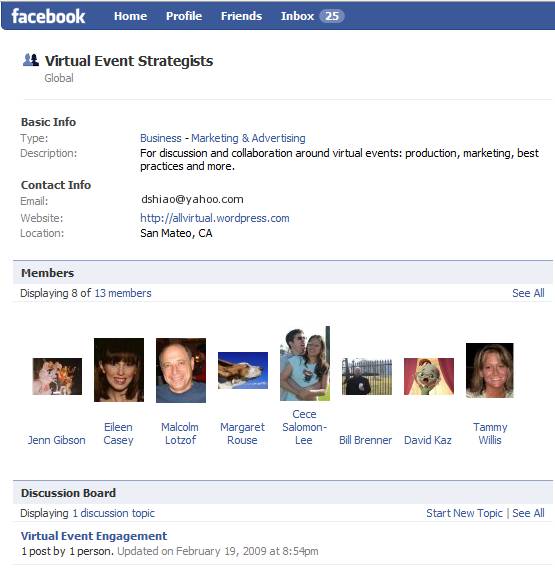
So I decided to create a Facebook Group to address these challenges – it’s called Virtual Event Strategists and is open to anyone interested (you need a Facebook account to join).  Here’s a snapshot of the group page:

Source: Virtual Event Strategists' Group Page

Source: Virtual Event Strategists' Group Page

Why a Facebook Group?  A few reasons:

  1. The 175MM active users (of Facebook) – most readers of this blog are likely on Facebook – if not, let me know why not!
  2. Threaded discussions – are you a first-timer in virtual events?  Well, starting up a threaded discussion may be just the thing to do
  3. The Wall – post miscellaneous thoughts and ideas about virtual events
  4. Post Links – let us know what interesting blogs or articles you’re reading about virtual events
  5. Post Video – Facebook has a convenient video recording and hosting capability – plug in a webcam and start using it

In fact, I’ll be doing brief “Virtual Event Tip of the Day” video clips on the Group page.  Here’s one of my first video clips, where I talk about the use of prizes in virtual events:

fb_video

I’ve seeded the site with some initial content – but, what I’d most like is to hear from all of you.  So, start some discussions, post some videos, post some links.  The group page is:

http://www.new.facebook.com/group.php?gid=52325833170#/home.php?ref=home

Let’s collaborate and learn together – see you there!


Virtual Events In A Wireless World

February 21, 2009

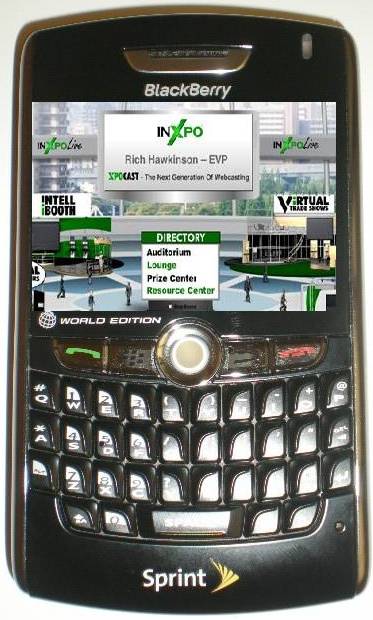
Some day soon: virtual event on PDA?

Some day soon: virtual event on PDA?

Whether it’s business use or personal use, we’ve begun to expect that applications on our PDA’s mirror those available on our PC’s and laptops.  For business, it’s largely corporate email today – the ability to read and respond  (around the clock, I might add!).  For personal use, it’s email (e.g. Yahoo Mail, Gmail, etc.), instant messaging, web browsing and (of course) interacting with our social media sites.

I recently purchased a BlackBerry 8830 – my first step (after verifying that calls to my cellular number were ported over to the BlackBerry) was to set up access to my corporate email.  After that, the series of steps I embarked on were not unlike the set-up of a new PC or laptop – downloading applications that I’ve become accustomed to.  The short list so far is:

  1. AOL Instant Messenger (AIM)
  2. A Twitter client (I selected TwitterBerry)
  3. The Facebook client for BlackBerry

With this collection of apps, I’m able to be on the go, but stay connected with corporate and personal email, stay in touch with friends and colleagues via AIM and keep tabs on my social networks (next up: the BlackBerry client for Netflix).  Virtual events are a combination of business and social networking applications.  Thus, I believe that pretty soon, business users will come to expect virtual events to work on their PDA’s.

Attendees would be able to visit vendor booths and peruse vendor content (while on the go) and exhibitors would be able to interact with booth visitors via a wireless connection.  The “live date” of a virtual event is often planned months in advance – and often times, scheduling conflicts arise for exhibitors – whether it be an important client meeting or attendance at a physical event.  I’m sure that exhibitors would value the convenience of doing basic booth duty from their PDA.

But how do we get there? First, formats like Flash (Adobe), Silverlight (Microsoft) and even JavaFX (Sun) will need stronger support and adoptoin onto PDA devices.  From doing a quick set of Google searches, the adoption (and support) doesn’t seem quite there today.  Here’s hopinng for a better tomorrow – where I’ll be seeing you at a virtual event … from our PDA’s.


How To Market Your Virtual Event

February 18, 2009

marketing_sherpa

MarketingSherpa published an excellent primer on Virtual Event Marketing.  The 10 tactics listed were:

  1. Partner with assocations
  2. Invest in PR
  3. Get exhibitors involved
  4. Advertise on relevant web sites
  5. Market to internal email database
  6. Email registrants the day before and the day of an event
  7. Use social media to attract attendees
  8. Emphasize the value of the event
  9. Use the virtual event’s microsite
  10. Use sweepstakes as an incentive

Based on my involvement in marketing virtual events to an Information Technology (IT) audience, I’d like to add the following:

  1. Promote early and often – get your microsite launched up to 2 months prior to the live event.  Time is critical, because it gives you options to try different tactics, measure response rates and adapt accordingly.  If you leave yourself too little time, your flexibility is limited and your registrations will suffer.
  2. Invest in search engine optimization (SEO) – make sure your registration page and microsite are optimized for SEO.  For more insights into SEO for virtual events, see this blog posting: https://allvirtual.wordpress.com/2009/02/02/search-engine-optimization-seo-for-virtual-events/
  3. Invest in search engine marketing (SEM) – just like you’d buy keywords to drive visitors to your corporate web site – figure out which search terms are relevant to your virtual event and spend a little of your budget purchasing search engine keywords to drive clicks to your virtual event microsite or registration page.
  4. Use interactive technologies to draw attention – with the amount of email received by your target audience, it’s harder and harder to stick out from the crowd.  To do so, use interactive visuals like a screencast (to give users a sneak preview of what your virtual event environment looks like) or a short video clip embedded within an HTML email.
  5. Use a variety of promotional vehicles – email is the most heavily used, but not all of your users pay attention to promotional emails.  So try display ads, placement in e-Newsletters, text links on publisher web sites and sponsorship of relevant sections of web sites.
  6. Highlight the prominence of expert speakers – in some industries, a well-known speaker can generate the audience all by herself.  If you’ve secured such a speaker, be sure to promote her prominently.  In fact, use her name right in the Subject heading of your promotional emails.
  7. Highlight the ability to interact with executives and experts – once you landed that expert speaker, invite her to participate in the virtual event after her speaking appearance.  In fact, in lieu of a Q&A after the Webcast/Videocast, have her appear in the Networking Lounge to answer questions there (via text chat), interacting directly with the audience.  In addition, invite your executives to participate and interact with the audience.
  8. Display the list of exhibitors – as you sell sponsorships, display the list of companies who will be exhibiting.  That may convince some users that they need to attend – what better a way to narrow your purchasing decision than to “meet” with the candidate solutions providers in one fell swoop?
  9. Provide a sales contact for potential exhibitors – some registrants of your virtual event may represent companies who’d like to exhibit (sponsor).  So give them an email address or phone number and you might have just sold an additional sponsorship.

What has worked well in promoting your virtual events?


Virtual Events 101 For Corporations

February 16, 2009

Some of us learn through observation – and I’ve had the privilege of observing (and learning from) many corporations in their use of virtual events and virtual worlds. First, I will provide “newbie” corporations with some pointers on how to best leverage virtual events (by way of links to some past blog posts).  Then, I will summarize some recent examples of virtual events (and virtual worlds) by corporations – all of which I admired.

How to Leverage Virtual Events

  1. Get closer to your customers – by understanding customers’ current challenges (which may differ from the challenges they faced when they originally purchased your product), you can create solutions, make your customers more satisfied and generate additional revenue (https://allvirtual.wordpress.com/2008/12/16/get-closer-to-your-customer-with-virtual-tradeshows/)
  2. Launch your next product – whether you complement your physical launch – or, do it exclusively online, the virtual event platform allows you to conveniently launch your next product online to a global audience – and, track all the interactions generated with customers, sales prospects and analysts/press (https://allvirtual.wordpress.com/2008/12/22/launch-your-next-product-online/)

Virtual Events: How Corporations Are Leveraging Them

  1. Quest Software produces an annual virtual event titled Quest Connect to provide information on their products and services (https://allvirtual.wordpress.com/2009/01/02/marketers-as-event-organizers/)
  2. Lenovo utilized Nortel’s 3D-based web.alive platform to drive interest and product sales of its laptops during (and after) CES 2009 (https://allvirtual.wordpress.com/2009/01/08/review-lenovos-elounge-virtual-world/)
  3. Adobe held a virtual product launch in Second Life to complement their real-world launch of eLearning Suite (https://allvirtual.wordpress.com/2009/01/25/adobes-real-world-launch-is-suppplemented-with-virtual-launch/)
  4. Trend Micro teamed with Virtualis to host an internal training event titled Trend Technical University in Second Life (https://allvirtual.wordpress.com/2009/02/05/virtualis-and-trend-micro-put-on-quite-a-show/)
  5. VMware launched an online companion to their physical VMworld conference, running on Jive Software’s platform (https://allvirtual.wordpress.com/2009/02/07/vmworld-complements-physical-conference-with-virtual-conference/)

So if you’re a newbie on virtual events, read up on what these companies have done – and decide whether (and how) virtual events and virtual worlds can benefit your company.  Better yet, if you have ideas on new ways corporations can leverage virtual events, be sure to leave a comment below.  Either way, I’m excited to see and hear about the new things that are in store.


VMworld Complements Physical Conference With Virtual Conference

February 7, 2009

VMworld

Source: VMworld

What do you do when you produce the world’s leading virtualization conference?  You make it better, of course!  VMware teamed with Jive Software to take the once-per-year VMworld conference and extended it (online) into a 365-day-per-year, always-on community.  A Case Study on this initiative can be found here:

http://www.jivesoftware.com/customers/case-studies/vmware

And this quote from Eric Nielsen of VMware sums it all up:

We expanded the VMworld conference from a three day event for 15,000 to a 365 day/year destination for 50,000 virtualization professionals.   — Eric Nielsen, Director of Web Communities, VMware

So that’s a triple play for VMworld – by complementing their event online, they’ve generated a more than 3x increase of participating virtualization professionals.  As quoted in the Case Study, the VMworld.com community has 35,000 active members, generates 35,000 page views per day and 2,000 video views per day.

Quite an impressive level of activity.  A clear example of an active community at work – 35,000 page views (in a single day) is hard to come by with traditional b-to-b content.  However, in a highly active social community, the blog posts, discussion board entries, podcast downloads, video views, “ask the expert” questions, etc. – all contribute to traffic generation.

Just have a look at the volume of Discussion Board traffic:

VMworld.com - Discussion Board

Source: VMworld.com - Discussion Board

Now that’s an active community at work.  But there’s a chicken and egg problem – how do you generate an active community in the first place?  Well, the organizers of VMworld.com made the wise move to integrate a full suite of social networking tools – essentially building a mini-Facebook around the conference.  Tools available include:

  1. Discussion Boards
  2. Podcasts – both those produced for the conference, as well as third party / external podcasts
  3. Integration with social networking sites (e.g. Facebook, Twitter, etc.)
  4. Blogs – both in-house and third party
  5. Ask The Expert sessions and content
  6. Video
  7. Photo Wall (with pictures from the physical event)

VMworld.com also leveraged neat tools within Jive Software’s platform to encourage activity.  For instance, on a blog post, a user can click on “Watch This Blog Post” and be notified when comments are appended to that post.  Additionally, most content pages have a left-hand sidebar titled “More Like This”, which certainly encourages additional clicks and page views (it worked for me!).

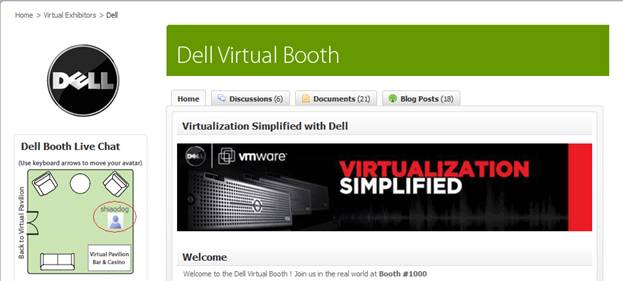
VMworld created virtual conference sponsorship packages for exhibitors, with pricing discounted if you’re already exhibiting at the VMworld physical conference.  3D style booths are planned – the current community features 2D style booths.  Here’s the Dell booth:

VMworld.com - Dell's Booth

Source: VMworld.com - Dell's Booth

This shows the top third of the booth – below it is Dell content, along with community content (blogs, discussion posts, etc.) around Dell topics. You’ll notice a “floor map” of the booth, which shows the physical location of my avatar.  Users utilize the arrow keys on their keyboard to move around within the booth.

VMworld Europe “floors” later this month (February 24-26) in Cannes.  If you’re lucky enough to get to Cannes, enjoy the show.  If you’re not able to attend, then go online and enjoy the online networking.  Registration for VMworld Europe can be found here:

http://vmworld.com/community/conferences/europe2009/


Search Engine Optimization (SEO) For Virtual Events

February 2, 2009

Flickr (martin.canchola)

Source: Flickr (martin.canchola)

These days, any publisher of information on the web is very keen to Search Engine Optimization (SEO).  If you build it (SEO) into your pages, they will come.  If you don’t, then you’re missing out on page views.  But, with all the effort we place on optimizing our web sites (e.g. corporate web sites, content sites, social media sites, etc.), how much SEO effort do we put into our virtual event pages?  I get the feeling that the answer today is “not much”.

For the external (non-private) virtual event, show organizers and exhibitors often judge success based on the number of registrations, attendees and interactions.  Basically, “the more, the better”.  However, what’s the largest source of registrations for most virtual events?  Outbound email promotions to (usually) large lists of users – where you’re hoping that some percentage of users open your email, click on the email and convert into a pre-registered attendee.  Very low on the list today is organic traffic from search engines like Google, Yahoo or MSN.

So the opportunity is quite large – improve the SEO of your virtual event and you can make a big impact on registrations, attendees and exhibitor satisfaction.  But where to start?  Well, first identify the pages on which to apply your SEO tactics.  For a virtual event, we’re usually talking about the microsite that describes your event – date, hours, speaker bios, etc..  The microsite often has separate tabs to list the event’s agenda, existing exhibitors, contacts for sponsorship info and (importantly) the event’s registration page.  All of these pages/tabs should have SEO applied.

A nice overview on SEO is titled “Search Engine Optimization 101” by Marketleap, a division of Acxiom Digital.  You’ll want to apply some of the basic concepts discussed here – including the right content on your virtual event pages; the use of meta tags; how to write good titles and strategic use of keywords.

Next, you’ll want to foster in-bound links to your virtual event microsite.  Promote the virtual event on your corporate web site (with a link).  Place links to the virtual event in your social networks (e.g. Twitter, Facebook, Linkedin, etc.).  Find blogs related to your industry and leave comments there.  Don’t blatantly promote your virtual event in the blog comment, but refer back to it (e.g. when leaving the comment, have your name be hyperlinked back to your virtual event’s microsite).  The more inbound links you can create, the higher your microsite will rank with the search engines.

Correction: comments you leave on other blogs can help with clicks (back to your blog), but do not help with SEO – most blog sites utilize a nofollow directive on the anchor tag, so search engines do not “follow” hyperlinks left in blog comments.

Finally, if your virtual event is not behind a registration wall (e.g. maybe it’s a 365 day, open environment), then make sure you provide “search engine friendly” content pages within the platform that search engine spiders can index.  Stay away from the Flash-heavy page and go with a flat, content-rich page.  Users will land here (from search engines), so be sure to provide easy navigation from this page to the main areas of the event (or environment).

For b-to-b virtual tradeshows, I’d estimate that well south of 10% of registrants are sourced from search engine traffic today.  Make it a goal at your next event to hit the 10% mark.  Your email lists will thank you.


Virtual Event Best Practices

January 23, 2009

With a number of virtual events on tap for 2009 (see the calendar of events here), marketers and exhibitors are busy preparing – assembling content for their booth, rounding up colleagues for “booth duty” and preparing the sales team for a burst of hot sales leads.  I’ve assembled past blog posts into a collection of virtual event best practices.  Without further ado:

  1. Bring the right people, have the right content (in your booth), perform the right actions and provide the right prizes (https://allvirtual.wordpress.com/2008/12/14/how-to-exhibit-at-b-to-b-virtual-tradeshows/)
  2. Utilize surveys to provide a deeper understanding of your customer prospects and generate insights back to your product management team (https://allvirtual.wordpress.com/2008/12/19/utilize-surveys-in-virtual-events/)
  3. Leverage Twitter – show-hosts can look to Twitter to expand the reach of the event’s audience and exhibitors can leverage Twitter to invite their followers to visit their booth at  the event (https://allvirtual.wordpress.com/2008/12/15/leverage-twitter-for-virtual-tradeshow-outreach/)
  4. It’s not always about “net new sales leads” – get closer to your existing customers (https://allvirtual.wordpress.com/2008/12/16/get-closer-to-your-customer-with-virtual-tradeshows/)
  5. Use treasure hunts to increase engagement (https://allvirtual.wordpress.com/2008/12/23/use-treasure-hunts-to-increase-engagement-in-virtual-events/)
  6. Have a process in place to handle the hot sales leads (https://allvirtual.wordpress.com/2008/12/31/how-to-handle-those-hot-virtual-tradeshow-sales-leads/)
  7. Utilize multiple metrics to judge success – Cost Per Lead (CPL) is the key metric for most marketers, but also consider other success metrics [e.g. quality of leads, conversion of inquiry to sales engagement, etc.] (https://allvirtual.wordpress.com/2008/12/28/what-cost-per-lead-cpl-should-i-pay-for-virtual-tradeshow-sponsorships/)

What best practices do you utilize at virtual events?  I welcome your input – feel free to drop a comment below.


Should CES And Macworld Go Virtual?

January 7, 2009

Flickr (Domain Barnyard)

Source: Flickr (Domain Barnyard)

With all due respect to the CEA (CES) and IDG World Expo (Macworld), I found it interesting that the primary discussion around CES and Macworld this week has been who and what will not be there, rather than the announcements and happenings scheduled at these venues.  Before I go further, let me state up front that I work in virtual events, so my thoughts are biased.  Now let’s review the “not there, not coming” list:

  1. Bill Gates (CES) — off pursuing his noble not-for-profit initiatives
  2. Steve Jobs (Macworld)
  3. Attendees  – lower numbers expected at both venues, compared to 2008
  4. Exhibitors – lower numbers expected at CES, compared to 2008

“Electronics trade shows change with times” is the headline of a story in today’s USA Today.  Some excerpts from this article:

Software king Adobe Systems and gadget maker Belkin dropped out of Macworld. Networking giant Cisco and Sanyo, being acquired by Panasonic, won’t be exhibiting at CES.

[…]

“I’ve surveyed my clients, and while many will be at the show, they are dramatically cutting back,” says James McQuivey, an analyst at Forrester Research. “If they had 20 people at the show last year, this year it’s just four.”

So clearly, the current economic climate is having its effect on industry events.  I do see a lot of value in the face-to-face event.  In fact, a significant aspect of CES is the brokering of partnership and business development deals between and among vendors, suppliers and retailers.  That activity is very effective “in person” and may not (yet) be well suited to online-only activity.  Another aspect of CES is the schmoozing and the wining and dining of clients and business partners.  This also cannot be replaced online, as far as I’m aware!  So I’m certainly not recommending the shuttering of CES (or Macworld).

But why not launch complementary events online?  For the product announcement angle of these events, online seems a natural fit.  In 2008, several IT vendors skipped the physical launch event and handled 100% of their product launch over the web, whether it was a Live Webinar, Live Videocast or a Virtual Tradeshow.  In an online venue, your potential audience expands, but you can still connect with your target base of customers, prospects and industry analysts.

James McQuivey of Forrester had a relevant quote in the USA Today article:

Says McQuivey, “New products get launched on blogs. There’s no reason to go through all the hassle and expense of trade shows anymore.” Apple said just that as it dropped out of Macworld, citing the reach of its own retail stores and website.

Now, let’s talk a bit about the green angle.  The same article quoted Jason Oxman from CEA:

Jason Oxman, senior vice president at the Consumer Electronics Association, which stages CES, says that even in the downturn, companies that are cutting back aren’t eliminating CES altogether. Like Cisco, they’re just eliminating the convention floor booths and opting for meeting room suites instead.

“Trade shows take on renewed importance in a down economy,” he says. “Every major consumer electronics manufacturer, buyer, installer and retailer is there. It’s the most efficient travel saver imaginable.”

I think Jason’s point is that because “everyone” attends CES, you schedule this one trip in January because you won’t need to go back to meet those same people (individually) later in the year.  While that does seem wise, I disagree on the “most efficient travel saver imaginable” quote.  To me, the most efficient travel saver is not to travel.

Hence, I could see a lot of value in a Virtual CES, where the product announcement angle of CES takes place.  The CEA could supplement their revenue stream by packaging this online opportunity with their physical event sponosorships.  I’m sure they’d draw quite a crowd online.  Exhibitors could demo their latest products from the comfort of their office (or home), be able to track all visits to their booth and have all interactions (with attendees) saved as text transcripts.  Steve Ballmer could still kick things off – but instead of in-person, you’d have him on a live video broadcast.

The uncomfortable angle to this (for the CEA) is that the flagship (physical) event may shrink significantly and be left to the deal makers, winers and diners.  On the flip side, it would cut back dramatically on carbon emissions and if done right, online would become the new flaghship.


Marketers as Event Organizers

January 2, 2009

Rebecca Lieb of ClickZ penned an interesting article titled “Marketers as Publishers”. Rebecca discusses the trend of marketers as full-blown content creators, especially in this age of digital media.  Examples cited by Rebecca include:

  1. Low cost video content creation and distribution (e.g. with a digital video camera to record and YouTube for distribution)
  2. Big brands creating original content (e.g. Bud.tv, along with Johnson and Johnson’s Baby.com)
  3. Creation and propagation of consumer generated media

I agree with Rebecca – spending the past few years in tech media, I’ve watched the transition of technology vendors into prodigious publishers, with their mix of White Papers, Webinars, Podcasts, Case Studies, Videocasts and Product Collateral.  Some technology vendors are producing hundreds or thousands of pieces of content a year, giving their technology media partners a run for their money (on volume).

Adding to Rebecca’s list, I think we’ll see an increasing number of marketers turn to virtual events – whereby marketers can easily morph into event organizers (in addition to publishers).  Perhaps you’re an up and coming vendor in an IT market – you see the benefits of doing a customer conference, but the business case isn’t quite there yet.

With costs for virtual events coming down, you now have the opportunity to launch that customer event in 2009.  You do it online, making it efficient and convenient – and bringing its availability to a global audience of customers and prospects.  Take Quest Software as an example.   This maker of products and services for Enterprise IT has run virtual conferences the past two years.  Last year’s event was titled Quest Connect 2008 and included presentations (webcasts) on just about every technology produced by Quest.

I wouldn’t be surprised to see Quest produce the same event (or events) in 2009 – so as you can see, they’re morphing into an event producer and event organizer (where the ongoing events occur online).

With regard to consumer generated media (CGM), I’ve found that virtual events are a natural venue for fostering CGM.  Engaged attendees who participate in your event are not shy about expressing their thoughts and opinions.  You’re bound to see a lot of CGM around your products and services – and I’d argue that good or bad, the discussion and interaction  is valuable to your company.  In some cases, I’ve seen questions posed by attendees that are directly answered by other attendees.  How efficient!  Customer support (and prospect management) via CGM.

So publishers (I mean, marketers), as you plan your activities for 2009, consider the virtual customer conference.  And, consider extending your (physical) customer conference into the virtual world.