Day 1 Recap: Virtual Edge 2009

May 29, 2009

The ABC's of Virtual Events (Virtual Edge Session)

The ABC's of Virtual Events (with Kenny Lauer, GPJ & Kelly Graham, Cisco)

That’s right, even the Virtual Events industry has a need to meet face-to-face.  Thursday (05/28/09) marked Day 1 of Virtual Edge 2009 – a 2-day face-to-face “summit on virtual events, meetings and communities”, held at the Santa Clara Convention Center.  By my estimation, the event had over 150 attendees and approximately 50 exhibitors.

Most of the presentations and panel discussions had “standing room only” crowds.  Two of the noted presentations of Day 1 were “The ABC’s of Virtual Events, Meetings & Marketing” (featuring Kenny Lauer of GPJ and Kelly Graham of Cisco) and the keynote presentation, featuring Paul Salinger or Oracle and Sandy Carter of IBM.

The sessions were streamed live into the virtual world – a combination of live video (via Stream57) and live video in a 3D immersive world (via VirtualU from Digitell).  A physical event on virtual events, which was then simulcast virtually – neat!  The “concurrent virtual”  allowed global access to event, for folks who were not able to attend in person – and that included some speakers, who (of course!) presented their sessions virtually.

In the afternoon, I participated in a panel discussion titled  “Measurement, Tracking & ROI”.  Two of the main themes we heard from the audience were:

  1. Better measuring event engagement – sure, we know about registration-to-attendance ratio, number of live attendees, average session time, etc. And Stu Schmidt of Unisfair introduced the notion of a “virtual engagement index”.  The calculation of that index (or score), however, may need to get “smarter” – for instance with a chat session.  Dannette Veale of Cisco noted the difference between a “where’s the Auditorium” and a “can you send me pricing information” comment – whereby the latter should carry a higher score from an engagement or “prospect worthiness” point of view.
  2. Aggregate profiles by user type – customers are in the need for published profiles by user type, so that they can better plan targeted virtual events.  For instance, if an enterprise is interested in a virtual event for C-level employees, they need to see a published profile (e.g. what does the C-level do in a virtual event), to determine whether the event is worth pursuing (aka what’s the expected ROI).  The panel responded that there are data privacy issues that need to be worked out – since all data is “owned” by customers – and NOT by the virtual event platform vendors.

While I was able to sneak out to attend a session or two, I spent most of the day in the InXpo booth.  I had the pleasure of meeting (face-to-face!) with many colleagues in the industry and also spoke to countless attendees who are considering their first virtual event.  For attendees from corporations, many had already executed virtual events – and were there to learn best practices and refine their game.  On the other hand, I met several folks from the event marketing industry, who were looking to leverage virtual events to complement their clients’ physical event strategy.

For me, Day 1 marked a momentous occasion for the virtual events industry – the creation of a physical event speaks to the legitimacy of the industry – while the turnout speaks to the timeliness and interest in virtual events.  Today, our industry is like the TV sitcom Cheers (“Where everybody knows your name”).  I imagine that this industry will grow quickly enough that it will be challenging to remember everyone’s name – and in a few years, the venue will have to shift to the Moscone Center in San Francisco! Looking forward to Day 2 today.

Related links

  1. Virtual Edge 2009 program: http://www.virtualedgesummit.com/program.php
  2. Virtual Edge 2009 program – to attend virtually: http://www.virtualedgesummit.com/virtual-event-schedule.php
  3. Dean Takahashi covered Day 1 for VentureBeat: http://venturebeat.com/2009/05/28/virtual-events-draw-a-live-in-person-crowd/

For Virtual Event Platforms, User Experience Is Key

May 22, 2009

Source: Wolfram|Alpha

Source: Wolfram|Alpha

Heard of this new web site?  It’s Wolfram|Alpha, whose “long-term goal is to make all systematic knowledge immediately computable and accessible to everyone”.  Unveiled with much media coverage (and drawing some comparisons to Google), the Wolfram|Alpha web site is exceedingly easy to use.  Other than the insiders at the company, we’re all first-time users of this service – and Wolfram|Alpha incorporates a lot of noble elements in User Experience (UE) – for one, the main page is prescriptive.

Not sure how the service works?  Well, click on any of the links in the “A few things to try” area and you’re off and running.  A left-click on any of the listed examples inserts the search term into the search box and the page dynamically updates to instruct you on what to do next [e.g. “Click here (or press enter) to get the result”].  Here’s a closer view of the “A few things to try” area:

Source: Wolfram|Alpha

Source: Wolfram|Alpha

How does this relate to virtual events?  Well, in 2009, virtual events have witnessed a dramatic surge in both interest and attendance.  The surge in attendance means that many users of virtual events have been first timers.  In fact, I’d estimate that of all virtual event attendees in 2009, one third (33%) were first time attendees.  Since first impressions are critical, this means that virtual event platforms need to nail the User Experience factor in order to have first time users return for more virtual events.

For first time users, it’s important for the platform to have the following attributes:

  1. Be prescriptive where needed – the last thing a virtual event platform provider wants to hear is a user who says that the environment is “hard to navigate”.  Especially for the first time user, virtual event platforms should add prescriptive features to the user experience – such that booth visits, search, chat, etc. leverage visual indicators similar to Wolfram|Alpha.
  2. Use examples – why not mirror the Wolfram|Alpha approach of  “A few things to try” – use that as a title in a navigational area of the virtual event and you’re sure to have users leverage it to get acclimated.  In a virtual event, a few things to try include: private chat, group chat, private webcam chat, view a Webcast, visit a booth, etc.  By providing these examples – and walking the first time visitor through each activity, you’re allowing these new users to take off their training wheels – and they’ll thank you for it.
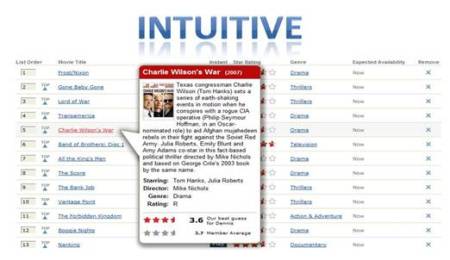
  3. Be intuitive and easy to grasp – easier said than done, but the example I’ll use here is Netflix.  When I first joined a few years back, I immediately found the Netflix web site to exceedingly intuitive, with a savvy use of AJAX in just the right places.  Finding movies and managing the Queue were so easy and convenient.
Source: Netflix

Source: Netflix

It would be silly to think that attendees of a physical event partake in “training” in order to navigate and participate.  This holds true in a virtual event – if the platform handles UE properly, the first time user should be up and running as a virtual veteran within the first 30 minutes of that first session.


Newspapers: With Print Declining, Go Virtual

March 24, 2009

Source: GlobalPost

Source: GlobalPost

In a previous blog posting, I wrote that newspapers could leverage virtual event platforms to transform the reader experience from one of unidirectional consumption to an interactive community of participation and engagement.  In an article titled “A Web Site’s For-Profit Approach to World News “, the New York Times highlights Boston-based GlobalPost.  The good folks at GlobalPost are clearly thinking outside the “print box”, with an approach that mirrors (somewhat) some of the points I made in my original blog posting.

For one, GlobalPost has deployed a freemium model, built upon a wealth of freely available, advertising supported content.  The premium service comes into play with a service called Passport, which, as eloquently stated by GlobalPost, “offers an entrée into GlobalPost’s inner circle”.  According to the New York Times article:

Passport subscribers, who pay as much as $199 a year, can suggest article ideas. “If you are a member, you have a voice at the editorial meeting,” although the site will decide which stories to pursue, said Charles Sennott, a GlobalPost founder and its executive editor. He said Passport is meant to “create a feeling of community” for subscribers who might otherwise see newsrooms as “impenetrable and fortresslike.”

On the GlobalPost Passport web page titled “Benefits of Membership“, one can discover further detalis about the access afforded to Passport subscribers:

Passport also gives you a significant voice in the news. We invite you to join us in reinventing the media equation, empowering members for the Web 2.0 era. Instead of the old top-down model where editors decide what you need to read, as a Passport member you play an unprecedented role in shaping the stories that get covered, via ForeignDesk, Correspondent Calls and Newsmaker Interviews. Simply put, it’s access that gives you an edge.

While GlobalPost would need to find a business model to profitably support this – I can envision the use of a virtual event platform to serve as the foundation for their interactive community.  By “profitably support”, I mean that the additional cost (e.g. virtual event platform, higher costs for editorial staff, etc.) would need to be weighed against the additional revenue.

But that being said, the use of a virtual event platform could facilitate:

  1. Direct, interactive access from Passport subscribers to GlobalPost’s Editorial Staff – in the form of text chat (both private and group), webcam chat (both private and group), forums and blogs (in the platform), etc.  What better a way to shape the editorial focus than for the Passport members (the most loyal of readers) to engage directly with the folks responsible for producing the content.
  2. Direct engagement among Passport subsribers – generate and sustain subscriber loyalty and retention by allowing them to connect with one another.  After all, two subscribers who visit the “United Kingdom” section of GlobalPost.com likely have common things to discuss.
  3. Drive incremental revenue by upselling your Passport subscribers – one you have a loyal following of Passport subscribers, upsell them into higher and higher premium services – e.g. scheduled video chat sessions with your Publisher; access to exclusive content; access to all archived content, etc.

Kudos to GlobalPost on their somewhat contrarian model – and best of luck on the new site and success of Passport.


Use Treasure Hunts to Increase Engagement in Virtual Events

December 23, 2008


Flickr ("Crazy Cake Lady")

Source: Flickr ("Crazy Cake Lady")

You’ve planned a great virtual event.  You sold a number of high profile sponsorships.  You promoted the event to your members and generated strong registrant counts.  You’re looking forward to the big day, when the exhibitors (and your boss) pat you on the back.  But wait!  You’re work is not done.  Even if you have a large audience – and, the right audience, exhibitors will deem the event underwhelming if that audience doesn’t adequately engage with them.

In a prior blog post, I wrote about the effectiveness of prize giveaways at virtual events.  In that post, I wrote about the notion of smaller prizes to generate interest.  Here, I endorse a slightly different approach: use a grand prize (e.g. flat screen HDTV, if budget allows) and up the ante for prize qualification.  Instead of “presence” in some event location, require that attendees complete all steps of a treasure hunt in order to qualify for the prize.

With a multi-sponsor virtual event, you’re going to want to keep all of your exhibitors happy (without favoring any particular exhibitor).  So set up the treasure hunt so that each exhibitor benefits.  Here is a sample treasure hunt template.  I’ll leave it as an exercise to the reader to determine what actions each step encourages.

Sample Treasure Hunt

  1. Find the White Paper titled Best Practices for Data Deduplication.  Name the author of the White Paper
  2. Find the White Paper titled Data Backup and Recovery.  Name the sponsor booth in which it’s located
  3. There is a booth representative in this event named Joe Kennedy.  Name the sponsor booth in which he’s stationed
  4. In the second Webcast presentation today, the speaker is from what company?

If you go with a treasure hunt, be sure to promote it heavily, both within the event and in email promotions and web site listings prior to the event.  To select the grand prize winner, ask your virtual event platform provider if the platform’s survey function can do the trick.  You may be able to “host” the treasure hunt quiz via the survey – using either multiple choice selections or, using a free-form text field to solicit answers from treasure hunt participants.

Happy Hunting!


The Effect of “Online” on the Event Industry

December 18, 2008

Newspapers and other print-focused publications have been hit hard by the migration of readers to the Internet.  Is the event industry facing a similar challenge?  It seems so, especially in today’s economic climate, when travel costs are receiving heightened scrutiny from the CFO.  In a previous blog post, I predicted that 2009 would be the Year We Go Virtual, as we witness a very sharp decline in the number of face-to-face events.

In a blog post titled “Are bloggers & social networks killing the big shows?“, Robert Scoble (@scobleizer) presents a similar view.  To quote Robert:

My sponsor, Seagate, told me they are reducing their spend this year at CES. AMD and Delphi are doing the same thing and I’m hearing about many other companies who will either stop going, or reduce the size of their booths, either this year, if they could, or in 2010 (contracts make it tough to shrink booths as fast as companies might want).

And here’s one reason why:

What’s killing them? The Internet. You can launch a product live now from a living room. Thanks to Stickam, Ustream, Qik, Kyte, YouTube, Flixwagon, Viddler, Vimeo, SmugMug, etc and blogs.

I agree with Robert, though I’d add that in the B-to-B space, you might want to launch a product from a studio (vs. your living room) and extend the reach of social networks by partnering with B-to-B publishers in your space.  The fact remains, though, that there are low-cost means for capturing, publishing and distributing video and related multimedia for launching and evagenlizing your products and services.

And, with active social nets like Facebook and Twitter, you have a cost effective publishing system for quickly spreading the word, assuming you’re spreading the right message to the right people and not spamming the universe.  I’ve seen Virtual Tradeshows as a great vehicle for handling product launches – they include the live keynote video from an executive, the follow-on presentations (Webcasts/Videocasts) and the discussions/networking (online) that you’d typically see at a physical launch event.

Of course, when you’re online, everything can be tracked and reported on.  And, you extend the reach of the content/event beyond geographical boundaries.  As Robert said, I can pitch my product from my living room.  And an IT Pro in Hong Kong can be on the receiving end of my pitch!  Another benefit of online is passalong, which can make a video, podcast or virtual event go viral.  With physical events, that’s just not possible.

While the newspaper industry is still seeking a magic potion to shift their revenues from print to online, I think the event industry should consider 2009 as the year where complementary versions of their events get launched online.  After all, that’s where we all are.


Virtual Tradeshow Technologies

December 17, 2008

Virtual Worlds group

LinkedIn: Virtual Worlds group

I participate in a virtual worlds group over at LinkedIn.   A few members there asked me about a Virtual Tradeshow’s (VTS) underlying technologies.  I don’t pretend to know the full set of technologies that power a VTS, but I will list my Top 3 (in order of importance).

  1. The SaaS Engine Virtual Tradeshow platform providers often call this the “self service utility”.  What it boils down to is a 100% web-based interface that allows event organizers to build a VTS environment from scratch.  Every last detail of the event (down to the number of pixels to use on a particular image on the show floor) can be configured or selected via this web app.  While some clients will always want the extra attention of a “full service model” (where the VTS provider’s staff uses the same web app to build the entire show), consider the power of “self service” – VTS platform providers can scale their businesses by selling leases on their SaaS platform, where their clients do all the heavy lifting.  This means that the better you build this web app, your clients will create more events and they’ll create them more quickly.  This means more revenue and (possibly) earlier revenue recognition.
  2. The Chat system – Today, the power of a VTS lies largely in the text chat sessions that attendees engage in with exhibitors (or, attendee<->attendee sessions).  Platforms used to employ basic HTML to support chat, but the trend is towards client/server technologies, such as Flash Media Server (FMS).  The platform needs to account for corporate firewalls, as many firewalls are configured to block chat-like protocols – if your users cannot chat within a VTS, they lose out on a significant show feature.  If you employ a workaround – such as HTTP tunneling – beware, as some corporate firewalls can utilize deep packet inspection, to figure out that you’re trying to tunnel FMS within HTTP.  And, they then block those packets from reaching their destination, which means that chat fails.  Finally, as webcams and Skype-like video chat emerge in virtual tradeshows, keep in mind that moving from text chat to video chat means that you lose the ability to save a transcript of the chat.  This may be an opportunity for platform providers to support such a feature (e.g. auto-transcribe the audio from a video chat).
  3. Event Reporting – For event organizers, an open-ended web reporting system is useful.  Give them the ability to generate custom reports, kind of like a rudimentary business intelligence app.  For exhibitors, the creation of easy-to-understand canned reports is important.  For both organizers and exhibitors, the reporting system is critical.  Once the live event is over, the reports (and the data contained in them) are the “living record” of the show’s success and both constituencies will lean on the reports to derive their ROI on the event.

What technologies do you feel are important in a VTS?


Breakdown: Exhibitors of Virtual Tradeshows

December 13, 2008

I’ve had the privilege of working with dozens of Virtual Tradeshow (VTS) exhibitors, ranging from scrappy start-up technology vendors to Fortune 100 giants.  I’ve found that each exhibitor, independent of the type of company represented, approaches VTS differently, with a wide range of knowledge, experience and plain old know-how.  Here is my breakdown of VTS exhibitors:

  1. The savvy elite (1%) – they know how to best leverage the VTS experience – they understand that a Live VTS embodies characteristics of social media, conventional online lead generation and face-to-face events.  They’re active and proactive.  They utilize tactics to drive interest to their brand and traffic to their booth.  They leverage tricks of the trade from physical events and translate them well to the online world.  Some gain this status from experience at past virtual events – others “get it” during their very first VTS.  The savvy elite excel not only on the front end, but also on the back end – in their ability to extract the valuable engagements they’ve generated and place that data in their CRM system.  By perfecting the back-end, the savvy elite hand their salesforce focused and prequalified leads.  Here, the VTS accomplishes the two-step process of lead generation and lead qualification.  The savvy elite can re-use their telesales staff on other programs, where more rigorous qualification is necessary.
  2. The group with good intentions (15%).  This group understands the potential of a virtual event.  For the most part, they do an effective job at interacting with attendees/prospects.  Some could use a little fine-tuning in their approach.  Where this group ultimately falls short is on the back-end.   They are sending Sales a mix of hot and cold leads, leaving Sales to pursue nine or ten  (or more) leads before they find one that’s worthy.
  3. Needs significant assistance (79%).  Here’s your bulk of VTS exhibitors today.  They need help on the front end and the back end.  On the front end, they tend to sit back and wait for attendees to contact them.  Imagine doing that at a physical tradeshow – you’d end up speaking to very few people.  This group requires a little more handholding on what works and what doesn’t – things that the savvy elite know instinctually.  On the back end, this group tends to throw all generated leads “over the wall” to telesales.  And the result is phone calls or emails to leads with no explicit association with the virtual event (quite a shame).  So here’s the opportunity to B-toB publishers and VTS platform providers: provide the necessary tools, utilities and reports (to this oversized constituency) to highlight the “best” leads to the exhibitors, based on automated analysis of the attendee engagement data.  If I had 57 private chat sessions with prospects, tell me which ones I should care about.  By doing this, all parties will derive more ROI from these events – you take a pre-existing set of leads – and instantly make them better.
  4. List buyers (5%).  They sponsor VTS’s in order to buy themselves a list of sales prospects.  They tend not to staff their booth.  They place little to no content in their booth.  They send the entire list of leads over to telesales and hope for the best.  On the back-end, this group sees significantly lower sales conversions compared to the savvy elite.

With 2009 being the year of virtual events, I’m hoping that the savvy elite grow from 1% to 10% share.  That growth won’t happen magically – the publishers and the platform providers will need to do their part.  If they do, it only serves to make virtual event marketing all the more compelling.