The #SocialMedia Revolution Is Here. Here’s How to Adapt.

September 26, 2011

Image source: “Social Media Revolution 2011” video on YouTube.

Introduction

“We don’t have a choice on whether we DO social media, the question is how well we DO it,” notes Erik Qualman (@equalman) in his video, “Social Media Revolution 2011.” I knew that technology and social media have created a revolution. But, it was Qualman’s video that made me take a step back and realize how much the world has changed and evolved. And with that change comes a need (for many) to adapt and adjust, in order to take advantage of what’s unfolding in front of us.

Facts and Figures

Qualman’s video contains a series of fascinating facts and figures. For instance:

  1. 50% of the mobile Internet traffic in the UK is for Facebook.
  2. Generation Y and Z consider e-mail passe.
  3. Social gamers will buy $6 billion in virtual goods by 2013. Movie goers buy only $2.5 billion in real goods.
  4. If Wikipedia were made into a book, it would be 2.25 MILLION pages long and would take you over 123 years to read.
  5. 90% of consumers trust peer recommendations. Only 14% trust advertisements.

Generation Y and Z are entering your organization today. Some short time later, they’ll be running your organization. These generations were not born with a silver spoon in their mouth. Instead, they were born with an iPod in one hand and a texting device in the other. How do you adapt to these new generations of digital natives? Here are my thoughts.

Learn from Your Kids

Those of us with kids in school have an advantage: we interact with this generation on a daily (or hourly) basis. We can directly observe their social interactions, learning styles and learning preferences and understand the role technology plays. We can pick up on lingo and hear about the hottest new “toys.” Apply your parental lessons (from this generation) to your organization or workplace.

Empower the Incoming Class

Think outside the box. Generation Y and Z do not need to enter your organization at “entry level” positions. Consider making the leap to place new hires (from these generations) directly into middle manager roles. After all, your customers are (or soon will be) from the same generation.

Reverse Training

Your tenured employees will need to “onboard” and train the incoming crew of Generation Y/Z. But it’s those same tenured employees who can stand to learn a lot in return. Have the new generation train the “older generation” on new technologies, such as instant messaging, Skype and Facebook. An organization more informed on Generations Y and Z is one that’s better suited to achieve growth.

Learn the New Engagement Models

Everything today is instantaneous: obtaining facts (Google), asking a question or favor (SMS), obtaining feedback (gaming, social media). Your organization’s engagement models need to parallel the feedback systems that social networks, games and technology provide. If Generation Y/Z needs to “wait” too long for answers and feedback, then you’ve “lost them at hello.”

Plan for Mobile First

Instagram launched on iPhone (only). Other platforms (including web) will follow. I think that’s the right model. Whether you’re a producer of content or software, deploy first on mobile. That’s where Generation Y/Z prefers to engage with you.

The Video

Here’s the video that spurred my thoughts on this topic. Check it out, it’s worth it.

Related Resources

  1. Web Site: Socialnomics
  2. YouTube channel: Socialnomics
  3. Erik Qualman on Twitter: @equalman

Subscribe

Did you enjoy this blog posting? If so, you can subscribe to the feed here: https://allvirtual.wordpress.com/feed/


The Second Life for Virtual Worlds: Vertical Solutions

September 11, 2011

Introduction

In 2007, Gartner predicted that “by the end of 2011, 80 percent of active Internet users (and Fortune 500 enterprises) will have a ‘second life’, but not necessarily in Second Life.”

As we approach the end of 2011, it’s safe to say that we’re far short of the 80 percent mark, as far as 3D avatars (in virtual worlds) go. It does seem clear, however, that the 80 percent figure is quite accurate if you consider the “second life” to be social networks. In fact, I then think the prediction turns out to be perfect.

Virtual Worlds: Where We’re Headed

3D virtual worlds (Second Life being the most prominent) never caught on in a mass market, the way that Facebook and Twitter have. I think social networks will see continued growth in adoption and usage, while the use of general-purpose, “open use” 3D virtual worlds continues to diminish.

I think “worlds” are dead. The future is all about self-contained solutions. And the future is now.

FountainBlue Virtual Worlds Panel

On September 30, 2011, I’ll be moderating the following panel for this FountainBlue event:

FountainBlue’s Third Annual Virtual Worlds Annual Conference

Topic: Virtual Worlds: Where We Were, Where We’re Going, What Does It Mean to YOU?

Date & time: Friday, September 30, from 8:30 until 10:30 a.m.

Location: EMC, 2831 Mission College Blvd., Santa Clara, in their San Francisco Conference Room on the Third Floor

Cost: $22 members, $32 partners, $42 general

Facilitator Dennis Shiao, Director of Product Marketing, INXPO
Panelist Andrea Leggett, Senior Product Marketing Manager, EMC
Presenting Entrepreneur Parvati Dev, President, Innovation in Learning
Presenting Entrepreneur Raj Raheja, Founder and CEO, Heartwood Studios

For more information and to register, visit http://www.svvirtualworlds.com.

My Premise: It’s All About Vertical Solutions

I’ll plan to float my premise to our panel and invite them to share their thoughts. The premise, of course, is that the “worlds” in “virtual worlds” is dead and the path to success (and profit) is to build focused solutions that directly solve business problems. Consumer-based virtual worlds told us that you can’t be all things to all people.

Consider the vertical approach that two panelists’ companies are taking:

Innovation in Learning: Solutions (Healthcare)

  1. CliniSpace™ – Virtual Hospitals and Clinics
  2. DynaPatients™ – Virtual Patients

Heartwoord Studios: Solutions (Military)

  1. Virtual Training
  2. Handheld and Mobile Apps
  3. Immersive Marketing
  4. Augmented Reality
  5. Simulation Ready Modeling

Conclusion

Do you have thoughts to share on this topic? Feel free to join us in Santa Clara, CA on September 30th. The event is meant for “Entrepreneurs, Intrapreneurs and Investors only. No service providers please.” In addition, I invite you to use the comments section below to share your thoughts on my premise.


7 Tips for Building Your Personal Brand Online

September 5, 2011

Pictured: Examples of notable personal brands, @digiphile and @funnelholic.

Introduction

It’s amazing what you can achieve today with a blog and a social media profile. Blogs have the potential to turn individuals into both media magnates and media magnets.

“A list” bloggers today can reach an audience wider than that of many magazines and national newspapers. Users who share, connect and engage on Facebook, Twitter and Google+ can be “followed” by tens of thousands of users (or more) and engage with their “fans” on a daily or hourly basis.

Building and sustaining your own personal brand is well within your reach. But it takes time, effort and energy. Here are seven tips to guide you on your journey.

1) Define the target audience for your brand.

Even Justin Bieber has a target audience. He’s not writing songs and tweeting for my mom, despite the fact that she may find him cute. Your brand should be defined by an area of specialty or expertise, in the same way that “digiphile” and “funnelholic” have done it (pictured above). This is an important first step, because it defines the type of blog you’ll create, the type of tweets you’ll generate and the type of content you’ll share with your followers.

2) Decide where to invest your energy.

There are only 25 hours in a day (I’m counting those days when we turn the clock back an hour), which means that you can’t be active on all social networks all the time. It’s far better to be highly active on one social network than it is to low levels of activity across ten. Of course, your mix is going to change over time, but it’s important to start off by “budgeting” your time. My priorities (at the moment) are blogging and Twitter.

3) Two words: BE USEFUL.

Keep this goal in mind in everything you do. Whether it’s sharing a link on Twitter to writing your first blog post, being useful brings awareness, appreciation and equity to your personal brand. When sharing links, consider content in the same way an museum director selects works for her next exhibit. Curate content like fine art. The more your target audience finds your content (and the content you share) useful, the more value your brand derives.

4) Engage and Interact.

Social media should not be solely about sharing links. It should include equal amount of engaging with others and interacting with content. For every five blog postings you author, find one third party blog and leave a comment on it. For every four links you share on Twitter, perform one Retweet or “at reply” to another user. As you find interesting content on the web, endorse it to your target audience (via “Like”, “+1” or “Tweet” buttons). But remember point #3 and make sure you’re being useful.

5) Use the same profile photo everywhere.

As you publish blog postings, tweet, comment on blog postings, answer questions on LinkedIn and “Like” an article, use the same profile photo. Doing so gives others the impression that you’re everywhere. It’s an easy way to build brand equity, without doing too much additional work. Use a recent photo, so that people may recognize you when they see you in person. I often meet strangers who ask, “are you the guy who blogs about virtual events?” and who would believe anyone could be recognized for doing that!

6) Promote others before yourself.

It’s actually quite easy to promote yourself via social media. However, you’ll find that others may be turned off by blatant self-promotion and that you actually do more damage (than good) to your personal brand.  So promote others and tell the world how great they are.  By introducing your Twitter following to other great Twitter users, you’re doing your followers a service (i.e. being useful). As you become more and more useful, you’ll find that others begin to promote you. An endorsement from others is far more meaningful than one from yourself.

7) Adjust and adapt.

Your journey towards personal brand equity will not travel on a straight line. You’ll need to adjust for things that are not working and experiment with new things. Previously, I wrote about how my use of Twitter is different in 2011 compared to 2008.  For me, that’s part of the fun, figuring it all out. It’s also one of the most rewarding aspects of social media experimentation: achieving progress by way of adjustment and adaptation.

Conclusion

There’s never been a better time to build your personal brand online. If you hone in on an area of specialty and follow your passions there, who knows – even Justin Bieber may some day “follow” your advice.

Related Presentation

I presented related tips at a workshop for the EMC West Coast Women’s Leadership Foundation. You can find the slides below.

Note: I invite you to connect with me on .


How to Build a Personal Brand and Advance Your Career with Social Media

August 31, 2011

Introduction

On Friday, September 2, 2011, I’ll be presenting a “Lunch and Learn Workshop” organized by the EMC West Coast Women’s Leadership Forum.

What, Where and When

Title: How to Build a Personal Brand and Advance Your Career with Social Media

Date: September 2, 2011

Time: 11:30AM – 1:30PM PT

Location: EMC, 2831 Mission College Blvd, Santa Clara, CA, The San Francisco Conference Room

Session Abstract

Facebook is not about friends.  Or at least it doesn’t have to be.  In this session, Dennis Shiao provides strategies, tips and tactics for using social media to build a personal brand and advance your career.  Whether you want to build a following online or gain a promotion at work, Dennis’ presentation will cover ways social media can help you, both personally and professionally.

Dennis will first cover some strategies for taking advantage of social networks, including the important activities of listening, connecting and participating. Next, he’ll draw upon his own experiences and cover specific tips from blogging, LinkedIn, Twitter, Facebook, YouTube, SlideShare and Quora, to name a few. You’ll leave this session with tips and ideas that you can apply right away to your own social networks and your own brand.

Presentation Slides

For those interested, you can view the slides from my workshop below.


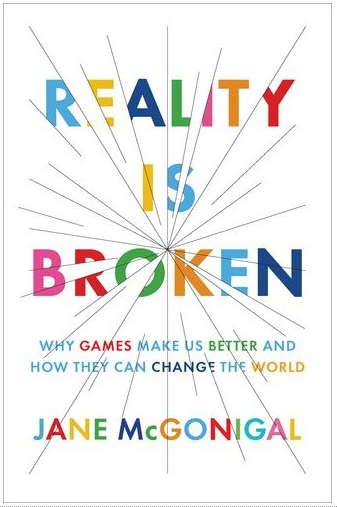
Favorite Book Quotes from “Reality Is Broken”

August 31, 2011

Note: Image courtesy of the book’s web site.

Disclosure: This post contains affiliate links to the book’s listing on Amazon.com.

Introduction

I’m reading Jane McGonigal’s book “Reality Is Broken: Why Games Make Us Better and How They Can Change the World.” The book has three parts:

  1. Why Games Make Us Happy
  2. Reinventing Reality
  3. How Very Big Games Can Change the World

As of August 31, 2011, I’m reading part one, which provides a fascinating look at the psychology behind games (i.e. the neurological factors behind why gamers engage in game play).

I’m continually finding great quotes in the book, so I thought I’d use this blog posting to keep a running collection of my favorites. Feel free to check back from time to time, as I add to the list!

Favorite Quotes

Added: 10/03/2011

Life is hard, and games make it better.” (page 349)

Added: 09/29/2011

We need to play games that stretch our collective commitment months, years or even decades ahead. We need to start playing with the future.” (page 295)

Added: 09/27/2011

Collaboration isn’t just about achieving a goal or joining forces; it’s about creating something together that would be impossible to create alone.” (page 268)

Added: 09/10/2011

Based on Clay Shirky’s estimate that all of Wikipedia took 100 million hours to create, the WoW community alone could conceivably create a new Wikipedia every three and a half days.” (page 231)

Added: 09/05/2011

Games are showing us exactly what we want out of life: more satisfying work, better hope of success, stronger social connectivity, and the chance to be a part of something bigger than ourselves.” (page 114)

Compared with games, reality is hard to get into. Games motivate us to participate more fully in whatever we’re doing.” (page 124)

Added: 09/04/2011

The single best way to add meaning to our lives is to connect our daily actions to something bigger than ourselves – and the bigger, the better.” (page 97)

Added: 08/31/2011

To develop foresight, you need to practice hindsight.” (page 5)

As for the future, your task is not to see it, but to enable it.” (page 13, attributed to Antoine de Saint Exupery)

Games, in the twenty-first century, will be a primary platform for enabling the future.” (page 13)

Computers were made to work for us, but video games have come to demand that we work for them.” (page 55)

The quote (above) is attributed to Nick Yee, “a leading researcher of MMOs and the first person to receive a PhD for studying WoW.”

Leave a Comment

Have you read the book? If so, let me know your take via the comments section below.

Related Resources

  1. Buy the Book: On Amazon.

2011 Professional and Industry Speaker Survey

August 30, 2011

Take the survey: http://www.surveymonkey.com/s/speaker-survey-vc

Introduction

Velvet Chainsaw Consulting and Tagoras have partnered on a research study. Together, they’re collecting data about industry and professional speakers at conferences with 500 or more attendees.  The basis for their research study will be a “2011 Professional and Industry Speaker Survey.”

Survey Details

The purpose of the survey is “to better understand how organizations in the United States and internationally use professional and industry speakers at their meetings (e.g., conferences and other events).”  The survey will take 10-12 minutes to complete.

When you’ve completed the survey, “you may register, if you wish, to receive a synopsis of key data from this survey when it is completed. By registering, you will also automatically be entered into a drawing for a $50 Visa gift card that we will give away to five randomly selected survey participants.”

Responses are due by September 9, 2011.

Dave Lutz (@VelChain) from Velvet Chainsaw Consulting notes, “Thank you in advance for taking time to help improve conference education and learning. Please share this with other association professionals that plan meetings with 500 or more attendees and secure both professional and industry speakers. The more high quality responses we have, the better!”

Take the Survey

You can take the survey here:

http://www.surveymonkey.com/s/speaker-survey-vc


12 Reasons to Consider Hybrid Events

August 26, 2011

Read the full post: http://12most.com/2011/08/24/12most-hybrid-events/

Introduction

On 12Most.com, I wrote an article titled “12 Most Compelling Reasons to Consider Hybrid Events.” In the introduction, I wrote, “Increasingly, event planners are adding a ‘digital extension’ to their physical events. The digital extension expands the event’s audience reach across the entire web.”

The 12 Reasons to Consider Hybrid Events

My 12 reasons are:

  1. The digital event provides a marketing tool for the physical event.
  2. Extends your audience reach.
  3. Creates events that never end.
  4. Does not cannibalize physical events.
  5. Use virtual booths to follow up with leads from your physical booth.
  6. Creates a DVR of event content.
  7. Gets you a raise or promotion.
  8. More networking for attendees.
  9. More leads for sponsors.
  10. Measure the effectiveness of event content.
  11. Reach a global audience.
  12. Enables localization.

To read the full post:

http://12most.com/2011/08/24/12most-hybrid-events/

Got a comment on the 12 reasons? If yes, please click through to the article on 12most.com and leave your comments there. Thanks!

Related Content

  1. Blog Posting: Use Virtual Booths to Follow Up with Leads from Your Physical Booth
  2. C&IT Article: “Cisco advocates free virtual content to boost live event attendees

How The Web Is Transforming Learning, Instruction and Education

August 19, 2011

Introduction

None of us would be where we are today without learning, whether it was in the form of instruction, reading, observing or doing. Thanks to the web, conventional learning models are shifting. In fact, they’re being turned upside down.

We’re discovering that knowledge and instruction can be embedded in web apps, empowering students to learn and experience at their own pace. In addition, we know that everyone is passionate about something. And just as blogging transformed individuals into publishers, the web is allowing all of us to become professional instructors. If we want to be.

Your Classroom in Your Neighborhood

Companies in this space include Skillshare (“Learn anything from anyone”) and CommuniTeach (“Teach, learn, connect”). Their services are a mashup of Meetup, eBay and Eventbrite. They turn anyone into an instructor, who can create a class on any topic.  The role of their web sites, then, is to publish courses and instructor profiles and enable students to sign up for classes – and then attend them in person.

The beauty of this model is two-fold: it can make anyone an instructor and, it creates a nearly unlimited inventory of course content – well beyond what you could find in your local community college’s adult education catalog. As CommuniTeach writes on their home page, “Can you cook? Paint? Throw a frisbee? Write? Then people want to learn from you!”

Important: Rating & Reputation Systems

There will undoubtedly be a wide variation in instructor expertise and quality, which means a key component of making these systems effective and sustainable is a rating and reputation system for instructors. eBay wouldn’t be where it is today without its detailed seller ratings. Their reputation system allowed for enforcement by the community, which is a model that scales well.

Your Classroom, Online

The “neighborhood classroom” model involves “face to face” instruction in a physical classroom. Naturally, this model requires instruction to be regionalized (i.e. the current services are being rolled out in specific cities) and synchronized (at a specific day and time). Another emerging model is the online classroom, provided by companies like Udemy and Learnable.

The online model is interesting because it enables a global audience. And, it enables instructors to leverage a combination of self-paced (on-demand) and scheduled (live) instruction. While some of us are inclined to meet local learners (in person), others may be more comfortable teaching via webcam (online).

With Udemy, for example, instructors can make their course content available to learners on-demand and they can also create a Live Virtual Classroom that supports up to 10 video participants, thousands of viewers and interactive tools (e.g. whiteboard, chat and file sharing).

Video: Overview of Udemy

Your Children’s Classroom, Online

The Khan Academy is leading the way with a learning model that may just transform primary and secondary education. This quote on their FAQ page sums it up neatly: “With just a computer and a pen-tablet-mouse, one can educate the world!” The idea behind Khan Academy started when founder Salman Khan provided math instruction to his cousins. He placed his modules on YouTube and discovered that his cousins “preferred me on YouTube than in person.”

The feedback from his cousins provided an interesting insight into the power of self-paced learning – the students could fast-forward and rewind their cousin, learning at their own pace. They could complete exercises until they became proficient, without someone at their side asking, “do you understand it now?”

Teachers who have adopted the Khan Academy model in their classrooms have inverted the model: instruction can now be done at home (via the web and YouTube), while the homework (hands-on exercises) takes place in the classroom, with more time for the teacher to provide quality instruction (one-on-one care, if needed).

With its videos, exercises, knowledge map, instructor dashboards and game mechanics, Khan Academy has built a model that led Bill Gates to say, “it’s amazing, I think you just got a glimpse at the future of education.”

Video: Salman Khan at TED 2011

Note: The quote from Bill Gates occurs at the conclusion of this video.

Conclusion

Blogging enabled any individual to become a publisher. While some individuals blog as a labor of love, others have left their jobs, leveraging blogging as their primary source of income. Teaching is the new blogging. While I don’t expect blogging to go away any time soon, I do believe that a revolution is underway in learning and instruction.

Just as TechCrunch and Huffington Post grew from individual blogs into publishing empires, new instructional brands will emerge, empowered by individuals. The TechCrunch of tomorrow may still have a blog, but they’ll also have a physical and digital classroom to go along with it.

Related Links

  1. Blog Posting: A Look at The Future of Online Instruction

Subscribe

Did you enjoy this blog posting? If so, you can subscribe to the feed here: https://allvirtual.wordpress.com/feed/


How to Generate Registrations and Attendees to Your Virtual Event

August 11, 2011

Introduction

Successful virtual events start with the ability to generate registrations and attendees that meet or exceed your targets. I presented a webinar at AMA’s Virtual Forum on “Achieving Success with Online Events.”

My webinar was titled “How to Generate Registrations and Attendees to Your Virtual Event.” My presentation was divided into two parts: I first covered how to generate virtual event registrations and followed that with how to convert registrants into attendees.

Top 10 Tips for Generating Virtual Event Registrations

To generate virtual event registrations, I provided the following 10 tips:

  1. Leverage speakers
  2. Leverage exhibitors
  3. “Less is more” on your registration form
  4. Use social sharing buttons
  5. Promote via syndication
  6. Start early
  7. Create a LinkedIn Event
  8. Promote on Twitter
  9. Promote on Facebook
  10. Promote via content marketing

Top 5 Tips for Converting Registrants into Attendees

To convert registrants into attendees, I provided 5 tips:

  1. Spruce up the confirmation page
  2. More content marketing
  3. Game mechanics
  4. Automated email messaging
  5. Facilitate pre-event networking

View My Slides

Feel free to view my slides (below). They’re also available for download, if you visit the presentation directly on SlideShare.net.

Conclusion

The AMA virtual forum is available on-demand and you can view all of the archived sessions.  You can register for this free event on the AMA web site.

Leave me a comment below if you attended the session – or, if you have questions or comments on this topic. Thanks!

Related Content

  1. Blog Post: Virtual Event Audience Generation via Content Marketing
  2. Blog Post: How to Leverage LinkedIn for Your Virtual Event
  3. Download: Free eBook on Social Media and Virtual Events

This Week: Achieving Success with Online Events (#AMAAdobe)

August 8, 2011

Introduction

This week, The American Marketing Association (AMA) is hosting a half-day virtual forum on “Achieving Success with Online Events.”

The online event “will explore how to create online events that will attract your target audience, how to utilize online events to further engage your customers, how to measure the success of your online events and most importantly, convert these efforts into top line revenue.”

Details

Date: August 11, 2011

Time: 10AM-2PM CT

Where: Online. Register here:

http://www.marketingpower.com/Calendar/Pages/VirtualXchange_Create_Engage_Convert.aspx

Speakers

I’ll be speaking at the virtual forum and will be joined by a great group of speakers:

  1. Carmen Taran, Co-founder of Rexi Media
  2. Ken Molay, President, Webinar Success
  3. Maria Pergolino, Senior Director of Marketing at Marketo

My Session

I’ll be presenting at 11:15AM CT.

The title of my presentation is “How to Generate Registrations and Attendees to Your Virtual Event.” Got a question? Feel free to leave me a comment below. In addition, you can tweet your question to me. Be sure to include the virtual forum’s hash tag, #AMAAdobe.

Conclusion

Hope to “see” you (online) at the virtual forum. Register now:

http://www.marketingpower.com/Calendar/Pages/VirtualXchange_Create_Engage_Convert.aspx