Virtual Events 101: Tips For Planning Your Virtual Event

May 7, 2010

Previously, I provided tips on selecting a virtual event platform.  In that posting, I covered team, technology and customer service considerations for selecting a platform.  Now, I’d like to cover the very important process of planning your virtual event.  A successful virtual event originates with a sound, strategic plan – one that’s researched, developed and documented well before the topic of platform selection is even broached.

Virtual events involve technology – however, as with physical events, it’s about the experience first.  Technology, while important, is there to provide the means to address your experiential goals.  Get the planning done right and technology decisions will fall out naturally from there.

Understand Your Audience

A virtual event planner must act like a product manager – to build the best “product” (i.e. event), you need to first understand your target audience / target customer.

Product managers need to employ “customer empathy”, while virtual event planners need to employ “attendee empathy”.  Product managers develop user personas – profiles of different users of the product.  Similarly, you ought to create attendee personas.

Identify the attendee profiles – and for each profile, document the “average user”.  Questions you ought to ask about your audience:

  1. Are they inclined to experience an event virtually?
  2. What topics/subjects are they most interested in?
  3. What online sites do they frequent the most?
  4. When they’re not online, what are they doing?
  5. How do they prefer to consume content?
  6. How do they prefer to interact with one another?
  7. What would prevent them from interacting, engaging, etc. online?
  8. What motivates them?
  9. What is their preferred form of reward (e.g. recognition, money, etc.)?
  10. How do you hold their attention?

There are many more questions you could ask.  Understanding your audience is one of the most important planning steps, so make sure you invest the right amount of time and energy here.  When done, document your “audience profiles” and share the document with your extended team.  Ensure you’re all on the same page with regard to your target audience.

Identify Your Funding Sources

The virtual event never happens if you’re not able to pay for its costs.  Are you an association that aims to fund the event with association or per-event fees?   Are you a non-profit organization who submitted a bid for a grant?  Or, are you a B2B publisher who aims to fund the event by selling sponsorships at a virtual trade show?

For virtual trade shows, identify possible exhibiting companies and forecast the amount of revenue you can generate from the sponsorships.  Review past events you’ve produced (whether physical or virtual) – and, review competitors’ trade shows to see which companies are exhibiting at them.

Regardless of the scenario, ensure that your funding model is identified – and, that the funds are “firm”.  It does you no good to spend a month profiling your target audience, only to have that work go to waste when you’re not able to obtain funding for the event.  If possible, seek to have your funds secured before you begin the subsequent planning steps.

Define your Format, Venue, Style, Personality

There are many types of virtual events: virtual trade shows, virtual career fairs, virtual product launches, etc.  Chances are, you already have a format in mind and that’s good.  Following that, however, you ought to consider the additional details of the design, style and personality of your virtual event.

The most direct (and cost effective) approach is to select from the pre-existing “event templates” of your virtual event platform provider.  They’ll allow you to select a theme from their template library and you can apply customizations on top of the base image.  While this approach is time and cost efficient, keep in mind that it’s more challenging to distinguish your event, especially if your competitor uses the same platform and selects the same theme.

If you have the budget (and time) to create a unique experience, consider the venue and theme – a virtual experience is not bound by physical space limitations (or, by gravity), so there are endless possibilities.  Do you want an outer space experience?  Perhaps not, but that’s possible if you so choose.

If budget allows, consult with a creative agency or design firm – you’ll first want to “storyboard” the event experience in the same way you’d map out a new web site.  In addition to event components, storyboard the user journey and user experience – map out how you’d like attendees to move through your environment.

Identify the Event’s Content

Most virtual event planners associate “content” with “sessions” (e.g. Webcasts, Videocasts, etc.).  Sessions are indeed important – invest the time and effort to identify hot topics, develop session tracks and recruit speakers and presenters.  Once that’s complete, identify additional content formats to include:

  1. Break-out Sessions
  2. Training Sessions
  3. Scheduled Chats
  4. Quizzes
  5. Games

Virtual events no longer need to be focused around the session schedule – as you can see from the list above, many content formats are available – and some are more effective at engaging and involving the audience.

Identify Potential Dates

Who knew that virtual event planning would be similar to wedding planning?  With regard to date selection, your first step is “conflict avoidance”.  You want to eliminate important dates within your organization (e.g. the date of your annual customer conference) – as well as important dates within your industry.  Then, review competitive events and related events in your industry, as you want to avoid those too.

Finally, consider seasonality dependencies, such as the December religious holidays or the week leading to Labor Day (in the U.S.), during which many families with school kids are out of town.

Once you’ve done the “elimination” of dates, consider events or occasions that would work well for your event – you might want to plan your virtual event around an existing physical event of your’s – or, plan for event around a key product launch you have scheduled two quarters from now.

Identify the Event’s Duration

Single-day events are the most common today.  Your event, however, should have a duration that’s driven by your goals and objectives.  For instance, if you have more content than can be consumed (or scheduled) in a single day, consider the multi-day event.  If your event is based around an ongoing game, with points accrued over days (or weeks), then the game parameters will dictate the event duration.

For multi-day events, be sure you have an audience engagement strategy in place to incent Day 1 attendees to return for Day 2 (and Day 3, etc.).  In addition, keep in mind that multi-day events require staffing and support to be available for each live date, which adds hard and soft costs to the equation.

Conclusion

Hold your horses! Technology is fun and exciting, but before you jump into that step, be sure to spend the necessary time and effort to complete the planning steps outlined here.  In the end, you’ll be rewarded with a successful event.

Related Links

  1. Browse the Virtual Events 101 Index Page
  2. Download the eBook, “Virtual Events: Ready, Set, Go

Note: I invite you to connect with me on .


What Can Be Better: Social Networks, Social Games, Virtual Events

May 4, 2010

Social networks, social games and virtual events are coming together.  Today, INXPO announced the INXPO Social Suite, which brings social networks and social gaming directly into the INXPO virtual events platform.

Over on the InXpo blog (Virtual Insights), I provide details on how we’re making these powerful forces come together.

Here’s a link to the full blog posting: Introducing INXPO Social Suite

Tweet this posting:


Virtual Events 101: Common Use Cases For Virtual Events

April 28, 2010

Some event planners just know that they want to produce a virtual event.  Others take a circuitous route to a virtual event, considering other options first.  For those of you “on the fence” – you’re interested in virtual, but not sure if a virtual event makes sense right now, read further about common use cases of virtual events.  Based on what others have already done, perhaps you’ll find a similar use case for your business need.

Corporate University, Virtually

Consider a conventional corporate training program – employees travel to the training site and receive instruction.  Training is often in the form of long and elaborate PowerPoint-based presentations, with some intra-class interaction mixed in.  Some training programs may incorporate hands-on learning (e.g. in a lab or in the field, where the company’s products are used).

Now consider virtual training or virtual university.  First, employees (and instructors) skip the flight and hotel – instead, they all participate from their office or their home.  Next, each student enters a virtual university environment, with a customized learning program created by the instructor(s).  In a virtual university (like in a virtual trade show), the attendees’ actions are tracked.  The result – heightened accountability for the students.

Sure, students are still able to view their BlackBerry or iPhone while an instructor is speaking – in virtual, however, learning effectiveness can be measured with precision.  For example: number of sessions attended, average session stay (or, “non-idle time” during the session, if the platform tracks that), number of questions asked per session, number of polling questions answered, number of “engagements” with other students, etc.

Quizzes (e.g. certification) can be given, with automated grading provided by the platform.  In addition, a variety of learning formats and learning tactics can be employed online: live presentations with “pass the baton” (students take turn as presenters), on-demand presentations, interactive games, online quizzes, user-generated content, Q&A sessions facilitated in a group chat room, etc.  Relative to a physical classroom setting, the possibilities are nearly endless, with tracking on a per student, per activity basis – powerful.

Test The Waters in a New Market

Event planners need to consider the creation of new events and new event franchises in order to generate revenue growth and explore new markets.  Consider the commitments required for a physical event vs. a virtual event.  For a physical event, you’ll need to find and secure an event site and pay a deposit to lock in your event date(s).  Then, delegates, exhibitors, presenters and the event staff make travel arrangements to the event site.  Finally, exhibitors and the event staff make arrangements to ship booths, printed paper, computers and related gear to the site.

For a virtual event, there’s a commitment (to secure the virtual event platform), but no physical site, no travel and no shipping.  In other words, the upfront cost commitment and “overhead” is significantly reduced.  This means that you’re more free to test the waters in a new market and evaluate attendee response and sponsorship sell-through rates.  If you discover that the market is not right for an event (virtual or physical), you can move on to the next opportunity.

If, instead, you determine that the market is ripe for ongoing events, you may choose to continue the virtual event – or, create a physical event around the footprint you’ve created virtually.  If you managed to create a loyal community around your virtual events (i.e. attendees are visiting the environment and engaging with others outside of scheduled events), then you have a natural outlet for promoting your corresponding physical event.

Cancellation of Physical Event

The economic downturn of 2008-2009 caused many physical events to be canceled due to budgetary factors.  Despite the cancellations, events planners were left with a mandate from management that “the show must go on” – it was not an option to cancel the annual customer conference or the sales kick-off meeting.

What resulted in 2008-2009 was a lot of virtual event innovation, stemming from savvy event planners who migrated their legacy on-site event or conference into the virtual world.  The result for these planners?  A larger and wider audience (virtually) that appreciated the opportunity to connect and interact – you can’t replace the handshake or the post-event cocktails, but connecting virtually was better than not connecting at all.

As economic conditions improve and budgets for the on-site conference come back around, event planners are not abandoning virtual to return 100% to physical.  Instead, they’re leaving the virtual component in place (in some cases, the virtual component grew into a vibrant online community) and pairing virtual with physical to create a hybrid experience.

Real Products, Virtual Launches

Microsoft made a big splash with its product launch for Windows 95 (in 1995) – the product was ushered in by the Rolling Stones’  “Start Me Up”.  These days, you’re more likely to see Microsoft produce a virtual product launch, rather than a multi-city, on-site road show.  A virtual product launch allows for effective and efficient dissemination of product information to a global audience.

Audience segments can be conveniently managed, with hosting of analysts, media, customers, prospects and partners in areas that are virtually “walled off” from one another.  This event model is analogous to “computing virtualization” – whereby logical “sub events” can ride over a single event platform.  So rather than separate analyst day, media day and partner summit meetings, your analyst relations, PR, product marketing and partner marketing organizations can leverage a single platform to engage with all of their constituents simultaneously.

Virtual Events as Listening Platforms

In my mind, we (as marketers) speak too much and listen too little.  In a challenging economic environment, it can be easier to grow existing accounts than convert new prospects.  To do so, you need to listen more to your customers and become more in tune to solving their business needs.  This is where a virtual events platform can help.

Today, we have the virtual customer conference and the virtual partner summit – those formats, however, are largely focused around “vendor to the customer” content, rather than “customer tells vendor what they need” content.  I think a “virtual focus group” should become a part of most virtual customer conferences, where the given “focus group” can be as small as a single customer to as many as 20.

Virtual event platforms can effectively provide listening tools (e.g. chat rooms, webcasts with “pass the baton”, etc.) – to enable better listening, the platforms may need to build better interpretation and analysis tools.  For instance, the ability to parse all of the chat room content, summarize the key points made and generate a sentiment rating.  Without such tools, event organizers are forced to read through reams of chat transcripts themselves.

Conclusion

I’ve covered a few of the use cases of virtual events – there are many more.  What interesting use cases would you like to share with us?  Leave your thoughts via the comments section below.

Related Links

  1. Browse the Virtual Events 101 Index Page
  2. Download the eBook, “Virtual Events: Ready, Set, Go

Note: I invite you to connect with me on .


Virtual Events 101: Tips For Selecting A Virtual Event Platform

April 22, 2010

Disclosure: I work for a virtual event platform vendor (InXpo).

The increase in demand for virtual events brings with it a common question: “Which virtual event platform should I select?“.  Some clients find a vendor and stick with them – others will end up doing business with all the major platform vendors.  My preference would be to find a long-term partner and stick with them, as changing vendors can be painful for all involved.

For me, selecting a virtual event platform comes down to six P’s: People, Platform, Production, Price, Process and Partners

People

While virtual events encompass a wide range of innovative technologies, we’re very much a services industry today.  This is never more true than on a client’s very first virtual event on a given platform – that first event is all about the platform vendor’s team working closely with the client to jointly achieve the client’s overall goals (and produce a great show, event or community).

In this model (in which that platform vendor handles 75-100% of the production activities), the customer experience is entirely defined by the services (and service level) provided by the vendor.  Providing an extraordinary level of customer care requires that the vendors’ company culture be built around servicing the customer – in a manner similar to how Nordstrom, Disney and Zappos have done it.

Of course, a great customer experience is ultimately delivered by individuals, which means that vendors with the right people, the right knowledge and the right experience really make a difference.  And that spans the entire spectrum, from Client Services to Development to Marketing to Finance to Legal – all departments in a company end up “touching” the customer in some way.

When considering a particular platform, I suggest you request a profile of the team (i.e. the individuals) behind the vendor’s services – and if you’re far enough in the sales pipeline, information on the specific individuals who will be assigned to your account.  Similarly, when speaking to other clients of the vendor, be sure to ask about the type of customer experience they received.

Platform

Now that we’ve covered the services piece, the underlying technology comes next.  The evolution of our industry will see a shift from 80% vendor-producing events (today) to 80% client-self-producing events in a few years.  As that shift unfolds, the industry will move away a bit from its services focus – technology then becomes a critical factor, with nothing more important that the technology to enable the self-servicing itself.

The first challenge you’ll face is that platform comparison is entirely qualitative today – there are no quantitative measurements on the technology (yet), like you have with computer hardware (e.g. megahertz, FLOPS, etc.).  While there are key quantitative metrics (e.g. %-availability, peak simultaneous users supported, etc.) – today, the claims are just that – with no independent, third party verification.

Given this, you’ll have to rely on other companies who have been clients of the platforms – try to find a company if your industry (even a competitor) who has produced an event similar in scope to your’s.  For instance, if you’re doing a virtual product launch in the pharmaceutical industry, try to find similar customer references – you’ll receive better and more direct insights than if you speak to a technology company who did a virtual sales kick-off meeting on the same platform.

I base my platform criteria around the following:

Flexibility – You want the ability to shape and mold the platform in a way that suits your unique requirements – this may include seamless integration of third party technologies or it may mean customization of features or layout that suit your unique needs.

Reliability – The platform must be available when you need it – and that includes everything from the event environment itself, to the registration system, to the reporting system, to the email system.

Scalability – The ability to scale up to tens of thousands of simultaneous users (if your event requires it).

Production

As you become a steady producer of virtual events (e.g. 1-2 events per year to start, growing to 5-10+ events per year), you’ll likely want to shift production from the vendor’s team to your’s.  In doing so, you’ll take on more control over the timing and delivery – and, save on cost (to the vendor – obviously, you need to staff appropriately to make this shift occur).

Keeping this eventual path in mind, you’ll want to select a vendor with strong “self service” capabilities.  The capabilities should allow you to create unique experiences – with the growth of virtual events, it serves you no good if your event looks identical to your competitors’ events. The platform should allow you the highest level of customization directly without custom development.

Any virtual event platform can create a highly unique experience – but if that’s accomplished via custom development, then the model is not scalable and repeatable – and you’ll end up paying the vendor dearly (on the custom development costs).

Price

As with all purchasing decisions, price is always a key factor – you likely have a budget in place (either set by yourself or your management) and ultimately, the vendor’s price needs to fit your budget.  However, pricing should be a secondary focus – first make sure you have the right vendor on people, platform, production, etc. – then, for those who “make the cut”, determine which ones fit into your budget.

If you’re willing to make an investment beyond a single event, most vendors are open to negotiating volume discounts, based on the size of your commitment.  Be sure to ask the vendor about event costs if/when you shift production to your own team.  You may be pleasantly surprised.  Lastly, think twice if your selected vendor has a price that’s significantly lower than the rest of the pack.  Sure, they may be very incented to get your business, just make sure you don’t “get what you pay for” – use those customer references to ensure the vendor can meet your key requirements capably.

Process

“Process” goes back to my first point about “People” and the production of your very first event.  It’s critical that the vendor have an established process for getting you from the starting line to the finish line – it should be based around project management best practices, while being flexible enough to adapt to unexpected developments or changes.  In fact, the vendor ought to show you a project planning template or timeline, so ask them for a sample to see their “execution lifecycle”.

In addition, give higher marks to those vendors who have successfully produced virtual events in your market – they’ll be able to take their learnings from the prior events and apply them to your’s – the process will be based on prior learnings and the vendor already has a sense for how the event execution process will unfold.

Partners

Most virtual event platform vendors provide a somewhat specialized offering: the virtual event technology (and production) itself.  The vendors then rely on a set of partner companies to fill in the gaps (e.g. A/V, streaming, experiential marketing, strategy consulting, etc.).  Do you need an “agency” to manage your overall event experience creation and execution?  Or, are you planning to do hundreds of on-site video captures and want the resulting footage streamed within your virtual event?

Determine your entire set of needs, then review the vendors for their own capabilities – along with whom they’ve partnered with.  Chances are that by combining the vendor and its partners, you’ll have a comprehensive solution to suit all of your needs.  Find out from the vendor whether all the “books” run through them (e.g. general contractor model) or whether you should make separate arrangements with the individual partners.

Conclusion

Like any other major purchasing decision, selecting a virtual event platform vendor (and partner) can be a daunting task.  A vendor with strong grades on the six P’s will serve you well.  What other selection criteria have you used?

Related Links

  1. Browse the Virtual Events 101 Index Page
  2. Download the eBook, “Virtual Events: Ready, Set, Go

Note: I invite you to connect with me on .


Job Posting: Virtual Event Contractor (SF Bay Area)

April 21, 2010

Position: Virtual Event Contractor

Focus (focus.com) is looking for a contractor to act as a Project Manager for a major virtual event scheduled for the end of June.  The event will be a virtual trade show with multiple vendor sponsors and a attendee goal of 5,000.

The Project Manager will be in charge of producing the entire event (with support).

Responsibilities

  1. Create speaking agenda – organizing 5-7 expert web presentations
  2. Audience Development – work with the Focus email and partner network teams to ensure maximum registrations and attendees
  3. Work cross-functionally with audience development, content and expert presenters
  4. Onboarding sponsors
  5. Produce and coordinate event

Requirements:

  1. Virtual event experience
  2. Strong product management skills
  3. Media background

Candidates local to the San Francisco Bay Area (US) are preferred.

Please submit resumes to: Craig Rosenberg (crosenberg@focus.com)

About Focus

Source: http://www.focus.com/about/

Focus is a private venture-funded company in San Francisco that was founded in August 2005 by a team committed to making world-class business expertise universally available.

Today, Focus is the world’s fastest-growing business research and media company. Focus.com features high-quality research, 1:1 briefings with analysts, and a thriving community of business and technology professionals. Whether it’s data-driven product research, topical briefs, or expert answers to your questions, the information on Focus is sourced from real experts in their fields – professionals like you. Best of all, it’s free and available to everyone who needs help making better business decisions. That’s why millions of professionals continue to rely on Focus.


Virtual Events In Europe: Best Practices, Learnings And Observations

April 19, 2010

The following is a guest post from Miguel Arias of IMASTE.

In the past months we have delivered a virtual career fair in partnership with Monster.com in various European countries. After a number of successful events in France, United Kingdom, Ireland and Italy (and with the imminent launch of the German version and preparations underway for the Polish and Czech versions), it is time to evaluate the project.

With a reach of over 400,000 unique attendees and more than 200 participating exhibitors to date, the Monster European virtual job fairs have become a very relevant case study about the way virtual events and tradeshows are being hold in Europe.

There are a few issues that I would like to point out:

Market differences within Europe

The fact that each of those markets has a different language is a known fact, which demands a certain level of customisation capabilities in the virtual event platform. This affects not only the code language but also all the 3D environments, interfaces size, fonts, etc.

And some of the countries have many official languages; therefore virtual event platforms need to have “real time” Multilanguage capabilities.

But, there are some other subtle differences that may have a big impact for virtual event production and development. For instance, legal differences lead to changes in the résumé data model and in different levels of integration with the partner´s databases.

Different customer expectations

The penetration and market awareness of virtual events is different in the UK, France and Italy. This leads to relevant gaps in terms of pricing, willingness to pay or expected features for the potential customers in each of those countries. Live interaction seems to be more relevant in UK or France, while an immersive user experience ranks higher in the Italian market.

We have also observed that French companies are keener to virtual stand customisations than British companies. It is difficult to generalise, but there seem to be some trends there.

Different marketing approach

In line with the last idea, the effectiveness of some marketing tools is quite diverse. The use of social media to promote the event has proven more successful in our French events than in other countries, while the effect of SEO/SEM strategies have worked better in UK. There is a need of knowing which are the best specific web traffic drivers of each country, to ensure high quality attendees in each event.

Vendor – client relationship

Since virtual events are “live” events, there is a need of a common trust between the event producer and the virtual event vendor. In order to build this relationship, factors like distance, time zone sharing and face-to-face trainings, meetings and follow up are very relevant.

We hired native country managers in Imaste for the French and British market, and will be doing the same with the Italian and German market in the following weeks.

To summarise, I would say that, the Monster Virtual Career fairs, in spite of being delivered for the same company and being the same type of event, implied an important percentage of adaptation and flexibility in each country. And the personal relations that go with a good level of service, involve a cultural understanding of country related particularities.

I believe that Europe can’t be considered a homogeneous market as the US is. American vendors should take this into account when entering the continental Europe market.

About Miguel Arias

Miguel Arias founded IMASTE in 2003 in hopes of building a bridge between companies and university graduates via live career fairs. Over the years, IMASTE has evolved to become one of the major agents in the virtual trade shows and events market, with successful projects in various European and South American countries

IMASTE is a Spanish company, European leading provider of virtual events, 3D online environments and online trade-shows, which connect, inform and engage visitors and exhibitors. IMASTE´s customized solutions reduce travel costs and are environmentally friendly, while our customers are able to generate leads, networking, increase online sales chances and communicate projects or services globally.

IMASTE has delivered more than 100 successful virtual events for global clients across the globe. You may find more info in http://www.imaste-ips.com

Miguel holds a MEng in Civil Engineering from Universidad Politecnica de Madrid and a Professional MBA from the Instituto de Empresa Business School.

Related links:

http://www.monster-edays.fr/2010/printemps/

http://www.monstervirtualjobfair.com/DEMO/

http://www.fieralavoromonster.it/

http://blog.imaste-ips.com

http://www.imaste-ips.com


Virtual Events 101: Tips For Building Your Virtual Booth

April 13, 2010

Your company is exhibiting at a virtual event and you’ve been assigned the responsibility of building your company’s virtual booth.  You’ve had plenty of experience assembling a physical booth, but never before have you built one virtually.  What’s your first step?  To immediately resist the urge to start the virtual build.

Set/Confirm Objectives & Goals

The objectives and goals for your virtual booth should align with the goals for your company’s participation in the virtual event. If you do not set the direction yourself, be sure to round up the necessary decision makers and have a documented set of goals – publish them internally and be sure that all stakeholders have a copy.  Sample goals include:

  1. Obtain contact information from “X” number of prospects
  2. Generate “Y” number of meaningful prospect engagements in-booth
  3. Yield “Z” number of qualified sales opportunities
  4. Generate “X%” of brand uplift, as measured by “Y”

It’s absolutely critical that goal definition be your first step, as it drives the decisions you make regarding the build-out of your virtual booth.

Content is King

The main elements of a virtual booth are (1) content [e.g. images, signage, videos, documents, links, etc.] and (2) virtual booth staffers.  Your first job is “content curator” – review all content available and be selective about which content you’ll place in your booth.  It all goes back to the defined goals – the content you select should align with the goals.

So if your goal is demand generation, find the same White Papers that your marketing team is using to generate sales leads across the web.  If your goal is driving awareness around a product launch, grab that 2 minute video of your product manager and have it auto-play when visitors enter your booth.  Besides documents in your marketing library, be sure to cobble together useful links on your web site, along with third party articles, blog postings and product reviews that reinforce your objectives.

Booth Labels Are Like Headlines

Content in a booth is typically housed behind a set of “booth labels”.  Your next job is one of headline writer – you’ll want to craft captivating “headlines” for the booth label, along with attention-grabbing titles (and descriptions) for the underlying content items.  You’re like the home page editor for your favorite content site – you need to figure out how to write headlines (titles) that will grab your visitors’ attention.

While you certainly want to avoid the “bait and switch” (e.g. writing a label/title that intentionally deceives), your labels need not literally reflect the underlying content. For example, if you assemble a set of blog postings from your company’s blog, you need not label these “Blog Postings”. Instead, organize the blog postings into themes – a set of postings on best practices could simply be labeled “Best Practices” in your booth.

While I suggest you do not change booth labels while the event is live (that would significantly confuse your booth’s repeat visitors), you’ll want to review the activity reports from your booth to learn from the labeling decisions that you made.  You’ll begin to figure out what worked and what didn’t – and can use those learnings for your next event to more effectively use labels/headlines to achieve your goals.

Use A Call To Action – Not A Declaration

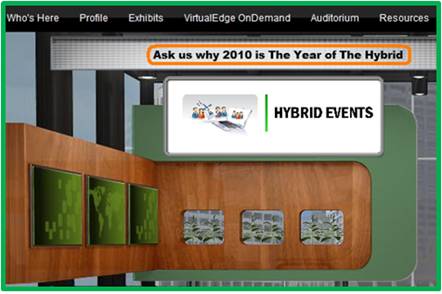
For signage within the virtual booth, I prefer to use a call to action (e.g. “Ask Us Why 2010 is The Year of The Hybrid” above) over a declaration. So instead of declaring, “The world’s leading producer of plastic widgets”, try a call to action, “Ask us why plastic widgets are the new metal widgets”.  The call to action initiates a conversation with your visitors, rather than telling them what they should know.  If visitors enter your booth’s group chat and proactively ask the question stated in your call to action, then give yourself a pat on the back.

Stand Out From The Crowd

You’ll likely have competitors exhibiting in their own virtual booths, which means that a key part of your job is to figure out how to separate your booth (and company) from the crowd.  Greenscreen video (aka an embedded video greeter) has been used at enough virtual booths that it won’t make your booth any different.

Instead, try an offbeat video that’s not yet made its way to YouTube.  Or, how about an avatar of your CEO whose mouth movements are synchronized to the words s/he is speaking.  Perhaps an animated avatar is the new greenscreen.  Thinking further outside the box, how about bringing one of your products to life – personalizing that product to the point where it speaks and delivers a message to visitors.  A good example (in general – not in a virtual event) is the DCX Man character created by Brocade:

Source: Brocade (dcxman.com)

Further information can be found here: http://www.dcxman.com/whois_dcxman.html

Optimize Your Content For Search

Search Engine Optimization (SEO) is not the sole domain of your web site or blog – it applies to virtual events as well.  How can this be?  Well, most virtual event platforms provide basic and advance search capabilities – they index all content in the event (e.g. documents, links, Webcasts, etc.) and some platforms even index the contents of uploaded documents.

As a result, keep SEO in mind for selecting documents to include in your booth, along with the labels, titles and abstracts that you use to catalog your booth content.  Taking a step back, be sure to write an SEO-optimized description for your company and booth – if attendees search for a key term and your booth is at the top of the search results, then all is good in the world.

Subject Matter Experts as Booth Staffers

While you’ll certainly want sales reps and sales engineers as booth staffers, it’s critical to work subject matter experts into the staffing schedule.  A visitor who asks specific product or service questions is a hot prospect – and telling that prospect “let me get back to you with an answer to your question” becomes a lost opportunity.  Even worse, that opportunity could fall into the lap of your competitor, whose booth is only one click away.

If you’re a technology vendor, try to have your product manager, chief engineer or event your CTO available within the booth.  While some technology folks may not be comfortable face-to-face with a customer, most feel quite at home in a text chat session.

Optimizing For: Demand Generation

If you’re looking to generate sales leads, cobble up all your best lead gen content – the latest White Papers, Case Studies, product sheets, videos, podcasts, customer testimonials, etc.  Be liberal and selective at the same time – that is, ensure there is a good mix of content choices, but be religious in making sure the content you select aligns with your goals – and relates to the theme of the virtual event.  The beauty of a virtual event is that registration occurs once – but all activity with your content is tracked.  So you’ll have rich activity profiles at your disposal to help you separate the cream of the crop leads from the visitors who came simply to enter your prize drawing.

Optimizing For: Thought Leadership

Are some of your co-workers experts or luminaries within your industry?  If yes, then have them be staffers within your booth!  Visitors will have a natural inclination to engage with them – and they’ll be able to funnel the ripest opportunities to sales reps within your booth.  If your employees have not achieved rock star status within your industry, leverage some of the luminaries to produce content on your behalf.

Perhaps it’s a research report authored by an industry expert – or, a video interview (hosted by the expert) with your CEO.  Better yet, a Webcast within the virtual event that features the expert(s) who provide a presentation prior to your own speakers.  If the experts are available to attend the virtual event, invite them to provide Q&A within your booth, as they’ll serve to draw interest and engagement from visitors.

Conclusion

While much of the logistics occur “online”, building a virtual booth will take longer than you think (if done right).  Be sure to clearly define your goals first – then, make sure your booth achieves those goals.  Take planned breaks from the virtual build to assess whether your booth aligns with the stated goals.  Finally, be sure to study activity data from the live event so you can make improvements for your next event!

Related Links

  1. Browse the Virtual Events 101 Index Page
  2. Download the eBook, “Virtual Events: Ready, Set, Go

Note: I invite you to connect with me on .


Bringing The Physical Event Experience To Virtual Events

March 30, 2010

Source: flickr (User: cafebiz08)

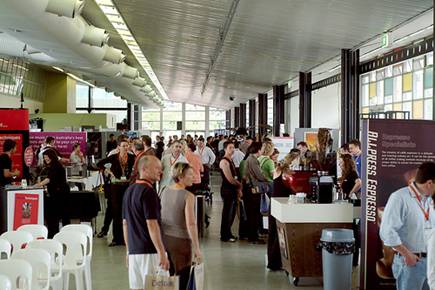
Virtual trade shows got their start by creating 2D graphical replicas of physical trade shows: exhibit halls, booths, auditoriums, lounges, etc.  Most users are “wowed” in their first experience attending a virtual trade show – they enjoy the quality of the user interface and often comment that they felt like “they were  there” at a physical event.

Exhibitors, too, find the virtual trade show experience to be quite enjoyable – at the same time, they often highlight important differences between exhibiting virtually vs. physically.  In a physical event, for instance, you have some amount of guaranteed foot traffic on the show floor – a portion of which will naturally wander into your booth.  The “efficiency” of a virtual event means that users only enter your booth by explicitly clicking into it.  In a physical event, exhibitors can greet prospects with a friendly handshake – in a virtual event, the exhibitor may never see the prospect’s face.

How can virtual event platforms incorporate aspects of the physical event experience?   Let’s consider a few ideas.

Source: flickr (User: ExhibitPeople)

How To: Gain Virtual Foot Traffic to Booths

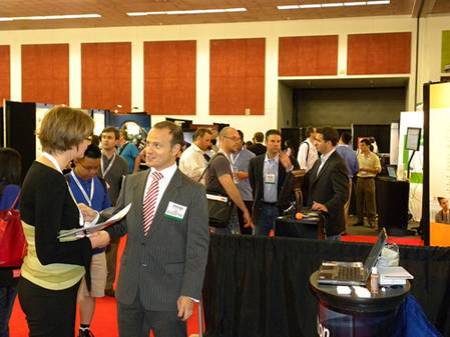
On a crowded show floor at a physical event, an exhibitor knows that some percentage of attendees will visit their booth – additionally, exhibitors can increase their investment and receive strategic placement on the floor (e.g. near the entrance, near areas where food and drink are served, etc.).  In a physical event, as attendees walk towards (or past) your booth, there are tactics to catch their attention (e.g. making eye contact, telling them about a special sales offer, showing T-shirts that you’re giving away, complementing them on their laptop bag, etc.).  In a virtual event, you never see someone “passing by” your booth – they click directly to where they want to go.

The Guided Random Walk

Virtual event platforms could re-create the leisurely stroll down the show floor aisles.  Clicking on a “take me on a guided booth tour” button could allow the platform to become the auto-pilot and guide the attendee to the “store front” of randomly selected  booths.  At each  “stop”, the attendee is presented with an overview of the exhibitor, the products/services they provide and a list of staffers with whom they can engage.  The attendee can click to enter the booth – or, continue on with the “walk”.

Once they enter a booth, attendees would see a “resume walk” button to return to the guided tour.  Additionally, the virtual event platform could collect “interests” on the registration form (or on the attendee’s profile) to more efficiently recommend exhibitors (on the tour) to attendees.  Since most virtual attendees prefer to visit only those areas that interest them, this service would be completely optional.

Strategic Offer Placement

Virtual event platforms provide many avenues and areas for exhibitor branding and promotion (e.g. banner ads, jumbotron, etc.) – similar to a physical booth located near the food and drink, virtual event show hosts could map out the event hot spots (e.g. lobby, auditorium, etc.) and provide sponsorship opportunities for exhibitors.  For instance, the Auditorium could display banner ads that drive traffic to premium sponsors’ booths.  Since the virtual attendee is bound to navigate through key areas  (e.g. the Auditorium), promotions in those areas creates the equivalent of “passerby traffic” in a physical event.

Webcast Exit Actions

Imagine taking all attendees of a physical conference session and teleporting them to a specific sponsor’s booth at the conclusion of the session.  Well, a virtual event makes such teleporting possible.  If an exhibitor is presenting in one of the event’s Webcasts, have the virtual event platform provide an “exit action” to drive Webcast viewers to the exhibitor’s booth when it concludes.   Be sure to instruct the Webcast presenter(s) to inform viewers that additional questions can be addressed within the booth at the conclusion of the Webcast.  And, be sure those presenters also “exit” into their booth to provide the answers!

Source: flickr (User: SESConferenceSeries)

How To: Gauge Visitor Interest

When an attendee visits your physical booth, you can quickly judge their interest level based on facial expression and body language.  While these signals are not available from virtual booth visitors, you certainly can decipher interest based on the visitors’ mouse clicks.  Eloqua developed the concept of digital body language – and it applies directly to virtual booth visitors – “Digital body language can arm sales people with deep insights into the areas and levels of interest of every prospect.” (source: Eloqua)

The virtual event platform could provide real-time profiling of booth visitors, based on the actions they’re taking within the booths.  Inactive visitors can probably be left alone, whereas highly active users (lots of document views, document downloads, web site views, chat requests, etc.) may literally be raising their hand to engage in a conversation.

The virtual event platform could first characterize the nature of the prospect’s interest (e.g. map the requested documents to high level “interest categories” defined by the show host) and then place a subtle offer in front of the visitor (e.g. “An online representative is available to answer questions about telepresence – click here to engage in a 1:1 chat”).

Since this feature could be deemed too “Big Brother” by attendees, it would have to be tested (to gather feedback) and/or have an explicit opt-in setting that allows attendees to enable or disable the feature.

How To: Connect with Interested Attendees

During periods of high activity in a physical booth, visitors often walk up, see that all staffers are speaking with other attendees and decide to move on to the next booth.  Perhaps  later in the day, the same visitor returns to see if any staffers are available.  The observant exhibitor may recognize the visitor (from her prior visit) – and if so, provide special attention to her (since she made the effort to visit the booth and return a second time).

In a virtual event, all activity is tracked, which means that observant exhibitors need only turn to the services of the platform to let them know about repeat visitors.  Virtual event platforms ought to explicitly track repeat visitors and alert booth staff accordingly – perhaps the platform plays one audio alert for the first time visit  – and separate audio alert for the repeat visitor.

Additionally, the platform could allow exhibitors to build in rules and offers based on the amount of repeat visits.  For instance, on the fifth visit to the booth (within the same day), the visitor could be offered to download a free copy of the exhibitor’s software.  Exhibitors  could then leverage the resulting action to qualify the worthiness of the prospect (e.g. visited my booth 5 times + downloaded a copy of my software = have a sales rep follow up tomorrow).

Source: flickr (User: bilateral)

How To: Create Better Attendee Networking

One of the key attractions to an event is the ability for attendees to network with like-minded professionals – exchanging ideas, thoughts and business cards.  In a physical event, there are many “transitory phases”, where attendees migrate from one locale to another.  These phases create opportunities to meet or “bump into” random strangers.

That being said, meeting at a physical event is largely inefficient, based on the random nature of the meet-up.  Who knows if you’ll meet someone aligned with your interests or an uninteresting individual who’s there only for the free cocktails?  A virtual event can leverage the information available in user profiles to make meet-ups a bit less random – and far better “matched”.

In virtual, we can skip past the not-so-subtle glance at another attendee’s badge label – instead, we can auto-recommend like-minded individuals.  In my mind, the single most effective feature of LinkedIn is the “People You May Know” listing in the upper right of your LinkedIn home page.  Virtual events ought to create recommendations (of other attendees) with the same effectiveness.

The recommendation engine could be combined with an interface similar to ChatRoulette – whereby attendees enable their webcam and rotate through and chat with other attendees in roulette-type fashion.  It may not be quite the same as the physical experience, but the use of webcam can add a whole lot more than just text chat.

Conclusion

While it’s still true that virtual events can never replace the handshake – there are benefits of physical events that if modeled and implemented properly, can be a boon for virtual events.


The Business Benefits Of Second Life

March 23, 2010

Veronica Butler-Borrer

The following is a guest post by Veronica Butler-Borrer, known in-world as Pooky Amsterdam (@PookyMedia).

AVATAR started off being the word of the new decade, and for good reason.  The blockbuster movie, which allows a man to take on a completely new form through a kind of mental transfer, has made hundreds of millions of dollars. It also speaks to the new decade in terms of new possibilities.

While Second Life has been part of the Internet for a while, recent changes and upgrades have made it more compelling as a business and media platform.  Recent economic conditions have also required new strategy to save money on travel costs.  And increased attention to environmental changes has required us to look more closely at green alternatives to business.  Facts and figures plus improved opportunities are now encouraging us as a business community to re-examine Second Life.

Pooky Amsterdam's Second Life avatar

What makes doing business as an avatar in Second Life a good choice?

  1. You can virtually meet people from anywhere in the world easily and inexpensively
  2. Your Avatar can be an extension of yourself and increase personal investment for you and the business community you are addressing
  3. VoIP puts you in the same room with those you need to speak with
  4. You can share any documents you need to
  5. You can work in real time on those shared documents
  6. Any 3D product or place can be re-created cost-effectively and to scale for business decision making
  7. You save on time and travel expense by just logging in from your computer
  8. You can establish a secure environment by restricting access to your location
  9. Training and Education done in virtual worlds returns great results
  10. Video created in Virtual Worlds (known as Machinima) or cinema done on machine will get your message to the public through regular distribution channels (e.g. YouTube).  In addition, it will be available as video content on your web site, plus be something you can include in your video emails

These are the main reasons to think about doing business virtually.  Let’s look into this a bit further.

Analysis: Benefits of Doing Business Virtually

That’s right, once you download the free client which is Second Life, you can enter a 3D world where you can meet by prearrangement, those whom you would like to, from anywhere in the world.  Of course this will take some organization, but that is easy to facilitate.

Your Avatar is an identity that you construct to carry out your work in a virtual world.  Allowing this creation to personify you means you invest yourself in it, and interact as well.  This is also not a bad thing, as in creating an other self which is “better, faster, stronger” will also result in your being able to transfer some of those properties to your real world person.  If you saw a digital image of yourself running on a virtual treadmill, would you feel like going to the gym? Probably so, according to a Stanford study showing that personalized avatars can motivate people to exercise and eat right.

It doesn’t yet beat Skype for number of chat minutes a month, but the VoIP technology in Second Life is excellent, and has served over a billion minutes of voice chat a month.  That means you can speak to people anywhere in the world, in the same virtual room, sharing important documents or any 3D representation for absolutely free.

Second Life Viewer 2

The latest viewer for Second Life (Viewer 2) also allows for shared media within this Virtual World and that means you can view ANY content on the web in real time with people from (or outside of) your organization.

This includes of course, Google Docs and Etherpad.  So you can make decisions together from your office, or home, without having to fly anywhere.  This is a remarkable opportunity that is afforded people who are on this site.  Plus, being able to recreate objects in 3 Dimensions means you can build anything to scale, whether it be a building or an engine, and have your people discuss this matter, again in real time and vocally.

When you have your own location, you can also set permissions to that landing point and area so you are the only ones who have access to it. This will not compromise your security at all, when you are discussing matters of confidentiality.

Second Life Case Study

Consider the case study entitled, “Virtual World Simulation Training Prepares Real Guards on the US-Canadian Border: Loyalist College in Second Life,”

The executive summary reads:

Before September 11, 2001, Customs and Immigration students at Loyalist College spent three weeks closely tailing professional border guards to experience the daily routine of their future job. In a post-911 environment however, this was no longer allowed. Training suffered until the Director of Educational Technology at Loyalist College catalyzed a virtual border crossing simulation in Second Life for Loyalist students.

The amazing results of the training and simulation program have led to significantly improved grades on students’ critical skills tests, taking scores from a 56% success in 2007, to 95% at the end of 2008 after the simulation was instituted.

This is proof positive that training in a Virtual World environment has documented benefits.

I present a video which my company made to show you some of the amazing opportunities that the Virtual World of Second Life can afford.  Video is a hallmark of professionalism, and being able to have content on your website, and/or through video email is an important way to integrate your customer base.

Before embarking on a Second Life journey, you may want to seek expert help; it will save you time and ultimately money if you begin your investment with those who are knowledgeable about the world you are about to enter for business.  Just of course if you wanted to have a meeting in Paris, you would need concierge services there.  Pookymedia can help you get started.

Please feel free to contact Pooky Amsterdam at info@pookymedia.com.

Tweet this posting:


How To Use Twitter For Virtual Event User Support

March 8, 2010

End user support for virtual events has traditionally been provided via a small number of channels: email and telephone support (which is especially useful for users having issues entering the virtual event) and “in-show support”, which is typically provided in a “help booth” within the virtual event.  With growing use of social media, however, attendees are leveraging their social network tools to request (and receive) user support.

From my observations, Twitter is the most widely used social network for virtual event support requests (today) – however, I wouldn’t be surprised to see increased “calls for help” via Facebook and LinkedIn.  This posting provides tips and best practices on providing virtual event end user support via Twitter.

Create/Establish a Twitter Account

Users can’t find you on Twitter if you’re not there, which means that if you don’t already have a presence on Twitter, you’ll need to create one.  I recommend a Twitter ID that incorporates your company name – or, the product, platform or service that you provide (if that’s different from your company name).  In addition, be transparent about the contributors (employees) who tweet on behalf of your company and brand.

Create A Real-Time Dashboard (of  tweets)

Configure your Twitter client (e.g. TweetDeck, Seesmic, etc.) with the relevant search terms and hash tags related to your virtual event.  At minimum, you’ll want to monitor the following:

  1. @Replies sent to your Twitter account (in TweetDeck, the column is labeled “Mentions”)
  2. A search on the hash tag for your virtual event
  3. A search on your company name – or, the name of your platform, product or service
  4. A search on the virtual event’s name or title

If it helps you stay more focused, delete columns that are unrelated to the virtual event – the result will be a single app that consolidates all “chatter” related to your event.  I recommend that you monitor for new tweets every 15 minutes while the event is live.

Allocate Proper Staffing & Get Started Early

In the same manner that you allocate support staff to booths, email inboxes and telephones, be sure to allocate staff to “Twitter support”.  You want to get up and running early – I recommend monitoring Twitter at least one full hour before the official opening of your virtual event.  Virtual event producers typically allow exhibitors into the environment prior to attendees – so during the “early period”, be on the look-out for tweets from exhibitors who may need assistance finding their way into their virtual booths.

Have at least one person who is “primary” for Twitter support throughout the event day.  And, know that Twitter users expect quick turnaround to their tweets.  Trend setters such as @comcastcares have provided highly responsive and immediate customer care on Twitter, which has raised the bar for everyone else.  Users on Twitter have come to expect similar care and responsiveness.

If you do not respond within 15-20 minutes of users’ original tweet, they may issue a subsequent tweet, letting the “world” (e.g. their followers + users who are following the event’s hash tag) know that they’ve received no response from the event provider.  So be sure to provide prompt service – if your customer care is prompt and effective, you’ll be rewarded.  Users are just as quick to say “thanks” (on Twitter) and acknowledge the great service you provide.

Following Up With A User

I prefer to handle support issues via 1-on-1 care.  Before you contact the user, review their Twitter profile – as background to your upcoming dialog, it’s good to know the user’s company, title and number of Twitter followers.  I like to know if the user has an audience of 100 on Twitter – or, an audience of 100,000.  In addition, read the user’s last 10-15 tweets, to get to know his/her interests, hot buttons, etc.

Now you’re ready to make contact.  I prefer to connect directly – a direct message on Twitter (if the user is following you), a direct email (if you have his/her email address) or a private chat within the virtual event (if the user is logged in at the time).  If none of these channels are available to you, send the user a public message on Twitter and provide your direct contact info (e.g. your email address).

It’s important to personalize your brand, letting users know that there are “real people” behind your corporate Twitter account – and, providing them with a direct means for getting in touch.

1-on-1 Triage

To prepare you for a “triage session” with your end user, I like the have the following information available via URLs that I can provide to the user:

  1. Technical requirements for accessing/attending the virtual event
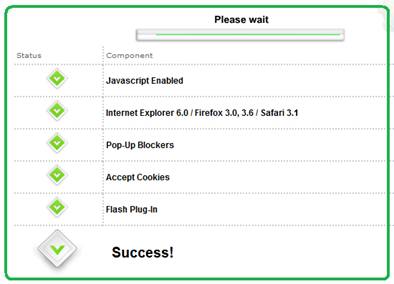
  2. Automated system check that allows a user to test their system
  3. Frequently Asked Questions (FAQ) related to the virtual event
  4. A “contact us” page related to end user support (e.g. providing an email address, phone number, etc.)

In addition, be sure to have higher level “support experts” available in case you need to delegate a sophisticated system issue.  The experts should be available within the virtual event – or, be available “on call” to jump in as needed.

Post-Resolution

Once you’ve resolved a user’s issue, follow them on Twitter – this allows them to send you direct messages.  And, it allows you to be quickly apprised of any subsequent issues they may come across.  Later on in the day, check if the user is logged in to the virtual event – if so, send a private chat request and politely ask how the event is going.  It’s always good for users to know that you’re actively supporting the event and genuinely interested in their satisfaction.

On Twitter, respond to each and every end user “tweet” – mention that the issue is resolved and invite the user to contact you back as needed.  Be careful, however, not to include the event’s hash tag on all of these follow-up tweets.  As the virtual event platform, you do not want to have a significant presence in the hash tag’s tweetstream.  Rather, only include the hash tag if your tweet relates to system-wide updates (applicable to all or most users).

The occasional update (with the hash tag) shows users that you’re listening – and replying to every single tweet shows your followers that you are responsive to each issue that arises.

The Entire Team Contributes

If your virtual event support staff is comprised of active Twitter users, encourage them to tweet about the event – have them highlight interesting sessions, pass along comments from enthusiastic attendees or simply state that they’re having a great time.  This helps promote the event itself – and, highlights the depth of the team behind the event support.  Take it a step further and create a Twitter List of your staff – allowing interested users to follow your employees tweets via a list.

Conclusion

The world is going social, which means that user support and customer service need to be “socially listening” (and responding).  Get ahead of the curve – be sure to support your next virtual event on Twitter.

Tweet this posting: