A Second Look At Second Life

June 3, 2009

Source: San Francsisco Business Times

Source: San Francsisco Business Times

“A lot of Silicon Valley has written Second Life off.  The tech world will have to revisit Second Life as a phenomenon in the next six months or so.”

Thus spoke Wagner James Au, noted virtual worlds author and blogger in a San Francisco  Business Times article on Second Life (note: the full article is available to paid subscribers only).  Au, who blogs at New World Notes about Second Life, notes in the article that Linden Lab CEO Mark Kingdon has renewed the Second Life brand that was created by founder Philip Rosedale.

While the revenue model for Twitter is slowly coming clearer (judging by the accounts in the business media), Linden Labs’ strategy under Kingdon is becoming quickly self-evident with the announcements of the past few months.  From my perspective, Kingdon’s growth strategy is around a few core pillars:

  1. Enterprise use of Second Life – makes sense, as enterprises and corporations can be monetized at a higher clip than individuals, artists, hobbyists, etc.  Enterprises (in the former of marketers) were a big portion of Second Life during its initial peak – and it seems the current focus is to bring marketers back into the fold, along with complementary uses in non-marketing disciplines (e.g. training, enablement, collaboration, etc.).  In the past 6 months, Linden Lab has hired 25 marketing and product people as part of their push for enterprise clients.  In addition, the company recently hired Amanda Van Nuys as Executive Director of Enterprise Marketing, signaling a further endorsement of the opportunity in the enterprise.
  2. Nebraska – an on-premises software version of Second Life  (compared to their Software as a Service model), which enterprises can run on their own servers behind the firewall.  IBM has been an active partner with Linden Lab on behind-the-firewall integration – the telltale sign will be how many other large enterprises opt for the Nebraska model.  For “behind the firewall” use, I have to think that we’re talking less about marketing and more about collaboration.
  3. Voice – not mentioned in the Business Times article, but Virtual Worlds News covered it well – Linden Lab is poised to go after the Skype market with capabilities to bridge voice calls and SMS messages between the real world and Second Life.  In the Virtual Worlds News article, Linden Lab Vice President of Platform and Technology Development Joe Miller notes, “The opportunity to monetize at a significant added value for our business is there”, regarding the opportunity in Voice.

IBM marrketing executive Karen Keeter notes in the San Francisco Business Times article that nearly 100 IBM’ers are “working on virtual world tools for commercial sale in Second Life and on other platforms”.  As such, IBM stands to achieve commercial gain from increased use (by enterpises) of Second Life and related virtual worlds.

In fact, it wouldn’t surprise me to see IBM leverage virtual worlds to generate services revenue.  Two things come to mind – IBM Global Services and IBM’s Smarter Planet initiative.  IBM Global Services could assist enterprises on their virtual worlds strategy (e.g. build me a virtual world representation of my data center, so that I can run heating and cooling simulations) – or, IBM could go in-world to enterprise’s private virtual worlds to provide traditional consulting services within the virtual world.

So a manufacturer who’s replicated their factory in a 3D world can have Global Services visit (in-world) to optimize their factory floor workflow.  Then, of course, Global Services could help facilitate the parallel action in the real world.  On the Smarter Planet project, IBM might create 3D models of the next generation power plant to show utilities how to become more energy efficient.  In a virutal world, I’m sure the possibilites are limitless.

Finally, Dan Parks of Virtualis is featured in the article.  Virtualis created a compound in Second Life with 34,000 square yards of meeting rooms.  Quite an interesting model – an event producer that leverages a re-usable area (virtually) to host meetings for corporate clients.  Companies who have done events with Virtualis include Deloitte, Oracle and Trend Micro.

I’d be interested in your thoughts – what do you think about the potential of Second Life for enterprises?

Related Links:

  1. Blog posting on Virtual Offices, with reference to Amanda Van Nuys’ use of Second Life
  2. Blog Posting: Virtualis and Trend Micro Put On Quite A Show
  3. Blog Posting: Philip Rosedale On Building A Business: Practice Extreme Transparency
  4. Blog Posting: IBM’s Second Life ROI: The Headline Beneath The Headline

Virtual Event ROI

May 31, 2009

Virtual Edge 2009 Panel on Measurement & ROI

Virtual Edge 2009 Panel on Measurement & ROI

What’s a hot topic on the minds of virtual event marketers? I’ll give you a hint – it’s spelled R-O-I. At Virtual Edge 2009 in Santa Clara, CA, I participated in a panel discussion on the topic of virtual event ROI.  It’s pretty clear that virtual events are driving significant ROI today – signified by the interest in last week’s conference, the keen interest from marketers and the growth of the virtual event industry.  However, the audience questions from this panel discussion make it quite clear that ROI discussions and analysis need to advance to the next level.

Here were the 3 hot buttons raised by the audience:

  1. Tracking ROI via closed sales – yes, I know that virtual events will drive awareness, engagement and great overall statistics.  But at the end of the day, I need to know that my investment drove product sales.  And I’m just not sure I can quantify that today.
  2. Understanding user/activity profiles – my company wants to produce a virtual event for the C-level, but we just don’t know whether C-level employees will attend virtual events – and if they do, we certainly don’t know the typical activity profile of a C-level employee within a virtual event.  As such, we’re not sure we can recommend the investment to produce one.
  3. More meaningful engagement statistics – it’s great that I had 200 private chat sessions with attendees – but there’s a difference between a “I can’t find the auditorium” chat and a “can you provide me with pricing information” chat.  How do I make the distinction when analyzing my ROI?

Let’s address each of these hot buttons.

ROI via Closed Sales

Here’s where the platform provider needs to work hand in hand with the client.  First, the provider and client need to develop certain engagement patterns that are meaningful for the client.  One pattern may be as simple as, “attendee initiated a private chat with one of my booth reps”.  Another pattern might be, “attendee downloaded more than 5 documents from my booth and had more than 2 return visits”.  Once these patterns are defined, the following should occur:

  1. Platform provider – upon detection of a pattern match, insert (or update) a record in the client’s CRM system (e.g. Salesforce.com, Siebel, etc.).
  2. Client – have the processes and technologies in place for a timely response.  Then, have a secondary process to accurately track and measure the actions/outcome that result from the sales inquiry.

The job of the platform provider is to detect the engagement pattern and seamlessly update the client’s CRM system.  By handling the CRM import automatically, the platform provider is significantly accelerating the potential payoff (ROI) – since a marketer or sales rep is no longer required to manually import the sales opportunity from an Excel spreadsheet.

The client, then, needs a process to have the right person respond in a timely manner to the sales inquiry (e.g. Inside Sales, direct sales rep, etc.) and be able to track the eventual outcome.  The outcome then needs to be mapped back to the source (e.g. virtual event) – to complete the equation.  If these pieces work together, you’ll be able to track closed sales to your virtual event investment.

Activity Profiles

As noted during the Virtual Edge panel discussion, platform providers and clients will need to agree on the use of aggregate event data.  Today’s contracts specify that the client (event producer) owns all data on registrant profiles, activity data, etc.  To publish industry-wide data, it will be important for the lion’s share of clients and vendors to participate.

The data will not be as meaningful if large players (clients or vendors) are not part of the effort.  In addition, vendors and clients will need to agree on standard definitions – for instance, what is “C-level employee” defined as – and how do we map that definition back to registration fields?  A single vendor may have 10 clients – and 10 unique registration forms (with unique registration fields).

Unique registration fields make data aggregation challenging.  In addition, both clients and vendors will want to disclose (to virtual event attendees) that their activities will be utilized in reporting and analysis (at an aggregate level).  This discussion, in my mind, leads me to believe that an industry wide standards body is needed – an Internet Advertising Bureau (IAB) for virtual events.

More meaningful engagement tracking

On the specific topic of deciphering chat content, technology is beginning to emerge to perform natural language recognition.  In child-based virtual worlds, I’ve read that technology can attempt to detect the presence of child predators within virtual world environments (where text chat is occuring).  I believe this technology can be applied to the business setting of a virtual event – whereby the sales worthiness of a chat session can be rated.

Have a look at this very interesting article from The New York Times – Software That Guards Virtual Playgrounds.

On the disclosure side, I think we need to make attendees aware of the use of this technology – so that they understand that the private chat they engage in may be read by a computer.

These are all interesting topics for the industry to address – I believe that in doing so, we’ll advance the industry significantly – and generate even stronger growth than we’re already seeing.

Related Links

  1. Blog posting: Increase Your Virtual Event ROI
  2. Blog posting: Virtual Event Adoption by the C-Suite
  3. Blog posting: What CPL Should I Pay For VTS?

Day 1 Recap: Virtual Edge 2009

May 29, 2009

The ABC's of Virtual Events (Virtual Edge Session)

The ABC's of Virtual Events (with Kenny Lauer, GPJ & Kelly Graham, Cisco)

That’s right, even the Virtual Events industry has a need to meet face-to-face.  Thursday (05/28/09) marked Day 1 of Virtual Edge 2009 – a 2-day face-to-face “summit on virtual events, meetings and communities”, held at the Santa Clara Convention Center.  By my estimation, the event had over 150 attendees and approximately 50 exhibitors.

Most of the presentations and panel discussions had “standing room only” crowds.  Two of the noted presentations of Day 1 were “The ABC’s of Virtual Events, Meetings & Marketing” (featuring Kenny Lauer of GPJ and Kelly Graham of Cisco) and the keynote presentation, featuring Paul Salinger or Oracle and Sandy Carter of IBM.

The sessions were streamed live into the virtual world – a combination of live video (via Stream57) and live video in a 3D immersive world (via VirtualU from Digitell).  A physical event on virtual events, which was then simulcast virtually – neat!  The “concurrent virtual”  allowed global access to event, for folks who were not able to attend in person – and that included some speakers, who (of course!) presented their sessions virtually.

In the afternoon, I participated in a panel discussion titled  “Measurement, Tracking & ROI”.  Two of the main themes we heard from the audience were:

  1. Better measuring event engagement – sure, we know about registration-to-attendance ratio, number of live attendees, average session time, etc. And Stu Schmidt of Unisfair introduced the notion of a “virtual engagement index”.  The calculation of that index (or score), however, may need to get “smarter” – for instance with a chat session.  Dannette Veale of Cisco noted the difference between a “where’s the Auditorium” and a “can you send me pricing information” comment – whereby the latter should carry a higher score from an engagement or “prospect worthiness” point of view.
  2. Aggregate profiles by user type – customers are in the need for published profiles by user type, so that they can better plan targeted virtual events.  For instance, if an enterprise is interested in a virtual event for C-level employees, they need to see a published profile (e.g. what does the C-level do in a virtual event), to determine whether the event is worth pursuing (aka what’s the expected ROI).  The panel responded that there are data privacy issues that need to be worked out – since all data is “owned” by customers – and NOT by the virtual event platform vendors.

While I was able to sneak out to attend a session or two, I spent most of the day in the InXpo booth.  I had the pleasure of meeting (face-to-face!) with many colleagues in the industry and also spoke to countless attendees who are considering their first virtual event.  For attendees from corporations, many had already executed virtual events – and were there to learn best practices and refine their game.  On the other hand, I met several folks from the event marketing industry, who were looking to leverage virtual events to complement their clients’ physical event strategy.

For me, Day 1 marked a momentous occasion for the virtual events industry – the creation of a physical event speaks to the legitimacy of the industry – while the turnout speaks to the timeliness and interest in virtual events.  Today, our industry is like the TV sitcom Cheers (“Where everybody knows your name”).  I imagine that this industry will grow quickly enough that it will be challenging to remember everyone’s name – and in a few years, the venue will have to shift to the Moscone Center in San Francisco! Looking forward to Day 2 today.

Related links

  1. Virtual Edge 2009 program: http://www.virtualedgesummit.com/program.php
  2. Virtual Edge 2009 program – to attend virtually: http://www.virtualedgesummit.com/virtual-event-schedule.php
  3. Dean Takahashi covered Day 1 for VentureBeat: http://venturebeat.com/2009/05/28/virtual-events-draw-a-live-in-person-crowd/

Reflections Of A Virtual Events Blogger

May 27, 2009

In the 6+ months that I’ve been blogging about virtual events, virtual tradeshows and virtual worlds, I’ve learned a lot.  I’ve learned from the research that I’ve done in this arena, I’ve learned from insightful comments left here by readers and I’ve learned a bit about blogging.  I decided to skim through the nifty historical charting provided by WordPress and thought I’d share some insights into what’s worked well here.  Let’s start with the most obvious one – the top 5 blog postings (by page views – listed by top post first):

  1. Review: Lenovo’s eLounge Virtual World – what I learned here is to create timely blog content that associates with major events.  Lenovo unveiled their eLounge virtual world (powered by Nortel’s web.alive) at CES 2009.  I decided to download it, try it out and review it.  Because my posting was a relative first (in terms of eLounge reviews), it got the lion’s share of search engine traffic.  I saw this both in referral data and by tracking relative rankings on the search engines themselves.  Additionally, a large amount of traffic was sourced from a popular blog about Nortel (allaboutnortel.com).
  2. Interview With Nic Sauriol, Venture Lead on Nortel’s web.alive Platform – if you strike a chord with an interesting posting, ride the momentum and generate follow-on postings that provide more information (or additional insight).  Nic Sauriol provided me with a virtual tour of eLounge (for my original blog posting), so I followed up later with an interview, asking Nic to provide new information on web.alive since the eLounge launch.
  3. Insights And Experiences From Virtual World Experts – here, I summarized a panel discussion for which I was an audience member.  It featured top notch virtual worlds experts – and as a result, this blog posting received a great deal of referral traffic from related blogs (e.g. Wagner James Au’s New World Notes).
  4. How To Use Social Media To Stay Current On Virtual Events And Virtual Worlds – this posting had the benefit of being posted on StumbleUpon, which generated a nice spike in traffic.  Hard to say whether the traffic surge resulted in new, regular readers – or whether they were one-time, curious Joe’s.  Regardless, I learned how powerful a single referrer (e.g. StumbleUpon, digg, etc.) can be.
  5. Hey Kids! I’ve Got a Virtual World For You – much of the traffic for this posting is due to SEO – it contains terms that are popular in search (e.g. My Little Pony, Webkinz, Club Penguin, etc.) – while I did not write this with the intent to generate search engine traffic, it does demonstrate the importance of writing content with SEO in mind (if your goal is to generate traffic from SEO).

Here’s a chart that demonstrates the power of referrals:

Source: WordPress Data for It's All Virtual

Source: WordPress Data for It's All Virtual

Here are this blog’s Top 5 Sources of Referral Traffic:

  1. allaboutnortel.com
  2. StumbleUpon
  3. Twitter – I promote new blog postings to my Twitter feed, which is kind of like RSS for all of my Twitter followers.  If they’re not subscribed via an RSS reader, the tweet helps nudge them to come back here 🙂
  4. WordPress Dashboardvery interesting – other WordPress bloggers are finding this blog by clicking on links promoted/suggested by WordPress in the blogger’s dashboard
  5. WordPress Tags – tells you the importance of properly tagging your blog content

Top 5 Search  Terms (that resulted in traffic to this blog)

  1. Miscellaneous terms related to Lenovo eLounge
  2. Virtual Calendar
  3. Virtual Events
  4. Virtual Worlds
  5. All virtual worlds (I guess it’s good to have your blog name closely match a search term)

And finally, the Top 5 clicked-upon links (within my blog content):

  1. Overview/download page for Lenovo eLounge
  2. My Twitter page – shows the importance of a permanent/prominent placement [top right of this blog]
  3. Facebook Group (Virtual Event Strategists) – shows the importance of a permanent/prominent placement [top right of this blog]
  4. Project Chainsaw web page (for Nortel’s web.alive)
  5. YouTube video on Project Chainsaw

What’s worked well for you and your blogs?  Leave a comment below to let us know.


The Importance Of Knowledgeable Booth Reps At Virtual Tradeshows

May 24, 2009

Source: Flickr (NatalieMaynor)

Source: Flickr (NatalieMaynor)

I’ll admit it, I’m a bit crazy.  Over the Memorial Day Weekend, I went to the local farmers market.  When I walk down the aisles of a farmers market, I draw comparisons to Virtual Tradeshows.  Crazy, right?  Well, here’s how I make the analogy.  At a farmers market, I’m in the “market” for fruits, vegetables, drink, snacks, etc.  At a Virtual Tradeshow (VTS), I’m in the market for the products and services provided and sold by the exhibitors.  The assorted VTS booths are similar to the many stands at a farmers market.

And here’s a key point of farmers markets – the stands tend to sell the same varieties of fruits and vegetables.  In a VTS, the exhibitors sell the same types of products and services.  At the farmers market, I saw tomatoes, asparagus and corn at many stands.  At a VTS on “backup”, I’m bound to see many booths that highlight a vendor’s backup solution.  The challenge to the farmer is the same as the VTS exhibitor – how to stand out from the crowd?

At a VTS, content is obviously very important – your booth description, logos, Flash movies, White Papers on your products, Case Studies, Podcasts, on-demand webinars, etc.  Content will go a long way in differentiating your booth from your competitors’ booths.  But content can only go so far.  VTS attendees may have a hard time choosing between two baskets of strawberries that look quite the same.  This is where knowledgeable booth reps make a difference.

At the farmers market, a young farmer (selling strawberries) went into great detail on the difference in flavor between the Chandler and Camarosa variety of strawberries.  He was quite an engaging speaker and invited us all to sample each variety and make our own judgments on which was sweeter.  And I’ll tell you, if I came across two stands selling Chandler and Camarosa strawberries, I’m buying from the one with the more knowledgeable seller.

Source: Flickr (Annieta - travelling!)

Source: Flickr ('Annieta' - travelling!)

I next ventured to a stand selling cherimoyas, an oval-shaped fruit that’s indigenous to the Andes mountains in Ecuador and Peru.  I had never heard of this fruit, so it was helpful to hear a farmer provide a quick overview – nutritional value, taste, flavor, how to peel, etc.  This knowledgeable “booth rep” increased the likelihood that I’d buy or try some – if I had strolled past this stand and did not receive any information, I’d sneak a glance at them and continue walking.

The same holds true for a virtual tradeshow.  Spend the time making your booth look great and provide excellent content.  But, make sure you bring knowledgeable representatives to the event (e.g. Sales, Sales Engineers, Product Marketers, Product Managers, even Directors and VPs).  They’ll make a big difference in differentiating your crop of  products and services from the booth next door.


For Virtual Event Platforms, User Experience Is Key

May 22, 2009

Source: Wolfram|Alpha

Source: Wolfram|Alpha

Heard of this new web site?  It’s Wolfram|Alpha, whose “long-term goal is to make all systematic knowledge immediately computable and accessible to everyone”.  Unveiled with much media coverage (and drawing some comparisons to Google), the Wolfram|Alpha web site is exceedingly easy to use.  Other than the insiders at the company, we’re all first-time users of this service – and Wolfram|Alpha incorporates a lot of noble elements in User Experience (UE) – for one, the main page is prescriptive.

Not sure how the service works?  Well, click on any of the links in the “A few things to try” area and you’re off and running.  A left-click on any of the listed examples inserts the search term into the search box and the page dynamically updates to instruct you on what to do next [e.g. “Click here (or press enter) to get the result”].  Here’s a closer view of the “A few things to try” area:

Source: Wolfram|Alpha

Source: Wolfram|Alpha

How does this relate to virtual events?  Well, in 2009, virtual events have witnessed a dramatic surge in both interest and attendance.  The surge in attendance means that many users of virtual events have been first timers.  In fact, I’d estimate that of all virtual event attendees in 2009, one third (33%) were first time attendees.  Since first impressions are critical, this means that virtual event platforms need to nail the User Experience factor in order to have first time users return for more virtual events.

For first time users, it’s important for the platform to have the following attributes:

  1. Be prescriptive where needed – the last thing a virtual event platform provider wants to hear is a user who says that the environment is “hard to navigate”.  Especially for the first time user, virtual event platforms should add prescriptive features to the user experience – such that booth visits, search, chat, etc. leverage visual indicators similar to Wolfram|Alpha.
  2. Use examples – why not mirror the Wolfram|Alpha approach of  “A few things to try” – use that as a title in a navigational area of the virtual event and you’re sure to have users leverage it to get acclimated.  In a virtual event, a few things to try include: private chat, group chat, private webcam chat, view a Webcast, visit a booth, etc.  By providing these examples – and walking the first time visitor through each activity, you’re allowing these new users to take off their training wheels – and they’ll thank you for it.
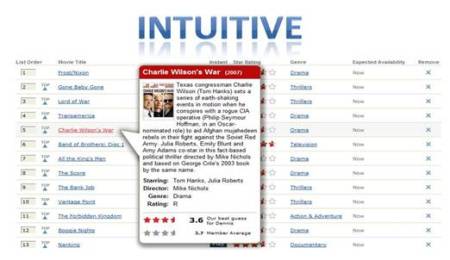
  3. Be intuitive and easy to grasp – easier said than done, but the example I’ll use here is Netflix.  When I first joined a few years back, I immediately found the Netflix web site to exceedingly intuitive, with a savvy use of AJAX in just the right places.  Finding movies and managing the Queue were so easy and convenient.
Source: Netflix

Source: Netflix

It would be silly to think that attendees of a physical event partake in “training” in order to navigate and participate.  This holds true in a virtual event – if the platform handles UE properly, the first time user should be up and running as a virtual veteran within the first 30 minutes of that first session.


Virtual Tradeshow Best Practices: Top 10 Exhibitor Tactics

May 20, 2009

At b-to-b virtual tradeshows (VTS), exhibitors compete for the attention and interest of the attendees.  And many times, the competition for attention occurs “against” the competitors of your business.  Thus, it’s even more important to make your mark, which places an onus on exhibitors to leverage new and creative ways to generate interest.  Here are Top 10 Exhibitor Tactics that I’ve observed while working with virtual tradeshow exhibitors.

  1. Set up a (physical) war room – it seems a bit contradictory, given that you’re exhibiting virtually, but if it’s practical to gather in a single location (physically), you’ll be more effective and coordinated.  As visitors pour into your booth and engage with you, it will be easy to shout aloud, “I’ll take this one” and have everyone immediately know what you’re referring to.  In addition, being together physically creates a buzz as the event goes on – you’ll hear cheers, shouts, jeers, etc. as activities unfold throughout the day.  I’ve participated in one and it does help with coordination and build camraderie.  Short of a physical gathering, another option is to keep a telephone conference bridge active throughout the day to coordinate activities.
  2. Send product experts into the Networking Lounge – you need to solicit your subject matter experts to participate in the virtual tradeshow in the first place.  And believe me, their presence will be worth it.  Send them into the lounge to soak in all the discussion – and encourage them to chime in.  The idea here is to demonstrate thought leadership and generate “organic interest” in your company and your company’s booth.  During one event I attended, an expert’s presence in the Lounge generated interest from an industry analyst, who set up a follow-up meeting (with the expert’s company) to further discuss their products and services.
  3. Leverage a compelling booth welcome – always make a good first impression for that first-time visitor.  Create a Flash video for your booth’s “front screen” that’s unique to the VTS – or, have your CTO or CEO (via greenscreen video) greet visitors with a short video welcome.
  4. Ad-hoc prize giveaways – drop a surprise on attendees and let them know that you’re giving away prizes in your booth.  Got leftover giveaways from a physical event?  Distribute that excess inventory to your virtual event visitors.  Draw them into the Group Chat in your booth and ask them to answer questions posted there (about your products and services)  in order to win.  You’ll end up not just with some happy booth visitors – but you’ll also have educated others who observed the group chat.
  5. Be practical with booth displays – if you have scheduled chats occuring in your booth – or, if you have distinguished experts staffing your booth, let visitors know!  How about an animated image that displays in the front screen of your booth, which rotates through the miscellaneous activites scheduled there that day.  Sometimes, the simplest and most practical approach is the most effective.
  6. Staff your booth with your product experts – for those experts that you send into the Networking Lounge – be sure they’re available to interact with your booth visitors as well.  When your expert has won over the respect of an attendee, then that attendee becomes more comfortable with your company’s products and services.  I’ve witnessed a few experts field requests for pricing information or a follow-up sales call.  While that’s best handled by a salesperson, it clearly demonstrates the effectiveness of having your products experts in your booth.  Another observation: if your experts are having engaging interactions with booth visitors, their presence will encourage repeat visits.
  7. Invite your company executives to participate – a virtual tradeshow affords your company executives with an easy and convenient way to connect directly with customers and prospects.  The attendees find the interactions engaging, as it’s not often they have direct access to your executives.  Additionally, your executives gain further appreciation of the virtual event via their first hand participation, which makes budget approvals quicker for subsequent events.
  8. Got extra books?  Give them away as prizes – first, you need to find the right book for the particular audience – one that will generate strong demand.  Then, by giving away a large number of them (50, 100, etc.), you generate interest because of the likelihood of winning one.  One event I attended awarded a free book to the first 100 booth visitors.  The particular book was authored by an industry expert whom all attendees were familiar with.  The first 100 visits occurred within minutes of the opening of the event!  Later in the day, visitors will still coming into the booth, asking if the book was still available.
  9. Functional avatar images – some exhibitors select their avatar image from the event platform’s image library.  Others upload a picture of themselves.  One exhibitor went a different route and created custom images that denoted the functional expertise of each exhibitor. The image had the company logo as a background, with text overlaid on top (e.g. “Product Expert”, “Integration Expert”, etc.).  Since attendees can determine your functional domain (by your avatar), they can immediately determine whether to interact with you.
  10. Use a “call to action” image in the final slide of a Live Webcast – want viewers to visit your booth at the conclusion of your Live Webcast?  Make your closing slide an image of the virtual environment, with a big arrow pointing to your booth’s location on the Exhibit Hall.  Title the slide, “Got more questions?  Visit our booth”.

So there you have it.  Try some of these tactics at your next virtual tradeshow and let me know how it goes!


For Virtual Events, Globalization Means Localization

May 13, 2009

Source: Flickr (jasmine3)

Source: Flickr ("jasmine<3")

To meet a growing demand from international enterprises and event organizers, virtual event platform providers are focusing on support for multiple languages within their core platforms.  Some providers launched langugage support during 2008 – while others are focusing their efforts around language support in 2009.  Some providers support single byte languages, while others support (or plan to shortly support) both single byte and double byte.

Language support is clearly a relevant and important feature to have in the platform.  But for me, language is just the beginning.  It’s the pouring of cement into the foundation of a house – something you need to start with – but then build upon.  The focus today is on supporting a core set of languages.  Once this foundation is in place, I believe that in the near future, the new focus will shift from language to culture.

In the West, “real world” meetings between business partners will often begin (or conclude) with a handshake.  In other cultures, the extension of a hand (for a handshake) may not be culturally acceptable or of proper etiquette.  It’s my belief that as we extend meeting and event interactions online, culture remains nearly as relevant as in the real world.  And, culture can often span multiple languages or dialects – so again, platforms will want to focus beyond support for individual languages.

What might be some examples within the virtual world?  Well, let’s take text chat for one.  In the West, we grew up using AOL Instant Messenger, Yahoo Messenger, etc. – and we likely use it in a business setting as well (e.g. AOL IM, WebEx Connect, Lotus Sametime, etc.).  Other cultures may be less inclined to use a chat client.  Perhaps they want to connect with each other using SMS on their cell phones.  Perhaps they like to chat in a large group (e.g. group chat) rather than private chat.  Or, perhaps text chat is not considered meaningful, whereas webcam communication (a la Skype) is the norm.

Whatever the case, virtual event platform providers will want to adapt their features and capabilities to support the requirements and preferences of multiple cultures.  Additionally, I believe that platform providers will need to create customized templates and skins that are suited for individual cultures.  If you take the standard set of templates for the Exhibit Hall, Auditorium, Lobby, etc. that are used by North American virtual event producers – and use them in an event in the Far East, chances are it will look foreign to the audience (no pun intended).

So, to support globalization, platform providers will want to create a portfolio of templates that are relevant and meaningful to the cultural norms of the region.  An image of a male worker planted in a virtual booth may be fine in the West, but aspects of the individual (attire, expression, etc.) may be inappropriate in the Far East.

So as we look to grow this industry globally, I’d note that language support is certainly important – but the combination of language with culture will matter most.


June: A Hot Month For Virtual Events

May 12, 2009

june_cal

Think up some hot technologies in Enterprise IT – desktop and application virtualization; data center; unified communications; SharePoint.  Next, consider some key disciplines that gain prominence during a down economy – online demand generation and e-commerce.  Then, think about the red hot area of sustainability and clean technology. Finally, consider what a leading technology vendor (Cisco) is producing for their partners and customers.

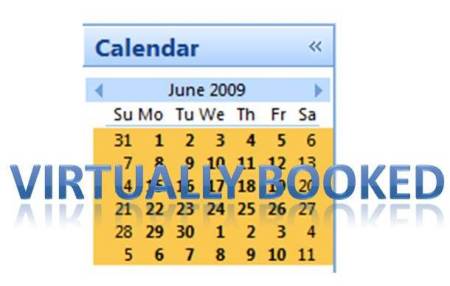
Put it all together and what do you get?  A jam-packed month of virtual events in the month of June.  You can sell the full slate of virtual events scheduled this year on the Virtual Events Calendar that I maintain on this blog.  Here’s an excerpt from that page, which shows you all the excitement that June has to offer.  Here’s the list of June virtual events in chronological order:

  1. Cisco Virtual Partner Summit: https://www.ciscopartnerspace.com/virtualpartnersummit/ (06/02/2009 through 06/30/2009)
  2. All About eCommerce Virtual Conference & Expo: https://event.on24.com/eventRegistration/EventLobbyServlet?target=registration.jsp&eventid=141444&sessionid=1&key=766F81E957D10012B67D1FC70900312D (06/04/2009)
  3. Desktop and Application Virtualization (SearchVirtualDesktop / TechTarget): http://events.techtarget.com/virtualdesktop/ (06/04/2009)
  4. Transforming the Enterprise with Unified Communications (VoiceCon): http://www.voicecon.com/virtualevents/ (06/10/2009)
  5. SharePoint Virtual Expo 2009 (Quest Software): http://events.unisfair.com/index.jsp?eid=395&seid=30 (06/10/2009)
  6. 2009 State of the Data Center: Storage (Ziff Davis Enterprise): http://presentations.inxpo.com/Shows/ZiffDavisEnterprise/VTS/06-17-09/Website/home.htm (06/17/2009)
  7. BtoB’s Leading Edge: Demand Generation in the Digital Age: https://event.on24.com/eventRegistration/EventLobbyServlet?target=registration.jsp&eventid=137553&sessionid=1&key=1E4584C2A969E4AEFAA97CB93E4BB4C8 (06/23/2009)
  8. Virtual Energy Forum: http://www.virtualenergyforum.com/ (06/24/2009 and 06/25/2009)
  9. Cisco Live Virtual: https://www.ciscolivevirtual.com/portal/login.ww (06/30/2009 and 07/01/2009)

Do you plan to attend or exhibit at a June virtual event that’s not listed here?  If so, leave a comment below to let me know.


Virtual Event Adoption By The C-Suite (CIO, CMO, etc.)

May 8, 2009

In my former role as a b-to-b media industry product manager, I developed product packages that utilized audio podcasts for delivering IT-specific content to IT practitioners and IT managers.  The conventional wisdom at the time  (early on, at least) was, “CIO’s will not download and listen to podcasts”.  I wasn’t so sure about that – after all, podcasts made it easier for busy executives to consume content they wanted – when and where they wanted to consume it.  So why wouldn’t a busy executive leverage technology to make her day more efficient?

Lo and behold, a CIO speaker at an event I attended was asked about the different content types he leveraged to get his job done.  He mentioned that he takes a 30 minute ferry boat ride to and from work each day.  While most boat passengers are reading the daily newspaper, this CIO would listen to IT-specific podcasts on each ride – and, he insisted that each downloaded podcast be 30 minutes long (or less), so that he could listen its entirety on the ride.

With virtul events, I’ve heard from event organizers and event sponsors who wonder whether the CIO (and her companions in the C-Suite) will adopt virtual events and virtual tradeshows.  I think the answer is “yes”.  First, let’s characterize some of the C-Suite occupants:

  1. CEO – may be too busy to attend virtual events – but, will occasionally make the keynote appearance to kick off a virtual event.  Many CEO’s do not use a computer, but most carry PDAs.  This means that the path to CEO participation in virtual events may be via the PDA.
  2. CMO – they see the value of virtual events as a marketing and lead generation vehicle, so one of their key roles today is in funding and approving budget.  As for attendance, my feeling is that they’re interested in doing so.
  3. CIO – like with podcasts, virtual events enable and empower an executive.  The CIO can attend a virtual event to peer network with like-minded CIO’s and not miss a day in the office to do so.
  4. CTO – intimate with technology, the CTO is virtually a slam dunk to participate (pun intended).
  5. CFO – not so sure about CFO’s, but I will note that IBM Cognos produced a virtual event called Virtual Finance Forum 2009 that targeted finance executives.  Cognos produced the same event in 2008 as well.

B-to-B publishers have caught on to the notion that CIO’s will attend virtual events, as past virtual events have specifically targeted the CIO.  Two upcoming events are taking a similar approach:

  1. CIO Virtual Forum: Navigating Through Dynamic Times (May 19, 2009 – CIO.com and Cisco)
  2. CIO Summit:  Driving Business Value and Customer Value in the Global Economy (June 10, 2009 – InformationWeek)

In my experience with technology focused virtual events, I found that of all registrants, 7-9% had senior IT titles (CIO, CTO, VP of Technology, etc.).  So an event with 1,000 registrants would have 70-90 of them be CIO’s or CTO’s.  Why would the C-Suite attend a virtual event?  I think there are a few primary benefits:

  1. Conveniently network with like-minded peers – one of the draws of attending an event is the ability to network with other attendees.  With a virtual event, a busy executive can do so without losing a day outside the office.
  2. Efficiently connect with partners and customers – an online experience can’t re-create the dyamics of an in-person interaction, but it does allow a busy executive to connect with many more partners and customers than could have occurred in-person.
  3. Extend your social graph and social presence – some C-Suite execs have enthusiastically adopted Twitter, Facebook and other social networks.  Industry-specific virtual events allow the executive to further expand the social graph.  And of course, they’ll be tweeting about the event as soon as they login.

What has your experience been – has the C-Suite at your own company attended a virtual event?